Amazon Without Rain!
Amazon Without Rain!Posted by Margot on 17-11-2026
Green Plant
What happens when a section of the Amazon rainforest receives far less rain for decades? A long-running scientific experiment in northern Brazil has offered researchers an unusual opportunity to investigate this question.
By deliberately reducing the amount of rainfall reaching a forest area, scientists have observed how trees respond to prolonged water shortages and how the ecosystem gradually reorganizes itself.

The Esecaflor Project, based in Caxiuanã National Forest in Pará, has been running for 25 years. Its findings reveal that the forest can adjust to difficult conditions, but this resilience comes with significant losses. The affected area has become shorter, more open, and less capable of storing carbon than it was before the experiment.
An Experiment That Began in 2001
The Esecaflor experiment was established to understand how the Amazon might respond to increasingly severe drought conditions. Researchers wanted to investigate what happens when trees receive less water over an extended period, particularly as climate conditions become warmer and rainfall patterns become less predictable.
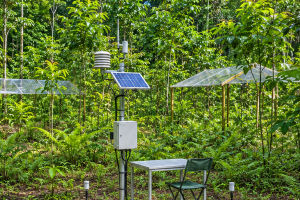
The experimental area covers one hectare within Caxiuanã National Forest, which extends across approximately 318,000 hectares. In 2001, researchers installed around 6,000 transparent plastic panels beneath the tree canopy. Positioned between one and four metres above the ground, the panels collect rainfall and direct it away through a system of channels.
This arrangement reduces the amount of rainwater reaching the soil by approximately 50%. A nearby forest plot of the same size receives normal rainfall and serves as a comparison. Scientists monitor both locations, measuring soil moisture, air temperature, tree development, water movement through trunks, and root growth. Two observation towers, each around 40 metres tall, also collect information using radar equipment.
The Forest Gradually Lost Its Largest Trees
The changes did not happen immediately. According to project coordinator Antonio Lôla da Costa, the first three years showed little visible impact because the forest still had moisture reserves. After approximately five years, however, tree deaths began to increase. The largest trees were particularly vulnerable because their size and position in the canopy exposed them to greater water demands.
By the eighth year, the experimental area had already lost around 40% of its total biomass. Biomass refers to the combined living material of the forest, including leaves, branches, trunks, and roots. The losses continued over the following years. Around the fifteenth year, the reduction in biomass reached its highest level. By 2024, the researchers estimated that the experimental forest had lost nearly half of its original biomass.
Smaller Trees Helped Restore Balance
Despite the extensive losses, the experiment revealed an unexpected development. The remaining vegetation gradually adjusted to the limited water supply. After many large trees disappeared, smaller trees were able to use the available soil moisture more effectively. Their growth and water use helped stabilize the remaining forest, and the rate of tree mortality began to decline.
Researchers described this development as a new ecological balance. The forest had not returned to its original condition, but it had adapted to the artificial drought.
Why Large Trees Are More Vulnerable
Scientists are still investigating why larger trees experienced greater losses. One possible explanation involves their internal water transport systems, which may be more vulnerable when soil moisture becomes limited. However, Lucy Rowland, a tropical ecosystem specialist at the University of Exeter and one of the project's lead researchers, points to another important factor.
Large trees often have taller crowns that extend above much of the surrounding vegetation. Their position exposes them to hotter and drier air, increasing the stress they experience during periods of limited rainfall. This distinction matters because natural drought affects forests in more complicated ways than the experimental setup.
What Happens When Normal Rainfall Returns?
An important new chapter began in November 2024, when researchers removed the plastic panels responsible for diverting rainfall. The experimental plot can now receive normal precipitation, just like the comparison area. Scientists are interested in whether large tree species, including kapok, andiroba, and angelim vermelho, will gradually return. Their recovery could take decades or even centuries, depending on the species and environmental conditions.
Although smaller vegetation has helped stabilize the area, researchers caution that the forest remains less dense and has lower biomass than before. Its more open structure may also leave it vulnerable to future climate extremes. The next phase of Esecaflor will therefore examine whether the ecosystem can recover its former structure or develop into a different kind of tropical forest.

As normal rainfall returns to the study area, researchers have a new opportunity to understand how forests recover after extended drought. Their findings may help improve predictions about the Amazon's future under increasingly challenging environmental conditions.
Popular
How Tea Leaves Get Picked
A Walk Through the Plucking and Processing Steps That Turn Fresh Leaves Into the Tea in Your Cup.
Waterleaf Under Threat
How is changing rainfall affecting Nigeria's waterleaf? Unpredictable weather threatens local crops!
Blue Hydrangea Secrets
How to Turn Pink Hydrangeas Into Beautiful Blue Blooms With the Right Soil and Simple Gardening Techniques.
Amazon Without Rain!
What happens when the Amazon dries out? Long-term research reveals how forests may respond to drought!