Why Iris Flowers Look Odd
Why Iris Flowers Look OddPosted by Naveen Kumar on 16-11-2026

On Trend
Hi there, readers. You'd expect a flower to spread its petals out evenly, the way a daisy or a buttercup does.
Irises don't. Look at one closely and you'll see a lopsided arrangement: three petals standing upright, three drooping downward, and a small landing area in the middle. That shape isn't random decoration. It's a working mechanism, and once you notice the parts, you can't unsee them.
The three-up, three-down layout
The upright petals are called standards, and the drooping ones are called falls. On a bearded iris, the falls curve outward and down while the standards stay cupped and vertical. That split gives the flower a distinct silhouette from any angle, and it's why irises are so easy to identify in a mixed border even from across a garden. The color contrast between the two sets does part of the work too. Many varieties, including the classic deep purple bearded types, carry a lighter patch right where the falls meet the center.

A landing pad for passing bees
The falls aren't just for looks. They act as a platform that a bee can grip when it lands. On bearded irises, the falls also carry a fuzzy band called the beard, and that patch is positioned right at the entrance to the nectar source. A bee follows the color signal on the fall, lands, pushes past the beard, and picks up pollen on its back. You get a flower that's shaped around a specific visitor rather than around symmetry.
Why the shape helps pollination
The geometry keeps pollen transfer controlled. On a bearded iris, the style arms sit above the stamens and act as a physical barrier, so pollen coming in from a bee tends to hit the stigma of the next flower rather than self-pollinate the one it just left. That's a real advantage for genetic variety. Species that self-pollinate readily, such as some of the smaller wild irises, tend to have less elaborate falls and thinner beards, because they don't need to steer a pollinator at all.
Different irises, different shapes
Not all irises follow the bearded pattern, and that's where the shape gets interesting. Russian irises have narrower, more upright falls with no beard, built for a different set of pollinators. Dutch irises, the ones florists sell in spring, have smaller, more tightly folded falls and a sparser structure overall. Japanese irises go the other way, with wide flat falls that open almost horizontally. Compare a bearded iris and a Japanese iris side by side and the shared three-plus-three plan is clear, but the proportions tell you they're built for different visitors.
What it means for growing them
The shape has practical consequences in the garden. Bearded irises need their rhizome exposed to sun, and the wide falls collect water if you plant them too deep or crowd them, which invites rot. Give them a spot where the rhizome sits half above the soil and space them about 12 to 18 inches apart. Russian and Japanese types tolerate wetter ground, so the shape of the flower and the shape of the planting site tend to match up once you know what you're looking at.
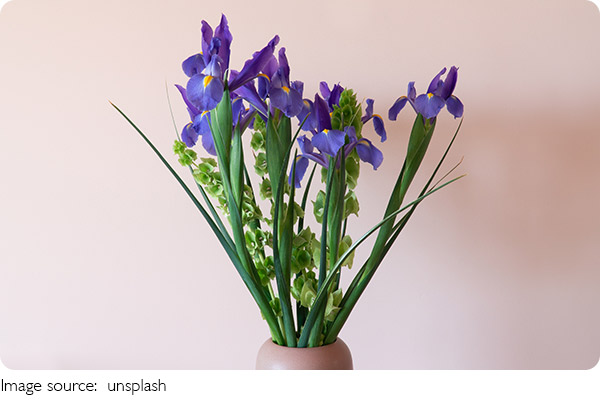
Next time you pass an iris in a border, lean in and check which petals are standing and which are hanging. That one detail tells you how the flower expects to be visited, and it's a quick way to read a plant without opening a field guide.
Popular
How Tea Leaves Get Picked
A Walk Through the Plucking and Processing Steps That Turn Fresh Leaves Into the Tea in Your Cup.
Waterleaf Under Threat
How is changing rainfall affecting Nigeria's waterleaf? Unpredictable weather threatens local crops!
Blue Hydrangea Secrets
How to Turn Pink Hydrangeas Into Beautiful Blue Blooms With the Right Soil and Simple Gardening Techniques.
Amazon Without Rain!
What happens when the Amazon dries out? Long-term research reveals how forests may respond to drought!