Eyes on the Universe
Eyes on the UniversePosted by Pankaj Singh on 21-03-2026
Funny Facts

The night sky has always sparked wonder, but today, astronomers are pushing the limits of what we can see.
From giant ground observatories to orbiting space telescopes, the tools we use are transforming our understanding of distant stars, planets, and galaxies. Every new observation reveals more about the universe's past, present, and future.
With better technology, we're no longer just gazing at twinkling points of light—we're reading the history written in those distant stars.
Ground-Based Observatories
Modern ground telescopes are massive, high-tech instruments designed to gather faint light from the farthest reaches of space. Adaptive optics correct for atmospheric distortion, letting astronomers capture images sharper than ever before. They can also detect extremely faint signals, such as the dim glow of distant galaxies forming shortly after the universe began.
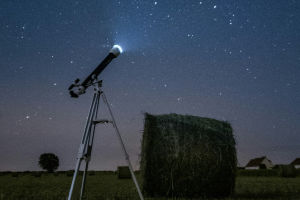
Example: The Extremely Large Telescope (ELT) in Chile will have a 39-meter mirror, enabling detailed study of exoplanets, star formation, and distant galaxies. Students and hobbyists can experience this technology virtually using online telescope simulators that mimic how adaptive optics correct images. Even simple backyard telescopes with basic tracking can demonstrate how ground-based observation has evolved over decades.
Space Telescopes
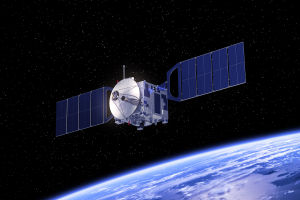
Orbiting above Earth removes atmospheric interference completely. Space telescopes detect a wider range of light, from ultraviolet to infrared, opening new windows into cosmic phenomena invisible from the ground. These telescopes allow scientists to study star-forming regions, black holes, and even the atmospheres of exoplanets.
Example: The James Webb Space Telescope peers into stellar nurseries billions of light-years away, revealing dust clouds and emerging stars. Amateur astronomers can explore its discoveries through NASA's public data portals. By analyzing infrared images, students can learn how hidden structures in galaxies are uncovered, demonstrating the importance of observing beyond visible light.
Robotic and Automated Systems
Automation allows telescopes to continuously monitor the sky, capturing transient events like supernovae, asteroid flybys, or variable stars without human intervention. These systems gather enormous datasets that would be impossible to collect manually, providing a constant stream of valuable information for both scientists and educators.
Example: The Vera C. Rubin Observatory will survey the entire southern sky every few nights, generating petabytes of data annually. Students and citizen scientists can participate in data analysis projects, spotting unusual objects and learning how automated systems identify patterns in massive datasets. Even small-scale projects, like tracking asteroid paths using robotic cameras, can show how automation improves efficiency in astronomy.
Multi-Messenger Astronomy
Astronomy is no longer just about visible light. Combining observations of light, gravitational waves, and neutrinos allows scientists to study extreme cosmic events like neutron star collisions or black hole mergers. This “multi-messenger” approach provides a more complete picture of the universe and its most energetic phenomena.
Example: Coordinated observations of a neutron star merger in 2017 confirmed theories about heavy element formation, such as gold and platinum. Schools can replicate simple experiments using sound and light sensors to understand how combining different “signals” uncovers hidden patterns, offering hands-on insight into how diverse data sources reveal complex cosmic events.
Artificial Intelligence in Observation
AI algorithms now help filter and analyze massive volumes of astronomical data, identifying patterns and anomalies that humans might miss. This accelerates discovery and increases efficiency, allowing astronomers to spend more time interpreting results rather than sifting through data.
Example: Machine learning tools can classify thousands of galaxy images automatically, sorting them by shape or color. High school students can try beginner-friendly AI projects using public datasets, such as recognizing spiral versus elliptical galaxies. This practical experience demonstrates how modern astronomy blends computational power with traditional observation techniques.
The Future of Cosmic Observation
Next-generation observatories promise higher resolution, faster imaging, and broader wavelength coverage. Coupled with AI, automation, and international collaboration, astronomers will map the universe in unprecedented detail. These advances will allow us to study cosmic evolution, track near-Earth objects, and explore distant planetary systems with a precision that was unimaginable a few decades ago.
Example: The Nancy Grace Roman Space Telescope will survey large portions of the sky in infrared light, helping track dark energy and galaxy formation. Students can access early datasets online, learning how massive surveys contribute to understanding cosmic evolution. Classroom exercises can simulate mapping distant galaxies or measuring light intensity variations, giving a hands-on feel for professional astronomical research.
Exploring the universe isn't just about advanced instruments; it's about connecting people with the cosmos. Whether through citizen science projects, online simulations, or classroom experiments, everyone can witness how these technologies unveil the universe's secrets. Observing the night sky now blends cutting-edge science with hands-on discovery, inspiring the next generation of astronomers to not only gaze at the stars but actively explore them.
Popular
Lunar Missions
Could We Really Live on the Moon? The Next Big Steps in Space Exploration.
Tomorrow’s Spaceships
How futuristic spacecraft could change exploration beyond Earth.
Asteroid Mining Horizons
How tapping space rocks could secure Earth’s critical resources.
Satellite Eyes on Earth
How advanced satellites help track environmental changes in real time.