The Secret Life of Galaxies
The Secret Life of GalaxiesPosted by Santosh Jha on 18-03-2026
Funny Facts
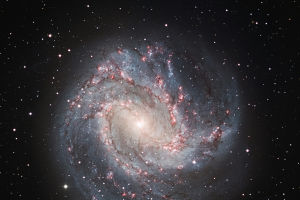
The night sky feels like a quiet ocean of stars, but each tiny light belongs to a colossal system called a galaxy. Some swirl elegantly like pinwheels, while others are more chaotic and irregular.
Understanding how galaxies form and why they look the way they do isn't just for astronomers—it's a window into the history of the universe itself.
Types of Galaxies
Galaxies come in a few main forms, each with distinct features.
Spiral Galaxies: These are the most recognizable, with a central bulge and winding arms. The Milky Way, our home, is a spiral galaxy. Its structure allows stars, gas, and dust to interact in ways that form new stars continually.
Elliptical Galaxies: Rounded or elongated, these galaxies contain older stars and less gas, so new star formation is limited. They often appear smooth and uniform in color.
Irregular Galaxies: Lacking clear shape, irregular galaxies may result from collisions or gravitational interactions. Their chaotic nature can spark bursts of star formation in unexpected regions.
Galactic Formation
Galaxies didn't appear fully formed—they grew over billions of years.
Dark Matter Halos: Invisible yet massive, dark matter provides the gravitational “scaffolding” where galaxies can form. Gas collects in these halos, cooling over time to form stars.
Mergers and Collisions: Galaxies frequently collide. These interactions can dramatically reshape their structure, sometimes turning spirals into ellipticals.
Star Formation: Clouds of gas collapse under gravity, igniting nuclear fusion and creating new stars. Feedback from stars, like supernova explosions, can regulate further star formation.
Actionable example: Simulations of galaxy formation are now accessible through online tools. By adjusting parameters like mass and collision speed, you can see how galaxies evolve over billions of years.
Galactic Motion and Interaction
Galaxies are far from static—they move, rotate, and interact with neighbors.
Rotation: Spiral galaxies spin, keeping stars in relatively stable orbits. Studying these rotations helped astronomers discover dark matter.
Interactions: Gravitational tugs between galaxies can trigger waves of star formation or remove gas from one galaxy to another.
Clusters: Galaxies rarely exist alone. Clusters containing hundreds or thousands of galaxies exert enormous gravitational influence, shaping their environment.
Actionable example: Amateur astronomers can track the motion of nearby galaxies like Andromeda using small telescopes over time. Even subtle movement can be measured with long-term observation. As radio astronomer Mark Reid explains, the motion of galaxies across the sky is incredibly small—so small that “a snail crawling on Mars would appear to move faster” than the motion astronomers detect.
The Role of Supermassive Black Holes
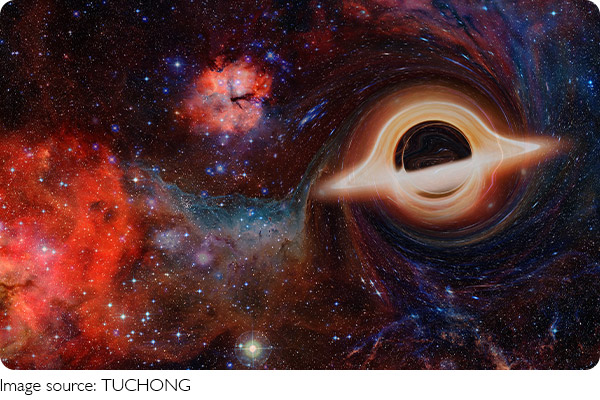
Nearly every large galaxy hosts a supermassive black hole at its center.
Influence on Stars: These black holes control the motion of stars nearby, keeping the core dense and compact.
Regulation of Gas: Powerful jets from black holes can push away gas, slowing star formation.
Galaxy Evolution: Feedback from central black holes can determine whether a galaxy continues forming stars or becomes more passive over time.
Actionable example: You can explore real data from projects like the Chandra X-ray Observatory to see how black holes affect their host galaxies, visualizing jets and energetic activity.
Why Understanding Galaxies Matters
Studying galaxies tells us about the universe's past and its future.
Tracing Cosmic History: Observing distant galaxies allows astronomers to see the universe as it was billions of years ago.
Understanding Dark Matter: Galactic dynamics provide one of the strongest clues about the unseen mass in the universe.
Predicting Cosmic Evolution: Insights into galaxy formation help us model how the universe will change over trillions of years.
Actionable example: You can follow news from space telescopes like the James Webb Space Telescope to see the newest discoveries about galaxy formation and evolution in real time.
Galaxies are the building blocks of the universe, each telling a story billions of years in the making. By observing, simulating, and even classifying them ourselves, we can start to understand not just distant stars, but the cosmic forces that shaped the very space we inhabit. It's a reminder that even in the vastness of space, patterns and processes connect everything from the tiniest star to the largest galactic clusters.
Popular
Satellite Eyes on Earth
How advanced satellites help track environmental changes in real time.
The Secret Life of Galaxies
Understanding Galaxies: A Journey Through the Universe’s Structure
Optical Telescopes Work
Discover how these instruments bring distant stars and galaxies into focus.
AI vs. Traditional Coding
Discover how artificial intelligence differs from traditional programming