The Story of the Cosmos
The Story of the CosmosPosted by Pankaj Singh on 18-03-2026
Funny Facts
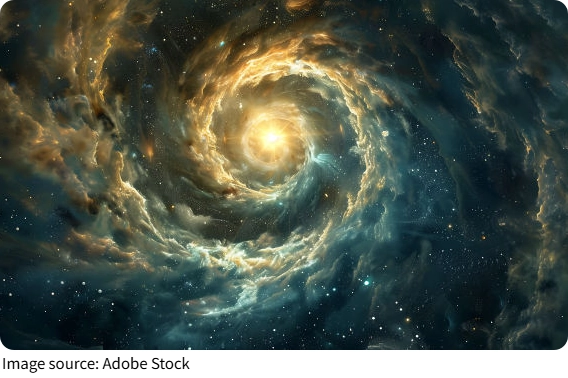
On a clear night, looking up at the stars can feel like peering into a time machine.
Each point of light tells a story billions of years old. Understanding where the universe came from isn't just academic—it shapes how we see reality itself.
Over the past century, scientists have uncovered remarkable clues about the cosmos, from its explosive birth to the subtle whispers of ancient radiation that still reach us today.
The Universe's Birth and Cosmic Expansion
One of the most important discoveries in cosmology is that the universe began as a hot, dense point nearly 13.8 billion years ago.
1. Observing galaxies moving away from us helped scientists realize the universe is expanding.
2. The faster a galaxy moves, the further it is—this relationship, known as Hubble's Law, gives a way to measure cosmic distances.
3. Expansion implies the universe was once incredibly compact, supporting the universe’s explosive origin theor.
Example: By measuring the redshift of distant galaxies with telescopes, astronomers can track the rate of expansion, which informs estimates of the universe's age.
Cosmic Microwave Background Radiation
Tiny temperature fluctuations in space reveal the afterglow of the universe's birth.
1. This radiation is a remnant of the universe’s explosive beginning, providing a snapshot of the universe just 380,000 years after it began.
2. Mapping these patterns shows how matter was distributed, influencing the formation of stars and galaxies.
3. Studying these fluctuations helps scientists test theories about dark matter and dark energy.
When scientists created detailed maps of the cosmic microwave background using satellites like COBE and WMAP, they discovered tiny “hot” and “cold” spots spread across the sky. These temperature differences are extremely small—about one part in 100,000—but they reveal where matter was slightly denser or less dense in the early universe.
Over billions of years, gravity amplified these small differences. Regions that were slightly denser eventually pulled in more matter, forming galaxies and galaxy clusters, while less dense regions became vast cosmic voids.
Formation of Galaxies and Stars
Understanding when and how galaxies formed sheds light on the universe's evolution.
1. Observations of distant galaxies show that stars began forming within the first billion years.
2. The shape and size of galaxies reveal the role of gravity and dark matter in structuring the cosmos.
3. Star clusters and nebulae provide laboratories for studying stellar life cycles.
Example: The Hubble Space Telescope has captured galaxies over 13 billion light-years away, allowing scientists to see the early stages of galactic evolution.
Dark Matter and Dark Energy
Some of the most puzzling discoveries involve invisible forces shaping the universe.
1. Dark matter doesn't emit light but exerts gravitational influence on visible matter.
2. Dark energy appears to accelerate the expansion of the universe.
3. Together, these components make up about 95% of the cosmos, yet remain largely mysterious.
By tracking galaxy clusters and gravitational lensing, astronomers can infer the presence of dark matter, revealing the hidden scaffolding of the universe.
The Role of Observational Technology
Our understanding depends on ever-improving instruments.
1. Ground-based telescopes capture visible light, radio waves, and X-rays from distant objects.
2. Space telescopes avoid atmospheric interference, providing clearer views of faint cosmic signals.
3. Particle detectors and satellites help measure cosmic rays and background radiation.
Example: The James Webb Space Telescope is designed to observe the first galaxies forming after the universe’s initial explosion, offering unprecedented insight into the early universe.
Studying the origins of the universe combines theory, observation, and technology in a grand quest to answer humanity's oldest questions. Every new discovery, from cosmic radiation maps to the behavior of dark energy, deepens our understanding of the cosmos and our place within it. Looking up at the night sky now carries a new sense of wonder—each star is not just a point of light, but a link to the vast, unfolding story of everything that exists.
Popular
Satellite Eyes on Earth
How advanced satellites help track environmental changes in real time.
The Secret Life of Galaxies
Understanding Galaxies: A Journey Through the Universe’s Structure
Cosmic Secrets Revealed
How Space Telescopes Uncover the Life Cycle of the Universe.
Powering Life in Space
How space stations stay alive with energy and support systems.