Cosmic Secrets Revealed
Cosmic Secrets RevealedPosted by Santosh Jha on 18-03-2026
Funny Facts
The night sky has always held mysteries, but seeing distant galaxies and newborn stars isn't just about wonder—it's about understanding where we come from.
Space telescopes have turned the cosmos into an open book, letting us read stories written billions of years ago.
From the birth of stars to the death of galaxies, these observatories give us a front-row seat to the universe's most dramatic events.
Peering Beyond Earth's Atmosphere
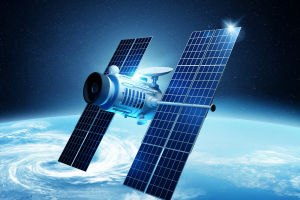
Earth's atmosphere is amazing for life, but it blurs the light from distant stars. Space telescopes, orbiting far above our atmosphere, capture light across the spectrum—from ultraviolet to infrared—without distortion. This allows scientists to detect faint galaxies, newborn stars, and even the remnants of ancient supernovae.
Actionable example: Amateur astronomers can simulate this at home by using filters on small telescopes to block certain light wavelengths, enhancing faint details just like professional space observatories.
Observing Stellar Birth and Death
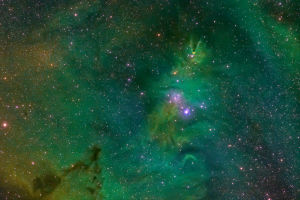
Space telescopes reveal star-forming regions that are otherwise hidden in dense clouds of dust. By mapping these nurseries, astronomers understand how stars of different sizes are born and how they evolve. Similarly, dying stars release energy and matter that shape their surroundings, sometimes forming spectacular nebulae.
Actionable example: Students can track stellar life cycles by using online databases of space telescope images, observing how stars change over time in different regions of the galaxy.
Tracking Galaxies and Cosmic Evolution
Telescopes like the Hubble and James Webb have allowed astronomers to see galaxies in various stages of evolution. By comparing young, star-forming galaxies with older, more settled ones, scientists can reconstruct the universe's growth. Gravitational interactions, galaxy mergers, and gas flows—all visible through precise imaging—explain why galaxies have their shapes and compositions.
Actionable example: Interactive simulations online let students manipulate virtual galaxies, observing how collisions and interactions alter their structure, mirroring real cosmic events captured by space telescopes.
Detecting Cosmic Explosions
Explosive events like supernovae and gamma-ray bursts release immense energy, shaping the chemical makeup of galaxies. Space telescopes can detect these events across billions of light-years, helping researchers understand how elements heavier than helium are created and distributed. Each observation fills gaps in the story of the universe's chemical evolution.
Actionable example: Citizen science projects allow participants to identify transient cosmic events in telescope data, giving hands-on experience with real discoveries.
Exploring Exoplanets and Potential Habitats
Beyond galaxies and stars, space telescopes examine planets orbiting other stars. By analyzing light patterns during planetary transits, astronomers can determine size, composition, and even hints of atmospheres. This research is crucial for understanding potential habitability and the likelihood of life elsewhere in the universe.
Actionable example: Enthusiasts can observe exoplanet transits using small backyard telescopes or online platforms to practice measuring light dips, mimicking methods used by professional observatories.

Building a Cosmic Timeline
Each telescope observation adds a piece to the puzzle of cosmic history. By combining data from multiple instruments, scientists chart a timeline from the cosmic origin event to the present, tracking the formation of the first stars, galaxies, and planetary systems. These insights deepen our understanding of the forces that have shaped everything we see in the night sky.
Actionable example: Teachers can use chronological space telescope images in classrooms to help students create visual timelines of galaxy formation, making abstract cosmic events tangible.
Space telescopes do more than capture stunning images—they reveal the life cycles of stars, the evolution of galaxies, and the processes that shape the universe itself. By peering into the cosmos, we not only understand the grand scale of space but also our own place within it. Observing distant galaxies and stellar explosions isn't just science—it's an invitation to connect with the universe's epic story.
Popular
Satellite Eyes on Earth
How advanced satellites help track environmental changes in real time.
The Secret Life of Galaxies
Understanding Galaxies: A Journey Through the Universe’s Structure
Cosmic Secrets Revealed
How Space Telescopes Uncover the Life Cycle of the Universe.
Powering Life in Space
How space stations stay alive with energy and support systems.