Powering Life in Space
Powering Life in SpacePosted by Raghu Yadav on 18-03-2026
Funny Facts
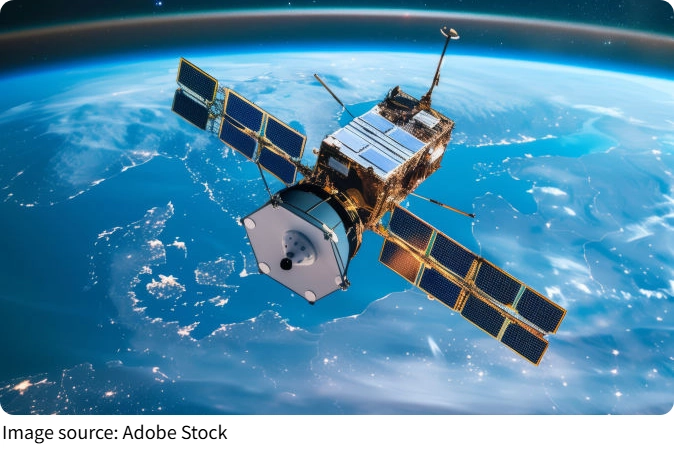
Floating hundreds of kilometers above Earth, space stations may look like metallic marvels, but their real challenge is keeping astronauts alive and productive.
Every breath, every sip of water, and every moment of electricity relies on sophisticated systems working perfectly.
Understanding these systems reveals how humans can survive and work in one of the most hostile environments imaginable.
Energy Generation and Storage
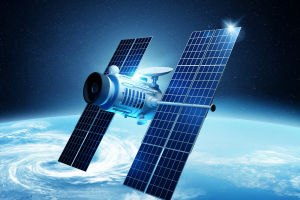
Space stations rely primarily on solar panels for electricity. These panels convert sunlight into energy, powering everything from lighting to experiments. Because sunlight is abundant in orbit, solar is ideal—but energy storage is just as crucial. Batteries store electricity for periods when the station is in Earth's shadow, ensuring systems never shut down.
Example: The International Space Station (ISS) uses massive solar arrays and nickel-hydrogen batteries, later upgraded to lithium-ion, to maintain continuous power. Students can experiment with small solar panels and rechargeable batteries at home to understand how energy collection and storage work in variable conditions, simulating day-night cycles in orbit.
Life Support and Atmosphere Control
Maintaining breathable air is critical. Space stations continuously monitor oxygen, carbon dioxide, humidity, and pressure. Oxygen is produced using electrolysis, splitting water into oxygen and hydrogen, while carbon dioxide is removed using chemical scrubbers. These systems must operate flawlessly, as even minor fluctuations can affect astronaut health.
Example: The ISS uses the Oxygen Generation System to supply breathable air and the Carbon Dioxide Removal Assembly to keep CO₂ levels safe. Classroom experiments can demonstrate air quality monitoring using sensors to track CO₂ and oxygen in enclosed spaces, giving students a tangible sense of how life support operates in orbit.
Water Recycling Systems
Water is heavy and expensive to launch, so recycling is essential. Space stations purify wastewater, including sweat, condensation, and human waste water, to create clean, drinkable water. Advanced filtration, distillation, and chemical treatments ensure that recycled water is safe, sustainable, and efficient.
Example: The ISS recycles up to 90% of its water. Students can try home experiments with basic filtration and distillation setups to see how impurities can be removed from water, illustrating the science behind closed-loop water systems in space.
Thermal Regulation
Space is extreme: sunlight can heat surfaces to over 120°C, while shaded areas drop below –150°C. Space stations must regulate internal temperatures to keep equipment and humans safe. Heat is moved through liquid loops, radiators, and heat exchangers, balancing energy from solar panels and onboard electronics.
Example: The ISS uses ammonia-based cooling loops and large radiators to release excess heat. Students can explore thermal management by experimenting with insulated containers and heat transfer, understanding how heat flow is controlled even in environments with no atmosphere.
Redundancy and Safety Systems
In space, failures can be catastrophic. Space stations are designed with backup systems for electricity, air, and water. Redundancy ensures that if one system fails, another can take over seamlessly. Sensors constantly monitor conditions, alerting crew to any anomaly before it becomes critical.
Example: The ISS has dual power channels and backup oxygen tanks. Students can simulate redundancy in a simple system, like wiring two batteries in parallel to power a device, learning how duplicating critical systems prevents failure.
Integration of Systems for Sustainable Living
The success of a space station depends on the integration of energy, life support, water, and thermal systems. Engineers carefully design these systems to work together efficiently, minimizing resource use while maximizing safety and comfort. This integrated approach also informs future plans for long-term lunar or Martian habitats, where resupply will be far more difficult.
Example: By analyzing public ISS data, students can model energy and water use, predicting how changes in crew numbers or experiments affect overall system balance. This hands-on exploration helps them understand the challenges of living sustainably in extreme environments.
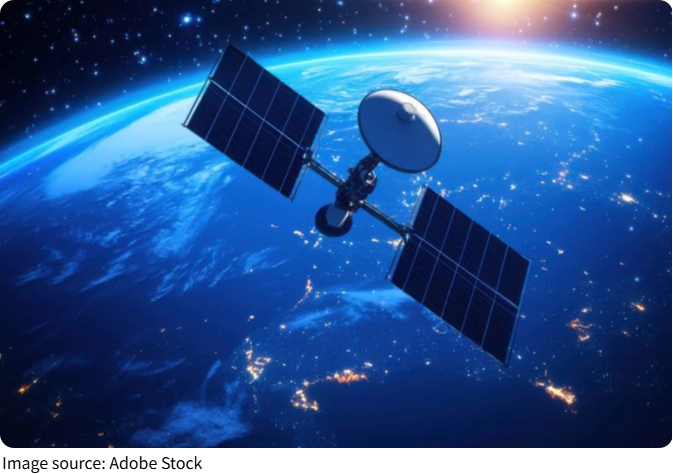
Surviving in space is a delicate dance of engineering and science. From solar panels collecting sunlight to water systems that recycle every drop, each technology ensures that astronauts can live and work safely. Observing these systems in action inspires us to think about sustainability, resource management, and the ingenuity required to thrive where nature offers no support.
Popular
Satellite Eyes on Earth
How advanced satellites help track environmental changes in real time.
The Secret Life of Galaxies
Understanding Galaxies: A Journey Through the Universe’s Structure
Cosmic Secrets Revealed
How Space Telescopes Uncover the Life Cycle of the Universe.
Powering Life in Space
How space stations stay alive with energy and support systems.