SUV Tips for Rocky Trails
SUV Tips for Rocky TrailsPosted by Hiro on 15-09-2026
Odd News
Rocky trails can put an SUV through conditions that are very different from ordinary roads. Uneven surfaces, exposed stones, steep sections, and sudden changes in terrain require more attention from the driver and place additional demands on the vehicle.
Even a capable SUV can suffer unnecessary damage if it is driven too quickly or approached without planning. With the right preparation and driving technique, many common problems can be reduced while keeping the journey enjoyable.
Inspect the SUV Before Leaving
Preparation starts before the SUV reaches the trail. Check the tires for visible damage and make sure they have the pressure recommended for the vehicle and the intended conditions. Inspect the underside as well, looking for loose panels, damaged components, or anything that already appears out of place.
Fluids, lights, and basic equipment should also be checked before departure. A pre-trip inspection can reveal a small problem that might become more troublesome once the vehicle encounters rough terrain.
Choose the Right Speed
Speed is one of the easiest factors for a driver to control. On rocky trails, moving too quickly reduces the amount of time available to identify obstacles and choose a suitable path. A slower pace allows the suspension and tires more time to respond to changes in the surface. It also gives the driver more opportunities to stop when a particularly large rock or deep section appears ahead.
Watch the Ground Carefully
Rocky trails can change constantly, so looking several meters ahead is useful. Identify large rocks, deep depressions, uneven ledges, and sections where the surface changes height. Try to understand how the obstacle will affect each wheel rather than focusing only on the area immediately in front of the SUV. If an obstacle cannot be avoided, approaching it slowly and as smoothly as possible can reduce harsh impacts.
Protect the Underside
The underside of an SUV can be vulnerable on rocky terrain, particularly around areas with limited clearance. Large rocks can contact components underneath the vehicle if the driver chooses an unsuitable line. Knowing the SUV's ground clearance helps the driver judge which obstacles can be approached safely.
Where available, manufacturer-approved protective equipment can provide additional protection for vulnerable areas. However, protective equipment should not be treated as permission to drive aggressively over obstacles. Careful route selection remains one of the best ways to reduce impacts.
Use Smooth Steering and Braking
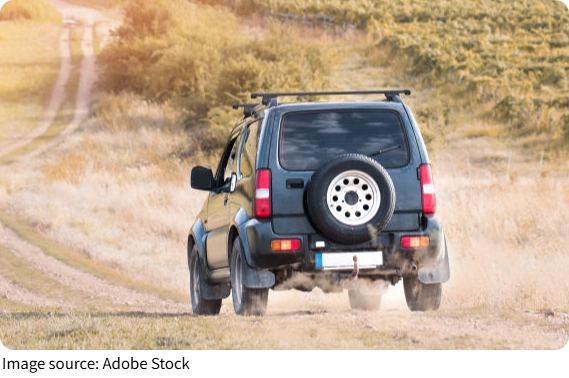
Sudden steering or braking can make a rough trail more difficult to manage. Smooth inputs give the SUV more time to respond to uneven terrain. When approaching a steep or rocky section, reduce speed early rather than waiting until the vehicle is directly on top of the obstacle. During a descent, controlled braking can help maintain a manageable pace.
Avoid making unnecessary steering corrections. If the SUV is already moving smoothly through a section, maintaining a steady line can be preferable to constantly changing direction.
Protect the Tires
Tires face direct contact with rocks, sharp edges, and uneven surfaces. Driving over obstacles too quickly can increase the chance of damage. Keep an eye on the path of the tires and avoid unnecessary contact with large or sharp rocks when possible. After completing a difficult section, inspect the tires for visible cuts, damage, or other changes.
Be Careful With Water and Mud
Rocky trails may include muddy or wet sections. Water and mud can hide holes, rocks, and changes in depth, making the surface harder to judge. Do not assume that a shallow-looking puddle is harmless. If the depth or surface beneath the water cannot be determined, stopping to assess it is a sensible choice.
After a muddy journey, clean the vehicle and inspect areas where mud or debris may have collected. Pay particular attention to the wheels and underside.
Carry Basic Recovery Equipment
Remote trails can leave drivers farther from convenient assistance, so carrying appropriate recovery and emergency equipment is useful. The exact equipment depends on the vehicle, trail, weather, and trip length. A basic kit might include a suitable tire-inflation method, tools, a flashlight, first-aid supplies, and equipment appropriate for recovering the SUV if it becomes stuck.
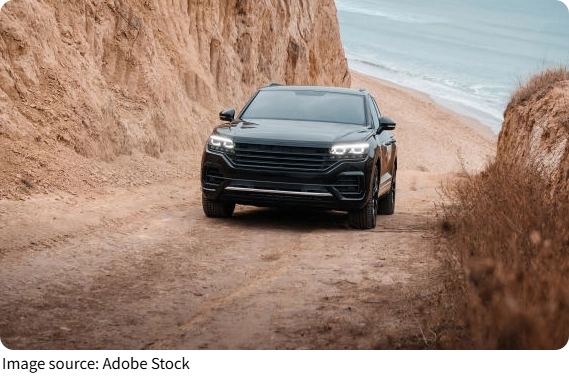
Protecting an SUV on rocky trails begins with preparation and continues with careful driving. A well-prepared SUV and a thoughtful driver can make rocky trails far more manageable while helping keep the vehicle ready for the next journey.
Popular
Europe’s EV Market Surge
Electric cars reached nearly a quarter of Europe’s new-car market in July as registrations rose and combustion models declined.
UK Reviews EV Targets
Britain is reconsidering its 2030 electric vehicle targets as manufacturers face weaker demand and supply-chain pressure.
Cars Could Boost Recycling
Europe’s car industry could become a major force in plastic recycling as new rules push manufacturers towards circular production.
Gravel Road Tire Tips
Driving on gravel? The right tire pressure and tread can make rural roads much easier!