Highlands With Purpose
Highlands With PurposePosted by Arjun Mehta on 26-08-2026
Funny Facts
Most trips to the Scottish Highlands are built around taking something away: photographs, summit views, long walks and memories. A conservation volunteering trip reverses that idea.
You still get the mountains and spectacular scenery, but part of the holiday is spent maintaining the paths that make those landscapes accessible.
Around Wester Ross and Assynt, volunteers work on popular mountain routes affected by erosion, heavy rainfall and thousands of walking boots.
No conservation experience is required, making this an unusual option for travelers who want more than an ordinary hiking break.
1. Work on Stac Pollaidh
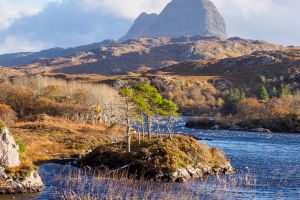
Stac Pollaidh is one of north-west Scotland’s most recognizable mountains, rising dramatically above a landscape scattered with lochs.
Its accessibility is part of the problem. The mountain receives tens of thousands of visitors, and constant foot traffic gradually widens paths and damages fragile vegetation. Recent infrastructure around the mountain was designed to accommodate more than 55,000 visitors a year.
A volunteer day can involve clearing blocked drainage channels, repositioning stones, repairing path edges, removing invasive vegetation or helping stabilize damaged ground.
The work is physical, but You are supervised and shown what to do.
Recommendation: do not think of this as a normal hiking day with a little volunteering attached. Expect several hours of bending, lifting and working with hand tools outdoors.
Stac Pollaidh
2. What You Need to Bring
Previous experience is not required, but reasonable fitness is important.
You should already feel comfortable spending a full day outside in mountain conditions. Waterproof clothing, warm layers, sturdy walking boots and gloves are essential.
Even in summer, Wester Ross can move rapidly between sun, mist, wind and rain.
Bring water, snacks and a small backpack, but check the event instructions before packing because tools and specialist equipment are normally organized for volunteers.
Tip: take spare socks. After several hours around wet moorland and drainage channels, they may become Your most appreciated luxury.

3. Stay in Ullapool
Ullapool makes an excellent base for conservation trips in the region.
The small harbour town sits between mountains and Loch Broom and has enough cafés and restaurants to make the evenings enjoyable without losing its remote Highland atmosphere.
Some multi-day volunteer events include hostel or bothy accommodation, an evening meal and transport between the accommodation and conservation site.
The waterfront hostel operates from April to October and has a communal kitchen, which is useful if You want to keep additional food costs low.
Food budget: set aside €15–20 for a casual lunch and €25–35 for a seafood dinner outside the volunteer programme.
A fish wrap at one popular seasonal seafood stop costs €17, while a larger seafood plate is €29.
4. Add a Free Day
If You are travelling this far north, do not leave immediately after the volunteering ends.
Add at least one free day for exploring Assynt.
Achmelvich is known for pale sand and clear water, while the landscape around Lochinver offers rocky peaks, lochs and walking trails. Stac Pollaidh itself can also be explored as a conventional hike once You have seen how much work goes into maintaining its paths.
A full ascent involves roughly 510 metres of climbing and generally takes two to four hours.
Recommendation: keep this extra day flexible. Highland weather rarely respects carefully organized itineraries, so choose between the beach and mountains after checking conditions that morning.
5. How Much Should You Budget?
The volunteering itself can be surprisingly inexpensive.
For selected multi-day events, accommodation, evening meаls and transport to the work site are included. That means Your main expenses are getting to Ullapool, meals outside the programme and any extra nights.
Allow €40–60 per day for food, coffee and personal expenses if accommodation is covered.
If You extend the trip independently, a comfortable additional daily budget is €90–140 per person including accommodation and meals.
For a two-day volunteering experience with an extra sightseeing day, €150–250 on the ground can be enough if the conservation programme includes Your stay and transport.

Why Try Volunteering?
The reward is not simply saving money on accommodation.
You learn why mountain trails need drainage, how erosion develops and why walkers should avoid creating shortcuts around damaged sections. By the end of the day, a cleared drain or repaired stretch of path suddenly becomes as satisfying as reaching a summit.
This is Highland travel with a purpose: spend two days helping protect the landscape, stay in Ullapool and add another day for beaches or hiking. You return home with the usual photographs—but also knowing that one small part of the mountains is in better condition because You were there.
Popular
Germany’s Wild Islands
Mudflat walks, beaches and millions of migrating birds make the East Frisian Islands one of Germany’s most unusual coastal escapes.
Island Without a Car
Isle of Man: steam trains, trams, and cliff walks – atmospheric and car‑free.
Highlands With Purpose
Paths by day, dinner in Ullapool by night – a fresh way to experience Scotland's northwest.
Victorian Island Escape
Isle of Man: steam trains, trams, and coastal walks – perfect for exploring without a car.