Portugal Beyond Lisbon
Portugal Beyond LisbonPosted by Kwame Johnson on 28-08-2026
Holiday Topics
Portugal may be compact, but the experiences change dramatically from one region to the next. Lisbon brings nightlife and tiled streets, Porto mixes river views with culture, the Algarve delivers golden cliffs, and the north becomes increasingly green and mountainous.
The latest travel guidance continues to highlight 11 destinations that together show how varied the country can be.
1. Algarve: Beaches and Cliffs
For a straightforward seaside holiday, start in the Algarve.
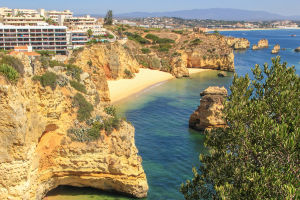
Portugal’s southern coast combines resort towns with quieter beaches backed by sculpted limestone cliffs. Swimming, surfing, boat trips and sea caves make it easy to build an active holiday, while families have plenty of calmer beaches and water parks.
The region receives around 300 days of sunshine in a typical year, although summer is also when crowds and accommodation prices peak.
Recommendation: travel outside July and August if you want warm weather with noticeably fewer visitors.
Algarve
2. Lisbon: City Energy
Lisbon works best if you enjoy cities that reward wandering.
Its hills are packed with tiled façades, old tram lines, viewpoints, historic neighborhoods and monumental architecture. Castelo de São Jorge dominates the skyline, while the tile museum offers a completely different way into Portuguese history.
After dark, the capital changes character again with bars, jazz clubs and nightlife stretching well beyond midnight.
Allow: at least three days before adding Sintra or the Setúbal coast.
3. Douro Valley
East of Porto, vineyards descend in steep terraces toward the Douro River.
The landscape becomes especially dramatic around Pinhão, where the river bends between vine-covered hills.
Many travelers visit on a day trip, but spending a night changes the experience completely. Once the tour buses disappear, the valley becomes much quieter.
You can reach it by train, car or boat, although the railway journey from Porto is one of the easiest scenic options.
Best for: slow travel and landscape photography.
4. Setúbal: Wilder Beaches
South of Lisbon, the Setúbal Peninsula offers an easy escape from the capital.
Costa da Caparica provides long Atlantic beaches and surfing, while Arrábida Natural Park feels more sheltered and dramatic, with green slopes falling toward small coves and clear water.
Praia do Portinho da Arrábida is one of the standout spots.
Tip: Setúbal works particularly well if you want beaches without travelling all the way to the Algarve.
5. Sintra: Fairy-Tale Portugal
Less than an hour from Lisbon, Sintra feels deliberately theatrical.
Pena Palace crowns the hills in bright colors, while castles, villas, gardens and forest paths disappear into the surrounding landscape.
Most visitors arrive for the day, which means the center becomes busy between late morning and afternoon.
Stay overnight and Sintra becomes much more atmospheric after the crowds leave and evening mist settles over the hills.
Recommendation: do not try to visit every palace in one day. Two major sights plus time to walk the town is a much better pace.
6. Évora: History and Food
Évora is one of the strongest choices for travelers interested in architecture.
Inside its medieval walls, Roman ruins sit near narrow lanes and an imposing cathedral.
But the city is not preserved as a museum. A large student population keeps it lively, and Alentejan cuisine gives you another reason to stay overnight rather than rush through.
Best for: two slower days between Lisbon and southern Portugal.
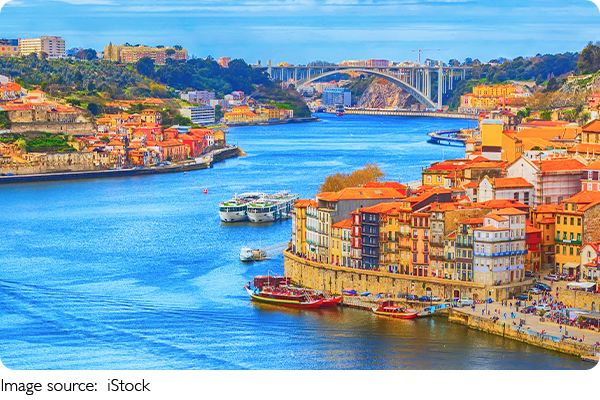
7. Porto: River Views
Porto offers a more compact and atmospheric alternative to Lisbon.
The historic center tumbles toward the Douro, with steep streets and waterfront buildings facing the port lodges across the river in Vila Nova de Gaia.
The city works particularly well as the starting point for the Douro Valley.
Tip: stay at least two nights before heading inland. Porto is small enough to explore on foot, but those hills make every kilometer feel longer.
8. Minho: Green Portugal
Northern Portugal becomes dramatically greener in the Minho.
Braga provides history and urban life, while Peneda-Gerês National Park brings mountains, old stone villages, waterfalls and hiking routes.
The region feels noticeably different from the drier south.
During summer, natural swimming holes become one of the best ways to cool down after hiking.
Best for: travelers who would choose hiking boots over a beach lounger.
9. Coimbra: University Life
Coimbra rises steeply above the Mondego River and revolves around one of Europe’s oldest universities.
Students still move through the historic center in traditional black capes, and the city has its own distinctive form of fado.
Its nightlife feels younger than many Portuguese historic towns without overwhelming the medieval atmosphere.
Allow: one full day, or stay overnight if traveling between Lisbon and Porto.
10. Óbidos: Walled Romance
Óbidos is small enough to explore without a detailed itinerary.
Its whitewashed houses, narrow lanes and medieval walls make it one of Portugal’s most photogenic towns.
Festivals bring extra energy, including medieval celebrations and literary events, but arriving early in the morning is often the best way to experience the town before day-trip crowds appear.
Best for: an easy stop between Lisbon and central Portugal.
11. Serra da Estrela: Mountain Escape
Portugal is not usually associated with alpine scenery, which is precisely why Serra da Estrela feels surprising.
The country’s highest mountain range offers rocky landscapes, hiking trails, traditional villages and winter activities when conditions allow. It is one of the strongest destinations for travelers who want to replace coastal Portugal with something colder, quieter and more rugged.
Build the Right Route
For a first 10-day trip, a practical route is Lisbon → Sintra → Porto → Douro Valley, with either the Algarve or central Portugal added depending on whether beaches or history matter more.
With two weeks, the journey becomes much more interesting: add Évora in the south or Coimbra and the Minho in the north rather than simply staying longer in the major cities.
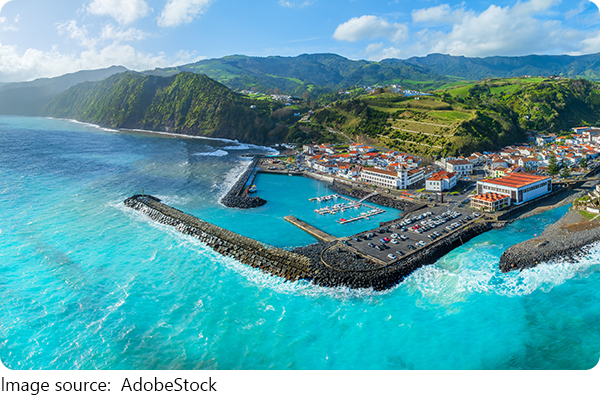
Portugal’s greatest advantage is variety within short distances. You can spend one morning beneath Lisbon’s tiled façades, another beside Douro vineyards and a few days later be walking beneath Algarve cliffs or mountain peaks in Serra da Estrela. The best trip is not the one that collects all 11 places — it is the one that combines three or four regions slowly enough to actually feel the difference between them.
Popular
Portugal Beyond Lisbon
Portugal rewards explorers – valleys, towns, beaches, trails.
Scotland’s Castle Trail
From royal forts to cliff‑edge ruins – eight castles that reveal Scotland through battles, legends, and landscapes.
Barcelona Beach Escape
Five different Barcelona coastlines – sightseeing, swimming, paddleboarding, and lazy Mediterranean afternoons.
Budapest Bath Escape
From rooftop pools to Ottоman domes, Budapest’s thermal baths turn an ordinary city break into a slow ritual.