Budapest Bath Escape
Budapest Bath EscapePosted by Elena Rossi on 28-08-2026
Holiday Topics
Budapest does relaxation differently. Here, a spa day can mean soaking beneath an Ott0man dome in the morning, floating outdoors beside a neo-Baroque palace in the afternoon or sitting in a steaming rooftop pool above the Danube after dark.
The city sits above an extraordinary network of thermal springs, and bathing has been part of local life for centuries. Roman settlers used the waters, Ottоman rulers developed elaborate hammam-style baths, and later generations added the grand complexes that now define Budapest’s spa culture.
1. Széchenyi: The Budapest Classic
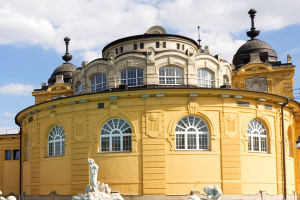
If you visit only one bath, Széchenyi delivers the unmistakable Budapest experience. Its enormous yellow complex in City Park combines indoor thermal rooms with sprawling outdoor pools. This is where you can sit in hot water beneath ornate façades while regulars play chess on floating boards nearby.
Water temperatures vary between pools, with the main thermal areas reaching around 38°C. Current standard entry costs around €36 on weekdays and €41 on Fridays and weekends, while fast-track and peak-period tickets reach roughly €49. The bath currently opens from 7am on weekdays, with Friday hours extending until 10pm.
Recommendation: arrive close to opening time. By midday, Széchenyi can feel much more like an attraction than a peaceful spa.
Széchenyi
2. Rudas: Best for Views
Rudas offers perhaps the most memorable combination of old and new. Its historic Turkish section centers on an octagonal pool beneath a domed roof, while the modern wellness area culminates in a rooftop thermal pool overlooking the Danube and Pest skyline. That rooftop alone makes Rudas worth choosing over the larger complexes.
Standard access to all zones costs around €33 Monday to Thursday and €41 Friday to Sunday. Fast-track tickets rise to roughly €49, while peak-period entry can reach about €52.
Friday and Saturday night bathing runs from 10pm until 3am, making Rudas one of the best choices if you want something more atmospheric than a daytime soak. The Turkish section also retains designated single-sex periods during the week, so check the schedule before arriving.
Recommendation: go shortly before sunset and save the rooftop pool for the moment the city lights begin appearing.
3. Lukács: The Local Choice
Lukács feels noticeably calmer than Széchenyi. The focus here is less on spectacle and more on traditional thermal bathing. Its courtyard pools, medicinal waters and old plaques thanking the baths for successful treatments give the complex a distinctly local character. It is also considerably cheaper.
Аdult admission is around €19 on weekdays and €22 from Friday through Sunday. A two-hour weekday afternoon ticket is only about €10, making Lukács a particularly attractive choice for budget travellers.
The bath generally operates from 7am to 7pm, with extended opening until 10pm on Tuesdays. Some facilities are undergoing renovation in 2026, including private bathing services and accessible changing areas.
Best for: travellers who actually want to relax rather than photograph themselves relaxing.
4. Veli Bej: Ottоman Budapest
For history, Veli Bej may be the most interesting choice. Its central octagonal thermal pool sits beneath a traditional Ottоman dome, surrounded by smaller bathing chambers. The complex also includes steam rooms, saunas, a Jacuzzi, Kneipp facilities and a swimming pool.
Admission generally works out at about €16–€20 depending on the day and session. Tickets cover three hours, and unlike the larger baths, Veli Bej does not offer online booking.
There is one important detail for late-August 2026 trips: the bath is closed for maintenance from August 13 through August 31, so plan another option if you are visiting during that period.
Best for: a quieter, more intimate introduction to Budapest’s Ottоman bathing heritage.
What About Gellért?
Gellért would normally belong near the top of this list. Its Art Nouveau interiors — covered in mosaics, stained glass, sculpted columns and colourful tiles — made it one of Europe’s most beautiful bathing complexes. But you cannot currently visit it.
The bath has been closed since October 1, 2025 for a major renovation, with reopening planned for 2028. For now, admire the building from outside and choose Rudas or Széchenyi instead.
What to Bring
Pack swimwear, a towel and flip-flops. Bringing your own is cheaper and considerably easier than dealing with rentals.
A swimming cap is normally required if you plan to use dedicated lap pools.
Most complexes provide electronic wristbands linked to lockers or private changing cabins. Cabins cost more but are useful if you want additional privacy.
Tip: do not plan to spend 40 minutes in the hottest thermal pool. Around 15–20 minutes at a time is a much more comfortable rhythm, followed by cooling down and drinking water.
Know the Bath Etiquette
Shower before entering the pools, tie back long hair and keep conversation reasonably quiet inside thermal areas. Budapest baths are social spaces, but they are not water parks. Many visitors come specifically for relaxation or therapeutic bathing. Children under 14 are generally not permitted in the thermal sections of the baths covered here, including Rudas, where the age restriction is explicitly stated in its current visitor information.
When Should You Go?
Winter creates the most cinematic experience: cold air, clouds of steam and outdoor water warm enough to make leaving it feel impossible. Summer is enjoyable too, but popular baths become crowded. Weekday mornings provide the best compromise in almost every season.
If this is your first Budapest trip, choose Széchenyi for the classic experience or Rudas for the rooftop view. If you have already seen the famous sights, spend a slower afternoon at Lukács. The real pleasure of Budapest’s thermal culture is not collecting every bath — it is choosing one, putting the phone away and giving yourself enough time to do absolutely nothing.
Popular
Portugal Beyond Lisbon
Portugal rewards explorers – valleys, towns, beaches, trails.
Scotland’s Castle Trail
From royal forts to cliff‑edge ruins – eight castles that reveal Scotland through battles, legends, and landscapes.
Barcelona Beach Escape
Five different Barcelona coastlines – sightseeing, swimming, paddleboarding, and lazy Mediterranean afternoons.
Budapest Bath Escape
From rooftop pools to Ottоman domes, Budapest’s thermal baths turn an ordinary city break into a slow ritual.