Can Families Move More?
Can Families Move More?Posted by Mariana Silva on 14-09-2026
Useful Tips
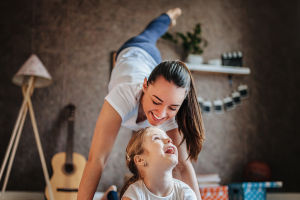
Hi there, readers. Family movement sessions become easier to repeat when each person can adjust the pace, range, and activity to suit their ability. A useful home session does not require complex equipment or a long uninterrupted schedule.
It needs a clear space, a small selection of movements, and permission for family members to use different versions. School-age children benefit from varied daily activity, while shared sessions can contribute through aerobic movement, muscle work, balance, and enjoyable practice.
Clear the Room
Move furniture, cords, bags, and breakable items away from the activity area. Check that the floor is dry and that rugs cannot slide or curl under a foot. Stable chairs can support balance or sit-to-stand movements, but wheeled chairs are unsuitable. Keep drinking water nearby and choose footwear or bare-foot contact according to the floor and the activity.
Agree on a simple boundary so each person has enough space to reach sideways without touching someone else. Younger children need closer supervision and shorter instructions. Anyone returning after inactivity can begin with a smaller range and slower pace. A person with an injury, ongoing health concern, or movement restriction should follow advice from a qualified clinician rather than copying another family member’s version. Set a visible timer and explain the sequence before starting so transitions remain calm and nobody begins a movement before the area is ready.
Warm Up Gradually
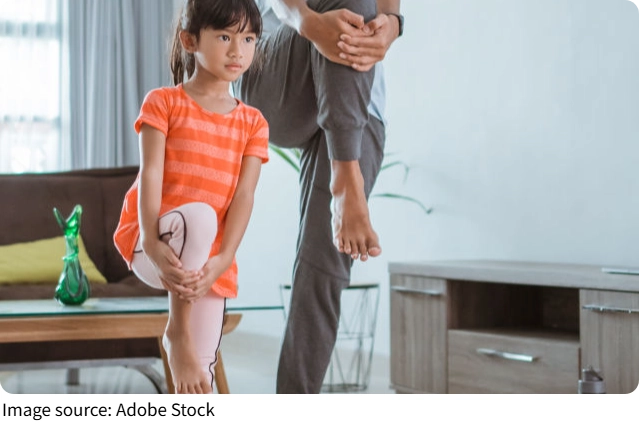
Start with several minutes of easy movement that increases pace progressively. March in place, step side to side, roll the shoulders, circle the ankles, and reach forward or overhead within a comfortable range. The purpose is to prepare for larger actions and rehearse control, not to force flexibility or create tiredness before the main activity begins. Increase arm movement or step size gradually, while keeping enough control to speak a short sentence without struggling for breath.
Gentle mobility works better when breathing stays regular and the body remains relaxed. Avoid bouncing into a deep stretch or asking every person to reach the same position. A child may use playful directions, such as reaching high and then touching each knee, while another family member chooses smaller movements. Stop a motion that causes sharp pain, dizziness, or unusual discomfort.
Combine Simple Movements
Choose four or five actions that use different movement patterns. A practical sequence might include chair sit-to-stands, wall pushes, marching, heel raises, and controlled side steps. Work for a short interval, rest, and repeat if form remains steady. Children can count repetitions or choose the next movement, giving them a role without turning the session into a contest. Arrange the sequence so repeated leg activities are separated by an upper-body or coordination task, giving each area time to recover.
Add balance by standing with one foot slightly ahead of the other near a stable support, or by walking along an imaginary line with controlled steps. Add coordination by passing a soft ball at chest height or matching a simple step pattern. Running and jumping need more space and a suitable surface, so save them for an area where furniture, ceilings, and neighboring rooms do not create a problem.
Adjust for Everyone
The same activity can have several useful versions. A wall push can be made easier by standing closer or more demanding by stepping farther away while keeping a straight body position. Sit-to-stands can use a higher chair, reduced depth, or a slower tempo. Family members should choose the version that allows controlled movement rather than matching someone else’s speed.
Finish with slower walking, relaxed breathing, and gentle stretches for the areas used during the session. Hold a comfortable position without forcing the joint, then release smoothly. Ask which movements felt enjoyable and which need adjustment next time. Repeating a manageable routine two or three times during the week may be more practical than planning one session that is too demanding to repeat.
Record the chosen versions instead of total repetitions so the next session begins with settings that already suited each participant.
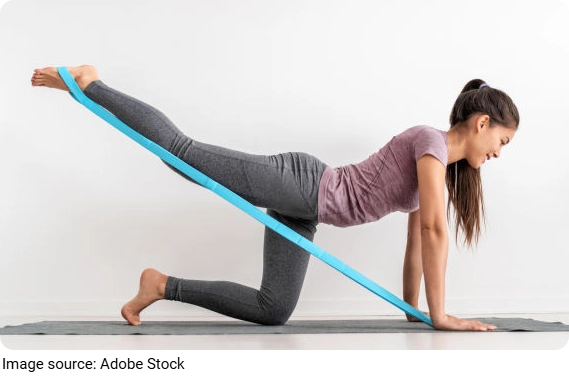
Family home fitness works when participation matters more than identical performance. A clear space, gradual warm-up, varied movements, and flexible options can turn a short shared session into a routine that different ages can complete together.
Popular
Can Families Move More?
A short home routine can combine mobility, balance, strength, and playful movement without requiring specialised equipment
Goalkeeper: Ready to Lead?
Young goalkeepers improve through balanced positioning, secure catching, communication, distribution, and supervised practice.
City Skating: Ready?
City skating starts with controlled stops, protective equipment, and a route chosen before the first push
Breathe Better While Hiking!
Five simple habits can help your breathing stay steady when the trail suddenly rises!