Hoop Height Secrets
Hoop Height SecretsPosted by Santosh Jha on 18-08-2026
Funny Facts
Have we ever looked at a basketball hoop and wondered why it stands at a certain height? A basketball setup may seem simple, but its size and height can affect shooting, movement, training, and safety.
When we understand these measurements, we can choose a suitable setup for a formal court, school, community space, or home. Let’s explore the main dimensions and see why each one matters.
Understanding The Base
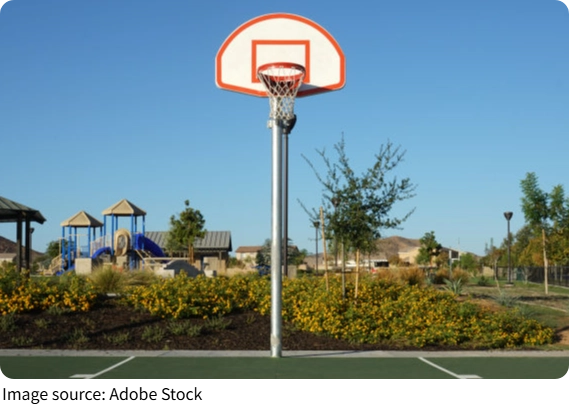
The base is the lower section that supports the entire basketball structure. A standard setup usually has a rectangular base that provides stability during play. Common international specifications indicate that the base should be at least 2 meters long and 1.2 meters wide.
A strong base helps keep the structure steady as players move around the court. The frame should also have suitable metal construction and enough thickness for reliable support. The raised edge around the base should be at least 5 centimeters high. Although these details may look minor, they help create a more secure playing area.
Checking The Extension Arm
The extension arm connects the main support structure to the backboard area. Its dimensions determine how far the hoop extends from the main frame. Standard designs commonly use an extension length between 3.20 and 4.20 meters, while the width may range from 1.80 to 2.20 meters.
For adjustable systems, the extension section can be changed to suit different players and activities. A practical adjustment range is around 2.90 to 3.20 meters for the hoop area. When we select a setup, we should check the fixed dimensions as well as the adjustment range instead of focusing only on appearance.
The Standard Competition Height
For major international basketball competitions, the usual hoop height is 3.05 meters from the playing surface to the rim. This has become the familiar standard for formal games and serious training.
At this height, we need to combine shooting control, timing, jumping ability, and accurate positioning. A consistent target also allows us to practice more effectively on different courts. When our training uses the same height as formal competition, our shooting habits can transfer more naturally to organized games.
Choosing A Youth Height
Younger players may find a full-height hoop challenging while they are still developing basic shooting skills. For youth games, a height between 2.80 and 3.05 meters can be suitable, depending on the players’ age, size, and physical development.
A slightly lower target allows young players to work on correct shooting form without depending only on strength. We can focus on hand position, balance, aiming, and follow-through. As players become more confident and capable, we can gradually raise the target toward the standard competition height.
Home Practice Options
For family use, many basketball setups are designed at around 2.40 to 2.60 meters. This range can work well for casual games and basic shooting practice, especially when younger players are involved.
A lower target makes it easier for children to reach the rim while learning. We can use this stage to build confidence and enjoy simple shooting challenges. If the system is adjustable, we can raise it gradually as skills improve, allowing the same equipment to remain useful for different stages of training.
Portable Hoop Heights
Portable basketball systems are designed with convenience in mind. Many have a height of about 1.80 to 2.20 meters, making them suitable for casual outdoor practice, community activities, or simple shooting games.
Their lighter construction makes moving and setup easier. However, a lower hoop does not fully reproduce the challenge of a regulation setup. If we want structured training, a system that can reach closer to 3.05 meters is more suitable. For relaxed practice, a lower adjustable option can be practical.
Choose The Right Setup
Choosing a basketball hoop is about matching the equipment to how we plan to play. Competition players need regulation measurements, younger players can benefit from a lower target, and families may prefer an adjustable system for different skill levels.
Before installation, we should also check the stability of the base, the frame, the adjustment mechanism, and the available playing space. Correct height matters, but stable placement is equally important for a comfortable playing experience.
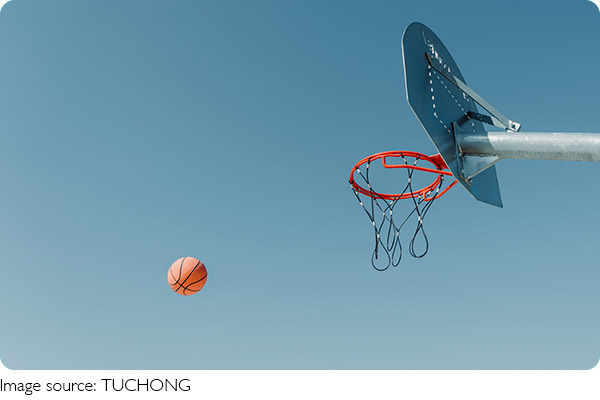
Play With Confidence
Understanding basketball hoop dimensions helps us make better choices and enjoy the game with greater confidence. From the base and extension arm to the rim height, every measurement has a practical purpose.
Lykkers, the next time we step onto a basketball court, take a moment to look at the hoop. Is the height right for our current skill level? Would an adjustable setting make practice more enjoyable? By choosing a setup that fits our needs, we can make each session more comfortable, useful, and fun.
Popular
Hoop Height Secrets
Is Your Basketball Hoop Too High or Low? The Simple Height Guide We Should Know Before Playing!
Perfect Passing Skills
Are Your Soccer Passes Too Weak or Too Strong? Simple Tricks We Can Use for Better Accuracy and Team Play!
Ride The Wind
Become a Windsurfer! Try These Simple Steps to Learn Windsurfing and Enjoy Your First Ride on the Water!
Smooth Skateboard Turns
Master Skateboard Turns! These Simple Tricks Can Help Us Ride Smoother, Turn Better, and Feel More Confident Every Time!