Ride The Wind
Ride The WindPosted by Mukesh Kumar on 18-08-2026

Useful Tips
Have we ever watched a windsurfer glide across the water and wondered how they control the sail and board at the same time?
Windsurfing may look complicated from the shore, but we can break it into a few simple skills. By learning the equipment, finding balance, lifting the sail, moving forward, and making basic turns, we can build confidence one step at a time.
Understand The Equipment
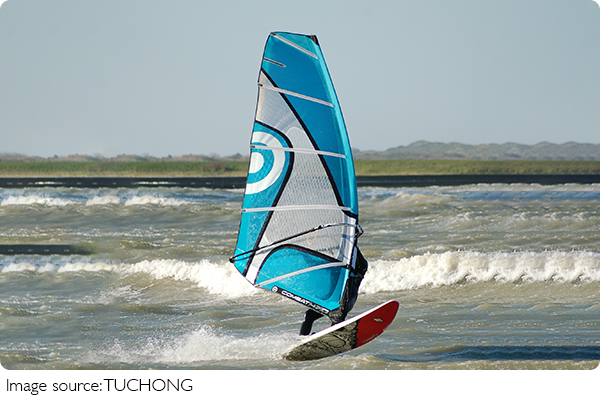
Before we enter the water, we should become familiar with our equipment. A beginner windsurfing setup has two main parts: the board and the rig. The board is where we stand, while the rig includes the sail, mast, and boom.
The underside of the board usually has one or more fins to help us travel in a stable direction. Some beginner boards also have a centerboard, which gives us extra stability and helps with control when moving slowly. When using a centerboard, we should lower it before starting.
The boom is the horizontal part we hold with our hands. A rope called the uphaul line connects near the lower mast area and helps us lift the sail from the water.
Move Into The Water
We should take the board into water deep enough for the fin to move freely without touching the bottom. Before climbing aboard, we pause and check the wind direction.
We position the board so the sail rests on the downwind side. Then we move toward the upwind side and carefully climb onto the middle section. At first, simply staying balanced can feel like a real achievement, so we should give ourselves time to adjust.
Lift The Sail Slowly
Once we are stable, we bend our knees slightly and take hold of the uphaul line. We pull upward in a controlled way, using our legs and body position instead of relying only on our arms.
We should keep our back reasonably upright. If we bend too far forward, we may place unnecessary pressure on our lower back. As the sail rises, we can hold the mast with both hands and let the sail move naturally with the breeze.
This relaxed position is useful because we can control the equipment without using too much strength.
Learn Basic Control
From the control position, we begin to notice how small mast movements affect the board. Tilting the mast gently can change the direction of the board. We should make small movements and watch how the nose responds.
When the wind becomes stronger, the board can react more quickly, so beginners usually benefit from practicing in manageable conditions. Our goal at this stage is not speed. We are learning how the sail, board, and wind work together.
Start Moving Forward
When we feel ready, we place our front hand on the boom and guide the sail toward the front of the board. Then we place the second hand on the boom.
We lean slightly away from the sail while keeping our arms comfortably extended. The mast should remain fairly upright compared with the board. This creates a stable body position that is easier to maintain.
Our rear hand controls much of the sail's power. Pulling gently can increase movement, while easing the hand can reduce it. We keep our feet positioned behind the mast base and point the front foot generally forward.
Practice A Simple Turn
To change direction, we return to the control position and gently tilt the mast. As the board turns, we carefully walk around the mast and move to the opposite side.
After placing our feet securely, we can take the boom again and continue in the new direction. It may feel awkward during the first few attempts, but repeated practice helps us understand the timing.
We should avoid rushing. A slow, controlled turn teaches us much more than a quick movement we cannot manage.
Choose Suitable Conditions
Our learning experience depends greatly on the conditions around us. We should check the weather, wind strength, tides, currents, water traffic, and local wildlife before going out.
A wide beginner board is often easier to balance on than a narrow performance board. We should also choose a sail that matches our experience and the local wind conditions. Most importantly, we should be able to swim confidently and practice where suitable instruction or assistance is available.
Enjoy The Learning Process
Windsurfing becomes much easier when we treat each attempt as a small lesson. Falling into the water, losing balance, or making an imperfect turn can all help us understand what to adjust next time.
Lykkers, we do not need to master everything in one session. We can begin with balance, then add sail control, forward movement, and turning as our confidence grows. With patience and suitable conditions, each short ride can become smoother and more enjoyable.
So, which part would we like to try first: lifting the sail, moving forward, or making our first turn?
Popular
Hoop Height Secrets
Is Your Basketball Hoop Too High or Low? The Simple Height Guide We Should Know Before Playing!
Perfect Passing Skills
Are Your Soccer Passes Too Weak or Too Strong? Simple Tricks We Can Use for Better Accuracy and Team Play!
Ride The Wind
Become a Windsurfer! Try These Simple Steps to Learn Windsurfing and Enjoy Your First Ride on the Water!
Smooth Skateboard Turns
Master Skateboard Turns! These Simple Tricks Can Help Us Ride Smoother, Turn Better, and Feel More Confident Every Time!