City Skating: Ready?
City Skating: Ready?Posted by Caleb Ryan on 01-09-2026

Useful Tips
Hello, readers. This article explains how beginners can use roller skates in city spaces while building control, awareness, and safer route habits. Urban skating requires more planning than practice in a closed rink because surfaces, slopes, pedestrians, and traffic can change within a short distance.
A beginner should start on a level paved area before considering longer routes or features such as stairs. The first session should focus on balance, stopping, and turning rather than distance or speed.
Choose a Practice Area
A suitable starting area is level, dry, smooth, and separated from moving vehicles. Inspect the full practice zone before putting on skates, looking for cracks, raised joints, loose stones, standing water, sand, and other debris. Leave enough open space to glide, slow down, and stop without reaching a curb, wall, stair edge, or group of pedestrians. Repeat the inspection whenever weather, maintenance work, or heavier foot traffic changes the area during practice.
City stairs may look useful for a photograph, but they are not appropriate for a first practice session. A beginner needs a predictable surface where each movement can be repeated without an unexpected drop or narrow landing. Check local signs and facility rules because some plazas, paths, and public spaces restrict skating or set specific hours for wheeled activities.
Fit Protective Equipment
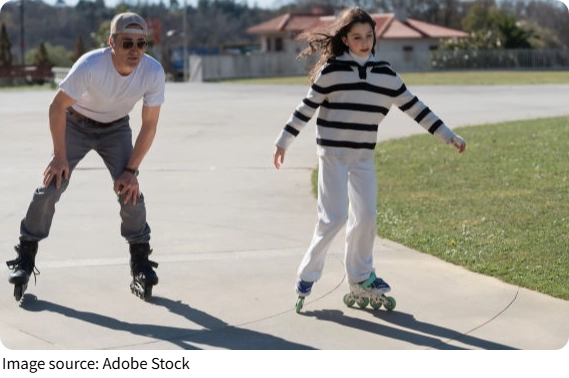
Protective equipment should be fitted before movement begins. A helmet needs a level position, a secure strap, and a close fit that does not shift when the skater moves the head. Knee pads, elbow pads, wrist guards, and gloves add protection for the body parts that commonly reach the ground during a loss of balance.
Skates should feel secure around the foot and ankle without causing numbness or pressure points. Check that wheels rotate, fasteners are secure, and the stopping component matches the skate design and is not excessively worn. Clothing should allow the knees and hips to bend freely, while laces and loose fabric should remain clear of the wheels.
Build Control First
Begin in a stable stance with knees bent, hips slightly lowered, chest upright, and feet about hip-width apart. Practice small weight transfers from one foot to the other before adding a gentle push. Keep the first glides short so speed stays low enough for deliberate corrections, and look toward the intended route instead of watching the skates continuously.
Stopping deserves its own practice block because different roller-skate designs use different hardware and techniques. Learn the method recommended for the specific skates from a qualified instructor, then repeat it from walking speed until the action becomes consistent. Add wide turns after stopping is dependable, using controlled pressure and a low stance instead of abrupt upper-body movement.
Read City Conditions
Before a longer session, walk the route and identify slopes, crossings, driveway entrances, crowded sections, and places where the surface changes. Choose daylight and clear visibility, and select a pace that leaves time to respond to other path users. On a shared route, pass with space, signal your presence calmly, and slow down near children, animals, doorways, and blind corners.
Conditions should be checked again during the session because water, grit, or increasing foot traffic can make a familiar section less predictable. If a slope creates more speed than the skater can stop from comfortably, remove the skates and walk that portion. End the session when balance or stopping quality declines, since fatigue often appears first as an upright stance, rushed steps, or delayed reactions.
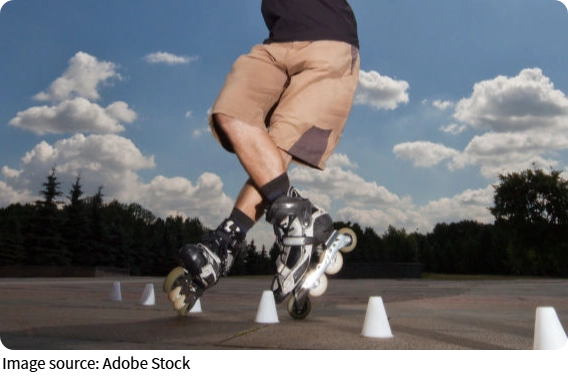
Urban roller skating becomes more manageable when route choice, equipment, and stopping skill are treated as one preparation process. Build dependable control on a level traffic-free surface before adding distance, slopes, or complex city features.
Popular
City Skating: Ready?
City skating starts with controlled stops, protective equipment, and a route chosen before the first push
Dare to Skip the Lift?
Escape resorts to carve fresh powder by mastering touring gear, uphill climbing techniques, and vital avalanche safety.
Tame the Wild Winds?
Master wind currents, essential safety gear, and cliff-edge launches to cheat gravity and survive your first unpowered flight.
Wing Suit Landing
How Do Wing Suit Flyers Actually Land Safely After Gliding Through the Sky With Careful Parachute Control?