Exercise Builds Kids' Focus
Exercise Builds Kids' FocusPosted by Ethan Sullivan on 02-06-2026

On Trend
Hi, Friends! If you have ever watched a child bounce off the walls right before sitting down to do homework, you already know there is a deep connection between a child's body and their mind.
What if that restless energy, when channeled into regular movement, could actually make your child sharper, calmer, and more focused? The good news is, it absolutely can. And the earlier you start building those habits, the better.
Why Movement and Focus Are So Connected
Physical activity not only benefits a child's health but also plays a vital role in enhancing their ability to focus. Studies have shown that physical exercises improve blood circulation to the brain. "Movement is one of the most powerful ways to improve attention," say experts. "It increases oxygen flow to the brain, which enhances alertness and cognitive performance." So when your little one runs around the yard or rides a bike, something remarkable is happening inside their head, not just their body.
Exercise fosters the formation of new neuronal connections, supporting complex learning processes. This means that building a habit of moving regularly from a young age is truly investing in your child's brain development, not just their fitness.
The Real Impact on School and Learning
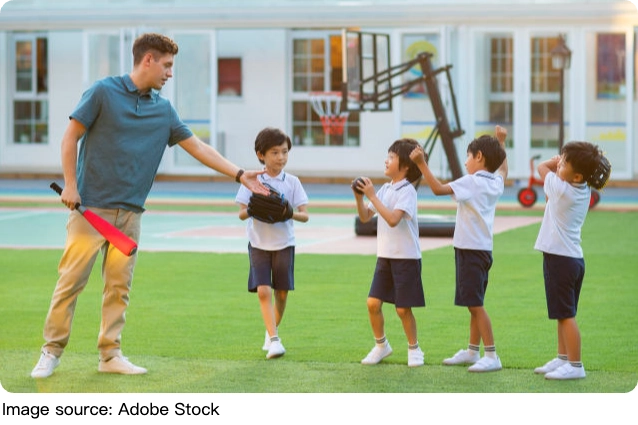
Improved focus in children has many benefits. It can improve academic achievement, better decision-making, and a prolonged attention span. There is a strong correlation between regular physical activity and academic success. Studies show that children who participate in exercise tend to perform better in subjects like math and reading.
Research shows that when students participate in physical education before or during academic classes, they are more attentive and achieve higher test scores. The physical exertion helps to "reset" their attention capacity, allowing them to focus better on subsequent tasks. That reset is something every parent and teacher wishes they could give a child mid-afternoon when energy dips and attention wanders.
Sports that require decision-making help to activate the mind, which primes the brain to pay attention for longer. Studies show that primary and middle-school-age children gain the most benefit, in terms of enhanced cognitive function.
Exercise as a Stress Reliever for Little Minds
Today's children are not immune to stress, and it can significantly affect their concentration and learning. Exercise is a proven stress reliever, known to reduce fatigue, improve alertness, and enhance overall cognitive function. We often forget that children carry their own emotional weight too, and movement gives them a healthy way to release it.
Exercise is known to reduce fatigue, improve alertness, and enhance overall cognitive function. By engaging in regular physical activity, children can manage stress more effectively, leading to improved concentration in academic settings and beyond.
The Social Side of Moving Together
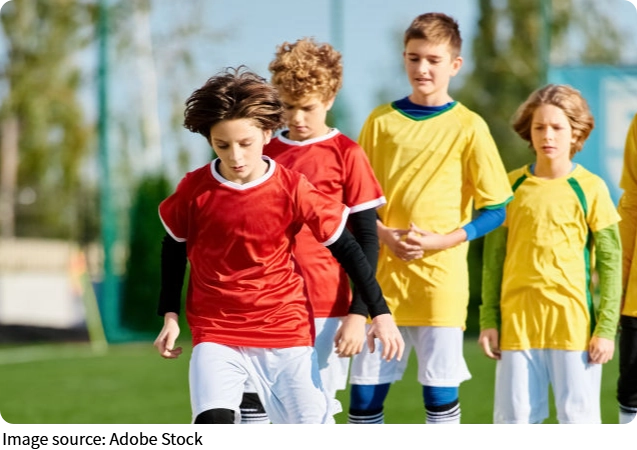
Exercise often involves a social component, whether it is team sports or group activities like dance classes. These interactions can further enhance focus and attention in children. Social sports and activities teach children to pay attention to rules and the actions of other participants, sharpening their ability to concentrate amid various stimuli. So playing with others is not just fun, it is actually brain training in disguise!
Children who are able to focus well learn languages more quickly, develop stronger social skills, and approach challenges with greater tolerance for frustration. In short, they are more resilient and better prepared for school in the long run.
How to Build the Habit Early and Keep It Going
To harness the full benefits of exercise for enhancing concentration, consistency is key. Children benefit greatly from a structured routine that includes daily physical activities. You do not need expensive gear or a fancy gym membership to make this happen.
Parents and educators looking to boost concentration in children should encourage them to engage in at least an hour of physical activity each day. This aligns with guidelines from health organizations which recommend 60 minutes of moderate-to-vigorous physical activity daily for children and adolescents. Integrating this into the daily routine can be as simple as a morning walk, an afternoon bike ride, or playing in a local park.
As with all other developmental skills, it is easier to build in the preschool years than later on in life. Healthy habits formed in childhood, particularly regular physical activity, can lead to primary health benefits into adulthood, including reduced obesity and cardiovascular issues, all of which contribute to sustaining cognitive health efficiently.
The beautiful thing about raising an active child is that you are not just helping them sit still in class today. You are giving them a tool they will carry for the rest of their lives. Start small, stay consistent, make it joyful, and watch your child's focus, confidence, and curiosity grow alongside their love for movement. You have got this, and so do they!
Popular
Mastering Backstroke Basics
Learn body position, arm technique, kicking, breathing, and key backstroke skills.
Exercise Builds Kids' Focus
Starting physical habits early can shape how well your child concentrates, learns, and grows for life.
Surfing Tips for Beginners
Everything You Need to Know to Build Confidence, Stay Safe, and Catch Your First Waves
Daily Pilates Benefits
Slimmer waist, leaner legs, better posture - here is what really happens when you stick with Pilates every day.