Bamboo Growth Secrets
Bamboo Growth SecretsPosted by Mariana Silva on 22-05-2026

On Trend
Put a mark on a bamboo shoot at dusk and check again in the morning. In the right conditions, that mark will be noticeably higher off the ground.
Not because the mark moved — because the bamboo grew past it overnight. Some species pack on nearly four feet of height in a single 24-hour period. No other plant on Earth comes close.
Bamboo Is Not a Tree
That's the first surprise. Bamboo belongs to the grass family, Poaceae, which makes the giant species the largest grasses in the world. Understanding that matters because bamboo grows the way grasses grow, not the way trees grow — and that difference is exactly what makes its speed possible. Trees build mass slowly through growth rings that progressively thicken the trunk. Bamboo grows straight up at constant diameter, without wasting any energy thickening its stalk. Every bit of effort goes into height.

The Underground Energy Reserve
The real secret is buried beneath the soil. Bamboo maintains an extensive network of underground stems called rhizomes, and these structures spend years quietly accumulating energy in the form of starches and sugars. By the time a new shoot emerges from the ground, it isn't starting from scratch — it's drawing on a massive pre-loaded energy bank that has been building for seasons. This means the emerging shoot doesn't need to photosynthesize at all during its explosive vertical push. It grows heterotrophically, fueled entirely by stored reserves, until it reaches its full height.
The Multiple Growth Zones
Most plants grow from a single point at the tip of the stem, called the apical meristem. Bamboo is built differently. Across the length of the culm — the stalk — there are multiple growth zones located at each node, or joint. These are called intercalary meristems, and they are capable of simultaneous cell division and elongation. A new bamboo shoot emerges from the ground with all its segments already pre-formed but tightly compressed. When growth is triggered, every single segment begins expanding at the same time. Dozens of sections elongating concurrently, rather than one tip growing incrementally — that's the mechanism that produces the staggering numbers.
How Fast, Exactly
The fastest-growing bamboo species can add up to 91 centimeters in a 24-hour period under optimal conditions. Some species, including Madake bamboo, have been recorded exceeding 120 centimeters — nearly four feet — in a single day. The full growth season lasts only three to four months, after which the culm reaches its final height and stops growing taller permanently. It doesn't add height in subsequent years. Instead, it spends the following seasons hardening and maturing, developing the structural density that makes bamboo so remarkably strong.
What the Plant Needs to Pull This Off
All of this biological machinery requires serious external support. Bamboo thrives at temperatures between 65°F and 80°F and has an extremely high demand for water — the rapid cell elongation process consumes moisture at a rate most plants never approach. Well-draining, fertile soil rich in organic matter is essential for maintaining the nutrient supply. And the above-ground stalks need several hours of direct sunlight daily to replenish the underground energy reserves that the growing culm is draining so rapidly.
It's a system built entirely around speed — underground storage, simultaneous expansion, no wasted energy on unnecessary bulk. The result is a plant that rewrote what's possible in the plant kingdom.
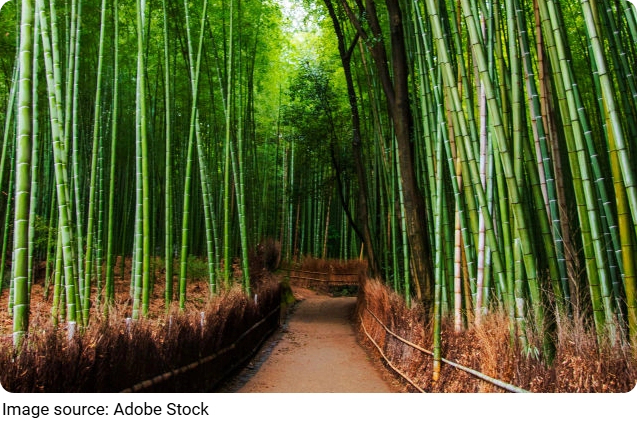
Bamboo’s extraordinary growth speed comes from a unique combination of underground energy storage, specialized growth zones, and efficient resource use. These adaptations allow it to grow faster than any other plant on Earth, making bamboo one of nature’s most remarkable examples of biological efficiency.
Popular
Bamboo Growth Secrets
This plant grows nearly 4 feet in a single day — and the biology behind it is genuinely astonishing
Amazing Carnivorous Plants
Discover how these plants trap and digest insects to survive in nutrient-poor habitats
Eucalyptus Drought Secrets
This tree sheds its own leaves to survive drought — and that's just the beginning of its bag of tricks
Wisteria in Bloom
Few plants put on a flower show this dramatic — here's the real science behind wisteria's legendary blooms