Renewable Support Shift
Renewable Support ShiftPosted by Caleb Ryan on 17-11-2026
Odd News
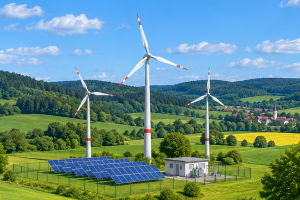
Germany is expected to spend €4.2 billion less than originally planned on renewable-energy support in 2026. The reduction reflects two important developments: higher electricity market prices and the gradual expiry of older support agreements for wind and solar installations.
Although lower subsidy costs offer relief to the federal budget, the change also highlights how Germany's renewable-energy financing system is evolving. The amount of public support required depends not only on the number of renewable installations but also on electricity prices, the terms of existing contracts, and the changing costs of clean-energy technology.

Why Renewable Energy Support Costs Are Declining
Germany's Renewable Energy Act (EEG) established a system designed to provide financial certainty for renewable electricity producers. Under the arrangement, eligible wind and solar operators receive a guaranteed minimum payment for electricity supplied to the grid.
When the market price falls below the agreed remuneration level, the government covers the difference. This mechanism helps protect project operators from fluctuations in wholesale electricity prices and makes long-term investment easier to finance. However, when electricity prices rise, the gap between the guaranteed payment and the market price becomes smaller. As a result, the government needs to provide less financial support.
The Renewable Energy Federation (BEE) estimates that the cost of EEG support in 2026 will be €4.2 billion below the amount originally budgeted. Higher electricity prices are a major reason for the reduction.
Higher Electricity Prices Reduce the Subsidy Gap
Germany's electricity prices remain influenced by the composition of its power generation mix. Gas-fired power stations can affect wholesale prices, particularly when they are needed to meet demand or balance fluctuations in renewable electricity production. When gas contributes to higher market prices, renewable generators receiving guaranteed remuneration may require smaller payments from the state.
This reduces the government's subsidy obligations even though the underlying renewable installations continue producing electricity. The relationship demonstrates an important feature of support schemes based on guaranteed prices: public expenditure can move in the opposite direction to wholesale electricity prices.
Older Renewable Energy Contracts Are Expiring
Another factor is the gradual end of older support agreements. Under Germany's EEG system, eligible wind and solar installations generally receive guaranteed remuneration for 20 years. Many installations built during the early stages of Germany's energy transition benefited from higher support rates. At that time, solar panels, wind turbines, and associated equipment were considerably more expensive than modern alternatives.
Technology improvements and larger production volumes have since reduced the cost of installing renewable capacity. Consequently, newer projects can often operate with lower financial support than older installations required. As contracts from earlier investment periods reach the end of their guaranteed payment terms, the government gradually faces fewer obligations under those agreements.
Why Lower Subsidies Do Not Automatically Mean Lower Electricity Bills
The federal budget and household electricity bills are connected, but they are not the same financial measure. Since 2022, payments under the EEG support system have been financed through the federal budget rather than a dedicated surcharge on electricity bills. Lower government expenditure can therefore improve public finances, but it does not automatically translate into an immediate reduction in household energy costs.
Storage and Grid Infrastructure Remain Important
A growing share of wind and solar power can reduce reliance on conventional generation, but renewable output changes with weather conditions and time of day. Electricity systems therefore need sufficient flexibility to balance supply and demand. Battery storage can absorb surplus electricity during periods of strong generation and release it when production falls.
Expert Insight
Ursula Heinen-Esser, head of the German Renewable Energy Federation (BEE), emphasised the importance of expanding renewable generation alongside storage capacity: “This can only happen through a growing share of renewables in the grid and more storage.”
What the Changes Mean for Future Investment
Germany is reviewing its renewable-energy support framework as older contracts expire and newer projects become more competitive. The aim is to control public expenditure while maintaining conditions that encourage investment in wind and solar capacity. Predictable rules remain important because renewable-energy projects require substantial initial financing and often take years to plan and construct.
Changes to guaranteed payments can influence borrowing costs, investment decisions, and the financial risks faced by developers. A sustainable system will need to balance three objectives: affordable electricity, reliable supply, and continued investment in renewable generation and supporting infrastructure.

The reduction provides financial relief, but it does not by itself guarantee lower household electricity bills or eliminate the need for public support. Continued investment in renewable generation, storage, and grid infrastructure will remain important for maintaining an affordable and reliable electricity system.
Popular
Global Trade Under Strain
Higher shipping and energy costs make it harder for developing economies to benefit from rising trade.
Crypto Trading Basics
Before placing an order, compare fees, check who holds the assets, and decide how much to risk.
Budgeting for Your Next Home
Before moving to a larger or better-located place, weigh the upfront costs and the effect of a bigger loan.
Mindfulness and Sleep
How mindful awareness and relaxation practices can support healthy sleep