Why Automatics Are Easier
Why Automatics Are EasierPosted by Arjun Mehta on 12-11-2026
On Trend
Getting a car moving is one thing. Doing it smoothly in slow traffic or when you’re trying to park is another.
The difference between a manual and an automatic is easiest to notice at low speeds, when small adjustments matter most.
The clutch pedal
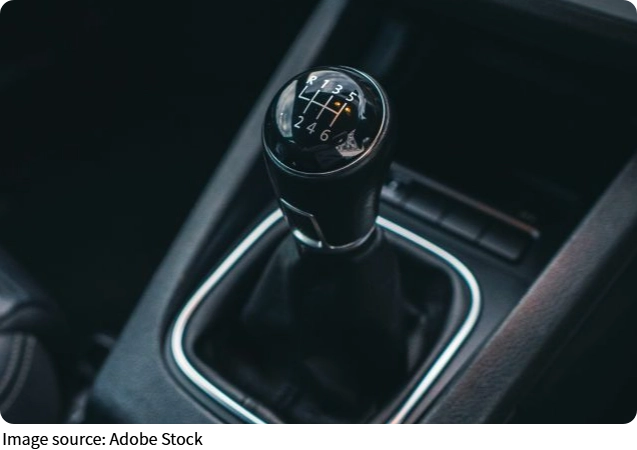
A manual car has three pedals. The left one, the clutch, is often the trickiest for beginners. To get moving, you press it to select a gear, then ease it up to the point where the engine starts to turn the wheels. Release it too quickly and the engine can stall.
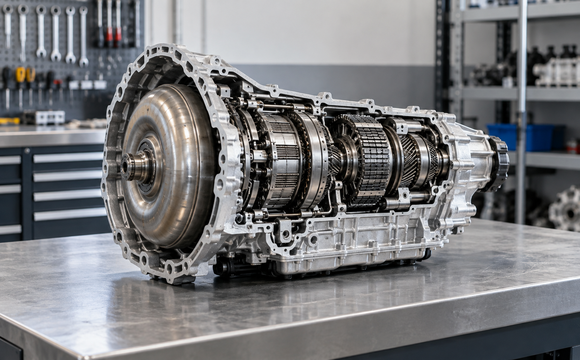
An automatic removes that pedal entirely. In a conventional automatic, a torque converter uses fluid to transfer power from the engine to the gearbox. Other designs handle that connection differently, but none requires the driver to find the point where the clutch engages.
Stop-and-go traffic
Think about a traffic jam on the 405 in Los Angeles, creeping forward a few feet at a time. In a manual, each move from a standstill means selecting first gear and easing the clutch out. When the line stops again, you press the clutch and brake.
In an automatic that creeps at idle, you can usually ease off the brake to roll forward and press it again to stop. If the line picks up speed, the transmission changes gears as you accelerate.

Hills and parking
Starting on a steep driveway in a manual takes coordination. You need to keep the car from rolling while you bring the clutch to the point where it engages. If the car has hill-start assist, it can hold the brakes briefly as you move your foot from the brake to the gas.
Parallel parking can be easier in an automatic, too. Bring the car to a full stop before switching between Drive and Reverse. On level ground, if the car creeps at idle, you can often control that slow movement with the brake alone.
Less to think about
A new driver in a manual has to decide when to shift, and an abrupt shift can make the car jolt. In an automatic, there’s no need to judge the timing of each gear change. That leaves one less task to manage while steering and watching the road.
Why some drivers prefer a manual
Plenty of drivers prefer choosing their own gears. On a winding road, for instance, some enjoy timing a downshift before a corner. If you’re comparing cars to buy, look at the price and likely repair costs for each model rather than assuming that the manual will cost less.
If you’re learning in an automatic, use your first sessions to get comfortable with mirror checks and judging gaps. Leave clutch practice for a separate lesson if you plan to drive a manual.
Popular
Norway's EV Shift!
What does this change mean for EV drivers? Norway welcomes a new approach to fast-charging infrastructure!
Europe's Car Costs!
Why are European drivers paying more? Examine how changing car rules may affect buyers and automakers!
EU Car Ban Changes!
Could petrol cars stay beyond 2035? EU lawmakers back softer emissions targets, giving automakers room!
EV Success Cuts Into Profit
German carmakers sell more EVs than expected, but a gap between demand and profitability is emerging.