A Hidden Botanical Wonder
A Hidden Botanical WonderPosted by Raghu Yadav on 02-11-2026
Green Plant
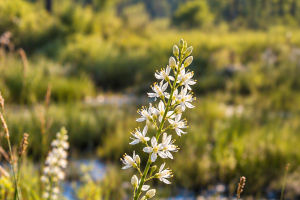
Finding a completely new plant species in a well-explored region might seem unlikely. Yet scientists have made precisely such a discovery in New Jersey's Pine Barrens, an extensive landscape of forests, sandy soils and unusual wetlands.
The plant, distinguished by delicate white, star-shaped flowers, had remained scientifically unrecognised despite decades of botanical research. Its identification in 2026 demonstrates that even familiar natural environments can conceal remarkable biodiversity.

A Discovery Hiding In Plain Sight
Botanist Sasha Eisenman, a professor at Temple University, identified the plant after investigating unusual specimens belonging to the false asphodel group.
For years, researchers assumed these plants represented a northern population of a species already known elsewhere along the American coast. However, subtle differences in their appearance raised questions about that classification.
Eisenman examined historical botanical collections, collected fresh specimens and compared their genetic characteristics with related plants.
The results confirmed a distinct species, formally named Triantha × novacaesariensis in March 2026. Its name refers to Nova Caesarea, the Latin name historically associated with New Jersey.
An Ancient Evolutionary Mystery
The plant's origins are particularly fascinating. Genetic evidence suggests that two different false asphodel species interbred thousands of years ago, producing a hybrid population.
Eventually, both parent species disappeared from New Jersey, leaving their descendants geographically isolated.
Over many generations, this population followed its own evolutionary path, developing characteristics that distinguish it from related species.
Researchers believe the separation may date back to approximately the end of the last ice age.
The discovery provides an intriguing example of how hybridisation and isolation can contribute to plant diversity.
Why This Rare Flower Needs Protection
Although its scientific identification is recent, the plant is already considered critically imperilled globally.
Unlike related species found across wider geographical areas, Triantha × novacaesariensis is known only from a small number of locations within New Jersey.
Its survival depends on specialised wetland environments, including riverside savannas and habitats associated with Atlantic white cedar and pitch pine.
Development, vehicle disturbance and changing environmental conditions threaten these delicate ecosystems.
Protecting the plant therefore requires conserving the wider landscape rather than focusing exclusively on individual specimens.
A Remarkable Region Of Biodiversity
The Pine Barrens is recognised as a UNESCO Biosphere Reserve because of its distinctive ecological characteristics.
The region supports at least 850 plant species, including 92 classified as endangered or threatened.
Despite its protected status and extensive scientific history, researchers believe additional discoveries may remain possible.
Lena Struwe, director of the Chrysler Herbarium at Rutgers University, has highlighted how unusual it is to identify an entirely new species in a densely populated and carefully studied American state.
Why Historical Collections Matter
Botanical discoveries often depend on specimens collected many decades earlier.
Herbaria preserve dried plants alongside information about their original locations, allowing researchers to compare historical populations with modern examples.
Such collections can reveal subtle differences that earlier scientists overlooked.
The latest discovery also demonstrates the value of combining traditional fieldwork with modern genetic analysis.

Nature Still Holds Surprises
The identification of this rare flowering plant shows that scientific discovery is not limited to remote rainforests or unexplored islands. Important biological mysteries can exist within landscapes that people have visited for generations.
Protecting these environments may preserve species whose remarkable histories have yet to be uncovered.
Popular
Gardens That Stop Floods
New research reveals how clever planting can dramatically reduce stormwater damage and protect homes from flooding.
A Hidden Botanical Wonder
A rare flowering plant found nowhere else on Earth reveals surprising secrets in a familiar American forest.
Invasive Plants Move
As the planet warms, invasive plants are shifting northward, putting fragile ecosystems at risk!
Protecting Native Forests!
Can forests naturally resist invasive trees? New research reveals how native growth helps restore biodiversity!