Forests Hold Big Secrets!
Forests Hold Big Secrets!Posted by Lucas Schneider on 29-10-2026
Green Plant
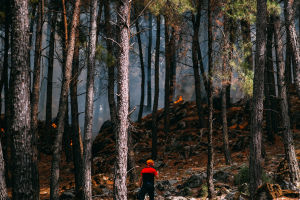
Forests can take decades to reveal the full effects of how they are managed. A long-running experiment in Victoria, Australia, has offered a surprising lesson: removing some trees from a dense forest may allow the remaining ones to grow much larger without reducing the amount of carbon stored in the woodland.
The results challenge the idea that forest management must always choose between producing timber and protecting important environmental benefits.
A Long-Term Experiment Rediscovered
The research began in the late 1980s as part of an effort to compare different ways of managing mountain ash forests. Scientists established experimental areas at Tanjil Bren in Victoria’s Central Highlands and Cabbage Tree Creek in East Gippsland. They examined several approaches, including clearing large or small sections of forest, removing a substantial proportion of trees, and leaving other areas untouched for comparison.
The project tracked how forests regenerated under these different conditions. Researchers recorded the growth of young trees and observed how the surrounding vegetation developed. Early findings showed that mountain ash regenerated strongly in larger cleared areas. Where more of the original canopy remained, or where openings were smaller, other plants, including acacias, became more prominent.
Over time, however, the project received less attention. Access to the research site became difficult, and the original experiment faded from view. Yet the trees continued growing, creating an opportunity to examine how the different approaches had shaped the forest over several decades.
Why Some Trees Grew So Large
Researchers returned to the Tanjil Bren site in 2014 and were struck by the condition of the heavily thinned sections. The trees left standing had grown remarkably large, even though the forest had not been managed recently. The explanation lies partly in competition. In a dense forest, trees compete for sunlight, water, nutrients and room to expand. Removing some trees can reduce that competition, allowing those that remain to use more of the available resources.
The largest trees in the thinned areas had reached impressive dimensions. At roughly 80 years old, the biggest trees averaged more than one metre in diameter at chest height, while some exceeded 1.5 metres. Their diameters were about 20% greater than those of the largest trees in the untouched comparison areas.
Carbon Storage Brought Another Surprise
Tree growth was not the only result that caught the researchers’ attention. The thinned sections also performed well when scientists assessed the carbon stored in their wood. Trees absorb carbon dioxide as they grow and retain carbon in their wood material. Forest management can therefore influence how much carbon remains stored in a woodland over time.
In this experiment, the thinned stands had recovered the carbon removed during the earlier treatment. After approximately 30 years, they held as much or more carbon in their wood than the untouched comparison areas. The finding matters because thinning is sometimes viewed as an automatic loss for climate protection. The results show that the longer-term picture can be more complicated.
Although removing trees initially reduces the amount of carbon held in a stand, the growth of the remaining trees may help make up that difference. However, the outcome should not be treated as a guarantee for every forest. Tree species, local conditions, climate and management methods can all influence the results.
What the Findings Mean for Forest Management
The study offers a useful reminder that forests respond differently to different management approaches. Large cleared areas supported strong mountain ash regeneration, while thinning encouraged especially substantial growth among the trees left behind. Each approach produced a different forest structure.
That variety can be important. Older, larger trees can develop natural hollows that provide shelter for some forest-dwelling species. Meanwhile, the growth of other vegetation can add layers to the woodland and create different conditions across the landscape.
The rediscovered experiment shows why forest management deserves a closer look than simple comparisons between untouched woodland and harvested areas. In Victoria, thinning allowed selected mountain ash trees to grow exceptionally large while the stands recovered their earlier carbon losses.
The findings do not suggest that one method should be used everywhere. Instead, they highlight the importance of matching management decisions to local conditions and long-term goals. By maintaining research sites, tracking changes over decades and learning from past experiments, scientists can build a clearer picture of how forests grow and how their resources can be managed responsibly.
Popular
Gardens That Stop Floods
New research reveals how clever planting can dramatically reduce stormwater damage and protect homes from flooding.
A Hidden Botanical Wonder
A rare flowering plant found nowhere else on Earth reveals surprising secrets in a familiar American forest.
Invasive Plants Move
As the planet warms, invasive plants are shifting northward, putting fragile ecosystems at risk!
Protecting Native Forests!
Can forests naturally resist invasive trees? New research reveals how native growth helps restore biodiversity!