Invasive Plants Move
Invasive Plants MovePosted by Yuna on 02-11-2026
Green Plant
Plants that grow naturally in one part of the world can sometimes become established far beyond their original range. While many introduced species remain harmless, others spread rapidly and compete with local vegetation.
Scientists now warn that rising global temperatures could change where these plants thrive, bringing new challenges to regions that have experienced relatively little invasion.
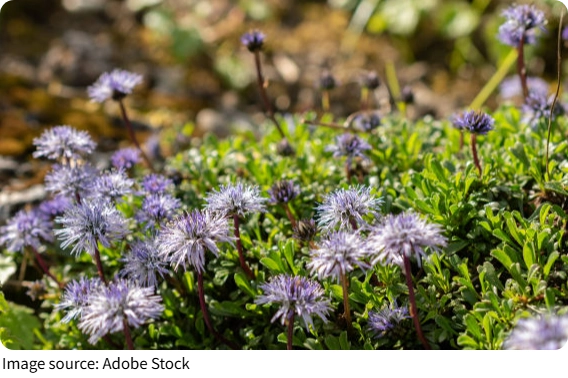
A Global Study Maps Plant Distribution
Researchers led by the University of Vienna examined 9,701 naturalized alien plant species, representing approximately 70 percent of known plants growing outside their original geographical ranges. The research relied on more than 160 million occurrence records collected through the Global Biodiversity Information Facility. Scientists also used information from the Global Naturalized Alien Flora database, which documents 16,429 naturalized plant groups.
Naturalized plants are species introduced beyond their native habitats that have successfully established themselves and can reproduce without continued human assistance. Some remain limited in distribution, while others spread extensively and create environmental problems.
To understand where these plants could survive, researchers combined their distribution records with information about temperature, rainfall, soil conditions, and land use. They divided the world into geographical sections measuring approximately 10 kilometers across. This approach allowed the team to estimate which regions currently provide suitable conditions for introduced plants and how those areas could change as the climate warms.
Where Invasive Plants Are Concentrated
The research identified areas where environmental conditions could support at least 10 percent of the species included in the analysis. These locations were classified as invasion hotspots. Approximately 33.9 percent of the world's land surface already falls into this category. Many hotspots are concentrated in temperate regions of Europe, North America, and the Southern Hemisphere. Australia and New Zealand also contain substantial areas suitable for introduced plants.
Interestingly, the risk is not limited to cooler or temperate environments. Parts of tropical South America, Africa, and Southeast Asia also contain considerable opportunities for introduced species to establish themselves. The researchers identified a relationship between existing plant diversity and the potential arrival of additional species. Regions that already support many native plants can also become suitable environments for newcomers.
Why Climate Change Is Shifting the Hotspots
One of the study's most important findings concerns the geographical movement of suitable habitats. As temperatures rise, conditions that previously supported certain introduced plants may become more favorable farther north or in other cooler locations. The researchers compared different future climate scenarios. Under a milder warming pathway, the proportion of global land classified as invasion hotspots is projected to reach 37.7 percent. Under a more severe scenario, the estimate is 36.6 percent.
Although these figures suggest only a moderate change in total land coverage, the geographical distribution is expected to change considerably. The models indicate that 93 percent of existing hotspots could remain suitable under the milder scenario. Under the more severe pathway, this figure falls to 82 percent.
New Plant Species Could Replace Existing Ones
The study also suggests that the future challenge involves more than the expansion of existing invasive plants. Different species may become established in places where environmental conditions previously prevented them from surviving. Lead author Omer explained that the identity of invading species is expected to change as plants adapted to warmer conditions move into new regions.
In tropical environments, the overall number of introduced species may remain relatively stable, even as the composition changes. Temperate areas could experience more noticeable increases and decreases in the number of suitable species. Temperature emerged as the strongest factor influencing these geographical changes. Rainfall, soil characteristics, and land use also contributed, although their effects were smaller in the models.
Why Cooler Ecosystems Need Attention
Boreal forests and polar tundra are among the environments that could face new pressure as suitable conditions expand toward cooler regions. These ecosystems currently support relatively few introduced plants and contain distinctive native vegetation. Their environmental conditions have helped limit the establishment of many newcomers.
However, warming temperatures may create opportunities for unfamiliar species to grow in places where they previously struggled to survive. Such changes are particularly concerning because these environments can recover slowly after disturbance. Boreal forests and tundra also store substantial amounts of carbon, making their ecological condition important for the wider climate system.
The changing distribution of invasive plants demonstrates how rising temperatures can reshape ecosystems in ways that extend beyond warmer weather. Cooler regions may encounter unfamiliar species, while existing hotspots could experience significant changes in their plant composition.
The research provides valuable information for planning future conservation efforts. Protecting native plant diversity will require preparation rather than waiting until environmental changes become difficult to reverse.
Popular
Gardens That Stop Floods
New research reveals how clever planting can dramatically reduce stormwater damage and protect homes from flooding.
A Hidden Botanical Wonder
A rare flowering plant found nowhere else on Earth reveals surprising secrets in a familiar American forest.
Invasive Plants Move
As the planet warms, invasive plants are shifting northward, putting fragile ecosystems at risk!
Protecting Native Forests!
Can forests naturally resist invasive trees? New research reveals how native growth helps restore biodiversity!