Arctic Freight Routes
Arctic Freight RoutesPosted by Liam Reilly on 11-08-2026
Useful Tips
In Western Greenland, freight vessels are part of everyday life. They transport food, fuel, construction materials, vehicles, and essential supplies to towns that have no road connections between them.
Watching one arrive at a harbor offers a much better understanding of Greenland than simply seeing it from a distance.
For Lykkers interested in Arctic shipping, Nuuk is the most practical base. Spend three nights exploring the capital, learn how Arctic logistics work, and, if time allows, continue your journey along the west coast on a passenger ferry instead of trying to board a working cargo ship.
Nuuk
Start in Nuuk
Nuuk combines Greenland's busiest harbor with the country's largest selection of hotels, restaurants, and transportation, making it the easiest place to experience Arctic maritime life.
Visit between June and September
Summer offers the longest daylight hours and the best opportunities to see ships operating under relatively stable weather conditions. Temperatures generally range between 6°C and 12°C, comfortable enough for spending time along the waterfront with proper outdoor clothing.
Even in summer, weather changes quickly. Strong winds, fog, or sea ice can occasionally affect shipping schedules, so treat arrival times as estimates rather than guarantees. Royal Arctic Line regularly publishes operational updates when weather or technical issues affect services.
For accommodation, comfortable hotels in Nuuk typically cost around DKK 1,200–2,000 per night, while smaller guesthouses may start from DKK 800–1,000 outside peak season. A three-night stay generally requires a hotel budget of DKK 3,000–6,000.
Nuuk Airport is only about 5 km from the city center, and most hotels can be reached in 15 minutes by taxi or shuttle.
Understand why freight ships matter
Unlike most countries, Greenland has almost no road network connecting its towns. Communities depend on aircraft during winter and ships throughout much of the year for everyday supplies.
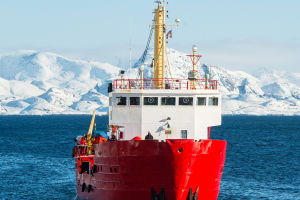
Royal Arctic Line, owned by the Government of Greenland, operates the country's freight network through 10 specially designed Arctic vessels, serving 13 major terminals and numerous smaller settlements.
Rather than treating these ships as tourist attractions, think of them as the Arctic equivalent of highways—without them, supermarkets, hospitals, and construction projects across Greenland would struggle to operate.
Experience Arctic Shipping
The most rewarding visit combines time around Nuuk Harbor with a passenger voyage that follows part of the same coastline served by freight vessels.
Visit the harbor in the morning
Start your day around 9:00 a.m., when port activity is usually increasing. Spend about one to two hours walking along publicly accessible waterfront areas and watching cargo operations from a safe distance.
You may see containers being unloaded, cranes transferring supplies, or one of Royal Arctic Lines ice-strengthened vessels preparing for its next journey.
Do not enter restricted port areas or cargo terminals. Everything here is part of an active commercial operation.
One interesting vessel is Irena Arctica, a container ship built specifically for Arctic conditions. Like other ships in the fleet, it is equipped to operate at ports where infrastructure is limited, allowing supplies to reach even remote coastal communities.
Travel the coast like locals do
If you have five or more days in Greenland, consider continuing your journey aboard the passenger ferry that links coastal towns along the west coast. While it is a passenger ferry rather than a cargo ship, it follows many of the same coastal communities that rely on maritime transport.
The ferry connects towns along Greenland's west coast on a regular schedule and carries both local residents and visitors. Depending on the route, journeys range from a single day to several nights, offering a completely different perspective from flying.
For travelers with limited time, simply spending a morning at Nuuk Harbor and learning how the shipping network works provides plenty of insight without adding several extra travel days.
Budget for Greenland
Greenland is one of the more expensive destinations in the Arctic, largely because almost everything must be transported long distances.
A reasonable daily budget includes:
• Accommodation: DKK 1,000–2,000
• Meals: DKK 350–600
• Local transport and sightseeing: DKK 200–400
• Museum visits or other activities: DKK 200–500
Overall, most Lykkers should expect to spend around DKK 4,500–7,500 for a comfortable three-night stay in Nuuk, excluding international flights.
The biggest mistake is expecting freight vessels to offer sightseeing opportunities. Their purpose is to keep Greenland supplied, not entertain visitors. Instead, spend time understanding how the harbor operates, observe the ships from public waterfront areas, and, if your schedule allows, continue your Arctic journey aboard a coastal passenger ferry.
It is a practical way to appreciate one of the world's most remarkable maritime transportation systems while experiencing Western Greenland at a relaxed pace.
Popular
Remote Greenland Magic
Beyond the Ice: 7 Spectacular Tasiilaq Sights That Look Straight Out of a Movie!
Iguazu Falls Wonders
Two Countries, One Epic Adventure: 7 Must-See Places Around Iguazu Falls!
Brisbane Beyond Expectations
Think Brisbane Is Boring? These 7 Jaw-Dropping Places Will Change Your Mind!
Zermatt Mountain Mysteries
Beyond the Famous Peak: 7 Secret Zermatt Escapes You Need to See Before Everyone Else!