Flying Frog: 5 Facts!
Flying Frog: 5 Facts!Posted by Naveen Kumar on 11-06-2026
Wild Animals
Good day, Lykkers! when most people imagine a frog, they picture a small amphibian hopping through ponds or hiding among wet leaves. But in the rainforests of Southeast Asia, a remarkable group of frogs has evolved a very different lifestyle.
Known as flying frogs, these animals do not truly fly like birds or bats. Instead, they glide through the forest canopy using specialized body features that allow them to travel impressive distances between trees.
From oversized feet that function like parachutes to eggs suspended above streams, flying frogs display some of the most unusual adaptations found among amphibians. Let’s explore five fascinating facts that reveal why these creatures continue to captivate scientists and wildlife enthusiasts alike.
1. They Glide Using Enormous Webbed Feet
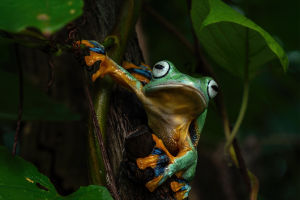
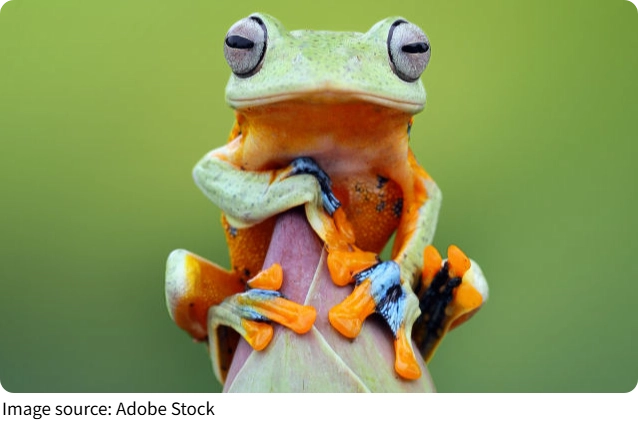
The most famous feature of flying frogs is their ability to glide. Species such as Wallace’s flying frog (Rhacophorus nigropalmatus) possess exceptionally large feet with extensive webbing stretched between their toes.
When a frog leaps from a tree, it spreads its limbs wide. The webbing acts like a natural airfoil, increasing surface area and creating drag that slows the descent. Rather than dropping straight down, the frog can steer through the air and glide toward another branch. Researchers have observed some individuals covering distances of more than 15 meters in a single glide. During these aerial journeys, the frog adjusts its body position to change direction and control its landing. This ability is particularly valuable in dense rainforest canopies, where moving through the treetops can be safer and more energy-efficient than descending to the forest floor.
2. Their Toe Pads Work Like Natural Climbing Equipment
Flying frogs spend much of their lives high above the ground. To survive in this environment, they need a reliable way to cling to leaves, branches, and tree trunks. At the end of each toe is a large adhesive pad covered with microscopic structures. These pads create close contact with surfaces, helping the frog maintain a strong grip even on smooth or wet vegetation.
In Wallace’s flying frog, the toe pads are especially large compared to many other tree frogs. The pads not only assist with climbing but also contribute to gliding performance by increasing surface area during jumps. This combination of climbing and gliding adaptations allows the frogs to move efficiently through the upper layers of tropical forests, where food, shelter, and breeding sites are often located.
3. They Lay Their Eggs Above Water Instead of In It
One of the most intriguing aspects of flying frog reproduction is where they place their eggs. Rather than depositing them directly in ponds or streams, many species construct foamy nests on vegetation hanging above water.
The female produces a frothy mass while laying eggs, often with assistance from the male. This foam protects the developing embryos from dehydration and certain predators. After several days, the eggs hatch into tadpoles. The young then drop from the nest into the water below, where they continue their development. This strategy provides an important advantage. By keeping eggs above the water’s surface during the earliest stages of development, flying frogs reduce the risk of aquatic predators consuming them before they hatch. It is a clever solution that demonstrates how evolution can shape reproductive behavior to improve survival.
4. Wallace’s Flying Frog Has an Extraordinary Origin Story
Among all flying frogs, Wallace’s flying frog is perhaps the most famous. It was named after the British naturalist Alfred Russel Wallace, who traveled extensively through the Malay Archipelago during the nineteenth century. Wallace documented countless species while developing ideas about evolution and biogeography.
The frog that now bears his name is found in parts of Malaysia, Indonesia, and surrounding regions, where it inhabits tropical rainforests. Mature green flying frogs are striking in appearance. Their bright green bodies help them blend into foliage, while the dark webbing between their toes creates a dramatic contrast when the feet are spread. Some females can reach lengths exceeding 10 centimeters, making them among the larger tree-dwelling frogs in their habitat. The species remains an iconic example of how rainforest environments can drive the evolution of highly specialized adaptations.
5. Their Survival Depends on Healthy Forest Canopies
Although flying frogs are skilled gliders, they face challenges that their remarkable abilities cannot solve. Their lives depend heavily on intact forest ecosystems. The canopy provides the height needed for gliding, while nearby streams are essential for tadpole development.
When forests are cleared or fragmented, frogs may lose access to breeding sites and safe travel routes between trees. Scientists often consider amphibians important environmental indicators because their permeable skin makes them sensitive to ecological changes. Declines in flying frog populations can signal broader problems affecting rainforest health. Protecting tropical forests therefore benefits not only these unique amphibians but also countless other species that share the same ecosystem. Every preserved stretch of rainforest helps maintain the complex web of life that supports animals both large and small.
Flying frogs are far more than ordinary tree frogs with unusual feet. Their gliding abilities, adhesive toe pads, foam nests, evolutionary history, and dependence on healthy forest canopies make them some of the most fascinating amphibians on Earth.
Popular
Horse Facts You Should Know
Discover surprising truths about horses, from their communication skills to intelligence and social behavior.
Domestic Cats Tips
From Diet to Health, Comprehensive Care for Your Average Housecat
The Zebra Journey!
Why travel hundreds of kilometers? The answer lies in water and fresh grazing!
Flying Frog: 5 Facts!
How can a frog glide through trees? These surprising facts will amaze you!