Monkey Kidnapping Mystery
Monkey Kidnapping MysteryPosted by Chris Isidore on 11-06-2026
Wild Animals
Hello, Readers! Animal behavior is usually linked to survival, such as finding food, avoiding predators, or caring for offspring. However, scientists studying monkeys on a small island off the coast of Panama observed something far more unusual.
A group of monkeys has been repeatedly carrying away baby howler monkeys from their families. Researchers found no clear survival benefit behind these actions.
A Surprising Find in the Forest
The story began on Jicaron Island, part of Panama's protected Coiba National Park. Researchers had placed motion-activated cameras across the island to observe local monkeys that were already attracting scientific interest because of their remarkable tool-using abilities.
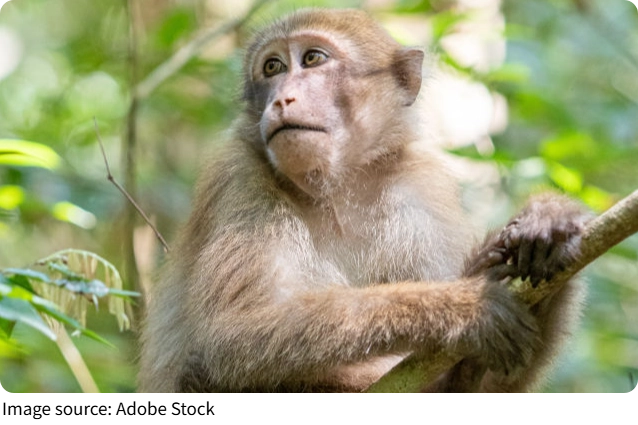
While reviewing footage collected in 2022, researcher Zoe Goldsborough noticed an unexpected sight. A monkey was carrying a baby howler monkey on its back. At first, the scene appeared almost touching. The monkey seemed to be caring for the infant, leading researchers to wonder whether they had found an unusual case of cross-species adoption. However, further investigation quickly revealed a very different story. The monkey, nicknamed "Joker" because of a small scar near its mouth, was later seen carrying several different howler monkey babies. This suggested that the behavior was not a one-time event.
What Looked Like Adoption Was Actually Abduction
As scientists examined additional recordings, they discovered that Joker was not the only monkey involved. Over a period of 15 months, five young male monkeys were observed carrying eleven different baby howler monkeys. Researchers also found footage showing howler monkeys calling and searching for their missing infants.
These recordings made it clear that the babies had not been abandoned. Instead, they had been taken from their families. The findings, published in the journal Current Biology, describe what researchers believe is the first documented case of one species repeatedly abducting the infants of another species as a socially learned behavior.
No Obvious Benefit
One reason the discovery has attracted so much attention is that the monkeys do not seem to gain anything from the kidnappings. They do not eat the infants. They do not appear to attack them. Researchers also found little evidence that the monkeys were using the babies for play.
In the animal kingdom, most behaviors can be linked to clear advantages such as obtaining food, finding mates, or defending territory. In this case, none of those explanations fit. The monkeys simply carried the infants while continuing their normal activities. Because there is no obvious reward, scientists suspect the behavior may have spread through curiosity and imitation rather than necessity.
A High Cost for Baby Howlers
Although the monkeys do not appear intentionally harmful, the consequences for the kidnapped infants are devastating. Researchers directly observed four baby howler monkeys die after being taken. Based on the evidence available, scientists believe that none of the abducted infants survived.
Young howler monkeys rely heavily on their mothers for food, warmth, protection, and social development. Once separated from their family groups, they face extremely poor chances of survival. This loss is particularly concerning because the island's howler monkey population is already considered endangered. Every infant represents an important part of the species' future.
How Are the Monkeys Doing It?
One of the biggest mysteries remains unanswered: how are the monkeys successfully taking these babies? Howler monkeys are much larger and stronger than the monkeys carrying the infants. Yet researchers have not observed injuries on the kidnappers, suggesting the encounters may happen quickly or under circumstances that give the smaller monkeys an advantage.
Scientists suspect the abductions occur high in the forest canopy, where cameras cannot easily capture events. Some of the babies appeared to be only a few days old when first seen, indicating that the monkeys are remarkably successful at separating newborns from their mothers. For now, the exact method remains unknown.
When Animal Culture Takes a Strange Turn
The phenomenon highlights an important scientific concept known as animal culture. Animal culture refers to behaviors that spread through learning and observation rather than being inherited genetically. Humans are famous for cultural traditions, but many animals also learn habits from one another. Previous studies have documented unusual trends among wildlife.
Some monkey groups have developed temporary habits that later disappeared. Orcas in the Pacific Northwest famously began carrying salmon on their heads during the 1980s, a behavior that unexpectedly resurfaced decades later. The baby-howler kidnappings appear to be another example of a behavior spreading socially through a group, although with much more serious consequences.
Could Boredom Be Part of the Explanation?
Researchers believe the island's environment may have helped create the conditions for this unusual trend. The monkeys have abundant food resources and face very few natural predators. Without constant survival pressures, they have more time to explore, experiment, and interact with their surroundings.
This freedom has already led to impressive behaviors, including sophisticated tool use. However, scientists suggest it may also encourage activities that seem to have no practical purpose. In other words, curiosity and spare time may sometimes produce behaviors that are unusual, unpredictable, and even harmful to other species.
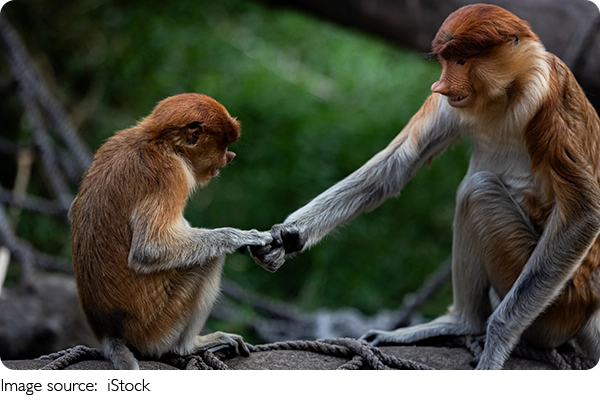
Researchers are still reviewing new footage from the island, and reports suggest at least one additional baby howler monkey has been taken since the original study period ended.
Popular
Horse Facts You Should Know
Discover surprising truths about horses, from their communication skills to intelligence and social behavior.
Domestic Cats Tips
From Diet to Health, Comprehensive Care for Your Average Housecat
The Zebra Journey!
Why travel hundreds of kilometers? The answer lies in water and fresh grazing!
Flying Frog: 5 Facts!
How can a frog glide through trees? These surprising facts will amaze you!