Red Panda Summer Secrets
Red Panda Summer SecretsPosted by Camille Dubois on 03-06-2026
Wild Animals
Greetings, Friends! Many people picture red pandas as fluffy animals living in the cool forests of the Himalayas and nearby mountain ranges. Because of their thick reddish fur, it may seem like warm temperatures would be difficult for them to handle.
However, red pandas have developed several smart adaptations that help them stay comfortable during the warmer months. These survival strategies show how well they are suited to life in changing mountain climates.
Yet every year, red pandas successfully navigate the warmest months of their environment. Their survival is not based on a single adaptation but on a combination of behavioral strategies, physical traits, and habitat choices that help them avoid dangerous heat stress. Understanding these remarkable techniques reveals just how specialized and resilient this unique species truly is.
Built for Cool Forest Life
Red pandas naturally inhabit mountainous regions stretching across parts of Nepal, Bhutan, Myanmar, and China. Most populations live at elevations between 2,200 and 4,800 meters, where dense forests provide shade and temperatures remain relatively moderate even during summer.
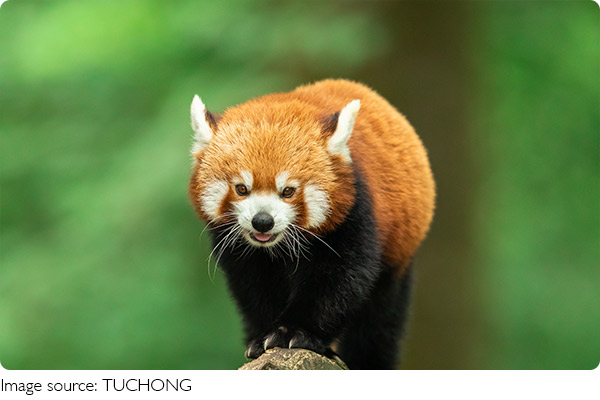
Unlike many mammals that thrive in hot climates, red pandas possess a thick double-layered coat designed primarily for insulation against cold weather. This dense fur covers nearly every part of their body, including the soles of their feet. While this adaptation is ideal for snowy winters, it creates challenges when temperatures rise. Fortunately, their high-altitude habitat acts as a natural cooling system. Forest canopies reduce direct sunlight, while mountain air remains cooler than conditions found at lower elevations. By living in these environments, red pandas avoid the extreme heat that would be difficult for them to tolerate.
Timing Activities to Avoid the Heat
One of the most important ways red pandas cope with summer is by adjusting their daily schedule. Researchers have observed that red pandas are typically most active during dawn, dusk, and nighttime hours. During the hottest parts of the day, they often reduce movement and seek sheltered resting spots.
This pattern, known as crepuscular behavior, allows them to conserve energy while limiting exposure to excessive warmth. Instead of spending midday searching for food, a red panda may stretch out along a shaded tree branch, remaining nearly motionless for hours. By avoiding unnecessary activity when temperatures peak, it significantly reduces the risk of overheating. This strategy is especially effective because bamboo, their primary food source, is available throughout their habitat, eliminating the need for long-distance travel during hot conditions.
Using Trees as Natural Air Conditioners
Trees play a critical role in summer survival. Red pandas are highly skilled climbers, spending much of their lives above ground. During warm weather, they frequently choose elevated branches where air circulation is stronger.
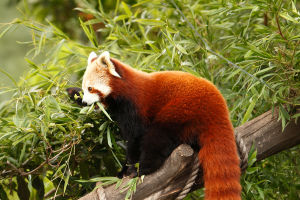
Cooler breezes moving through the forest canopy help dissipate body heat more effectively than conditions near the forest floor. Scientists have also documented red pandas selecting resting positions that maximize heat loss. Some individuals sprawl across branches with their limbs hanging freely, increasing the surface area exposed to moving air. This relaxed posture may look playful, but it serves an important thermoregulatory function. The dense forests they inhabit create multiple layers of shade, producing cooler microclimates that can differ noticeably from nearby exposed areas.
Conserving Energy Through Diet
Food choices also influence how red pandas manage summer conditions. Although classified as carnivores, red pandas rely heavily on bamboo leaves and shoots. Bamboo contains relatively little energy compared to meat, forcing red pandas to maintain an efficient lifestyle. Their metabolism is unusually low for an animal of their size, allowing them to survive on a diet that would not sustain many other mammals.
During warmer months, this naturally slow metabolic rate becomes an advantage. A lower metabolism generates less internal body heat, reducing the physiological burden associated with hot weather. In addition to bamboo, red pandas occasionally consume fruits, berries, flowers, and insects, which can provide moisture and nutritional variety during seasonal changes.
Cooling Through Behavior
Unlike humans, red pandas do not sweat effectively across their bodies. As a result, they depend heavily on behavioral cooling methods.
Many individuals seek locations near streams, damp vegetation, or humid forest pockets where temperatures remain slightly lower. Some have been observed licking their forearms and grooming extensively during warm weather. As moisture evaporates from the fur, it may provide a modest cooling effect. Shade selection is another carefully managed behavior. Red pandas often move between different resting sites throughout the day, choosing locations based on changing sunlight patterns. This flexibility allows them to maintain a more stable body temperature despite fluctuating environmental conditions.
Challenges in a Warming World
While red pandas have evolved impressive summer survival strategies, climate change is creating new obstacles. Rising temperatures can alter the cool mountain ecosystems on which these animals depend. Increasing heat may affect bamboo growth, shift suitable habitat to higher elevations, and reduce the availability of shaded forest areas.
Because red pandas are already adapted to relatively narrow environmental conditions, even moderate changes can place additional stress on populations. Habitat fragmentation further complicates the situation. When forests become divided by roads, agriculture, or development, red pandas may find it harder to reach cooler areas during periods of extreme warmth. Conservation efforts focused on protecting connected forest landscapes are therefore essential not only for preserving habitat but also for maintaining the natural temperature refuges these animals need to survive.
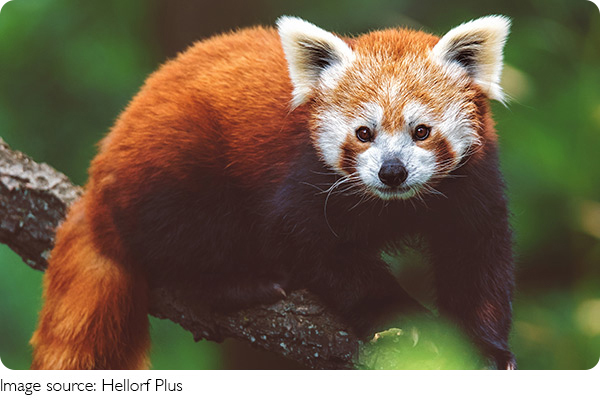
Red pandas survive the summer through a remarkable combination of habitat selection, careful activity timing, energy-efficient physiology, and intelligent behavioral adaptations. From resting in shaded treetops to taking advantage of cool mountain forests, every aspect of their lifestyle helps them stay comfortable despite seasonal warmth.
Popular
The Patient Heron
How Does the Great Blue Heron Stay Perfectly Still for Long Moments Before Striking in a Single, Precise Instant?
From Cub to Lion
How Does a Small Lion Cub Grow Into a Strong Leader of the Wild and Learn Survival Step by Step?
Squirrel Cache Mystery
Why Do Squirrels Forget Where They Hide Food—and How Does It Help Forests Grow?
Koi's Favorite Zone
Koi stay by the waterfall? More oxygen, cooler flow, or a hidden pond habit!