The Right Oil Change
The Right Oil ChangePosted by Lucas Schneider on 21-05-2026

On Trend
Engine oil is doing several jobs at once every time the engine runs.
It lubricates metal surfaces moving against each other at high speed, reducing friction that would otherwise generate heat and accelerate wear.
It carries heat away from areas the cooling system can't directly reach. It suspends and transports contaminants — combustion byproducts, metal particles, moisture — to the filter. And it contains additives that protect against corrosion, oxidation, and foam formation.
Over time and mileage, all of these functions degrade. The oil gets contaminated, the additives deplete, and viscosity changes. That's what an oil change addresses — not just swapping a dark fluid for a clear one.
Picking the Right Oil Type
The most important decision in an oil change is selecting the correct oil for the engine. This means matching viscosity grade and specification to what the manufacturer requires.
Viscosity grades are expressed as numbers like 5W-30 or 0W-20. The first number indicates cold-weather flow behavior — a lower number means the oil stays fluid at lower temperatures and reaches critical engine surfaces faster on a cold start, which is when most wear occurs.
The second number describes viscosity at operating temperature. Modern engines with tighter tolerances increasingly specify lower viscosity oils like 0W-16 or 0W-20 to reduce friction and improve fuel economy. Using a thicker oil than specified doesn't provide extra protection — it can actually restrict oil flow to tight clearances and increase wear.
Conventional oil is refined directly from crude petroleum. Full synthetic oil is engineered from chemically modified base stocks with precisely controlled molecular structure, offering better performance in extreme temperatures, longer resistance to oxidation, and extended service life. Synthetic blend sits between the two.
For most modern vehicles built after the year 2000, full synthetic is the recommended choice and delivers measurably better engine protection, particularly during cold starts and in high-temperature conditions.
How Often Is Actually Necessary
The old 3,000-mile rule persists in cultural memory and is promoted by some service shops, but it doesn't reflect modern engine or oil technology. Many manufacturers of modern gasoline vehicles specify full synthetic oil change intervals of 7,500 to 10,000 miles under normal driving conditions, with some specifying up to 15,000 miles. Vehicles before 2000 using conventional oil are better served by 3,000 to 5,000-mile intervals.
The term "severe driving conditions" covers a meaningful subset of real-world use and shortens appropriate intervals: frequent short trips under 5 miles where the engine never fully warms up, extended idling, towing or hauling heavy loads, extremely hot or dusty environments, and very cold climates. Under these conditions, many manufacturers recommend cutting the normal interval roughly in half.
Many modern vehicles have oil-life monitoring systems that calculate oil health based on driving patterns, temperature, and engine load rather than simple mileage. These systems are accurate and should be followed. When the monitor indicates a change is needed, act on it — whether that's at 4,000 miles or 11,000 miles depending on how the vehicle has been driven.
The Step-by-Step Process
Getting an oil change done correctly matters as much as the timing. A few common mistakes can cause more damage than skipping a change.
Warm the engine briefly — two to three minutes — before draining, since warm oil flows more completely and carries more suspended contaminants out. Park on a level surface. Place a drain pan under the oil drain plug at the bottom of the engine oil pan and remove the plug, allowing the oil to drain completely. A rush here leaves old contaminated oil behind.
Replace the oil filter at every oil change. The filter traps wear particles and combustion contaminants — an old filter starts recirculating debris through fresh oil. Most oil filters require only hand-tightening plus a quarter to half turn with a wrench; overtightening strips threads or crushes the gasket and causes leaks.
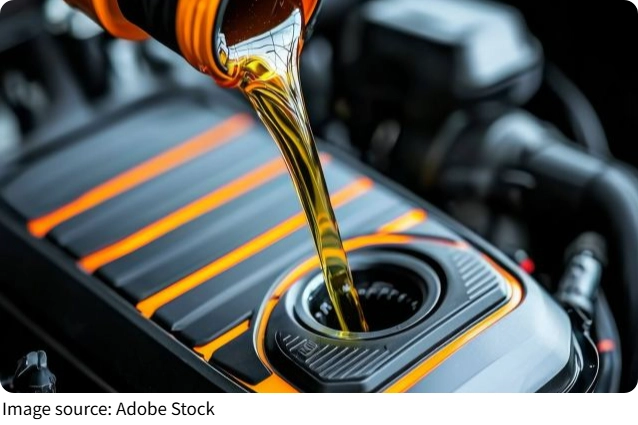
After reinstalling the drain plug — torqued to specification, not maximum hand strength — add the correct quantity of new oil through the fill cap on top of the engine. The quantity is specified in the owner's manual and typically ranges from 4 to 7 quarts depending on engine size.
Run the engine briefly, check for leaks at the drain plug and filter, then check the dipstick level. Overfilling is harmful — excess oil can foam under the crankshaft, lose its lubricating properties, and damage seals.
Reading the Warning Signs
The dipstick check is a quick health indicator worth doing monthly. Oil that looks black is not necessarily bad — modern detergent oils darken quickly as they pick up combustion soot, which is normal.
Oil that looks milky or has a cream-colored froth on the dipstick indicates coolant contamination, which is a serious problem requiring immediate attention. Oil that smells burnt or has a distinctly acrid odor has degraded and should be changed regardless of mileage.

A rising oil level between changes can indicate fuel dilution — particularly in cold-climate short-trip driving where gasoline washes past piston rings into the oil. A falling level between changes means the engine is either leaking or consuming oil, both of which warrant investigation.
An oil pressure warning light that comes on while driving is an emergency — pull over and shut the engine off. Running an engine with insufficient oil pressure causes catastrophic damage very quickly.
Popular
Suspension Shapes Your Ride
How Your Car’s Hidden Suspension System Determines Comfort, Control, and Handling
The Right Oil Change
Choosing the right oil, knowing when to change it, and doing it correctly — the steps that genuinely extend engine life
Car Cabin Air Purifiers
Understanding HEPA, Activated Carbon, and Ionizers for Healthier In-Car Air
Luxury Meets Green
Cactus leather, grape-waste textiles, and recycled nylon — how luxury carmakers are replacing hide without losing luxury