Renewables Redefined
Renewables RedefinedPosted by Arjun Mehta on 20-05-2026
Useful Tips
Hello, Lykkers! The future of utility-scale renewable energy is not only being shaped by giant wind farms and sprawling solar parks—it is increasingly being defined by how these projects are financed.
As the global energy transition accelerates, renewable finance is entering a new phase where innovation, private investment, and smarter financial strategies are becoming just as important as the technology itself.
A Shift Beyond Government Support
For many years, utility-scale renewable projects relied heavily on government subsidies, tax incentives, and feed-in tariffs to become financially viable. These mechanisms were crucial in helping solar and wind power grow. However, the industry is now moving toward a more market-driven model.
Today, renewable projects are increasingly supported by competitive auctions, corporate power purchase agreements (PPAs), and private investment funds. Large companies are signing long-term contracts directly with renewable developers to secure clean electricity while meeting sustainability goals. This shift is creating more stable revenue streams and attracting institutional investors.
As renewable technologies become cheaper and more efficient, developers are finding it easier to compete with conventional energy sources without relying entirely on policy support.

Investors Are Prioritizing Project Quality
Although global investment in renewable energy continues to rise, investors have become more selective about where their money goes. In the past, simply building a large solar or wind project was often enough to attract funding. Today, financial institutions focus closely on long-term profitability and risk.
Factors such as grid congestion, electricity price volatility, and transmission limitations strongly influence investment decisions. Projects that include energy storage systems or secure long-term contracts are often viewed as safer investments.
This shift means renewable finance will focus less on scale alone and more on project quality, flexibility, and resilience.
Energy Storage Is Transforming Revenue Models
One of the biggest developments in utility-scale renewable finance is the rapid growth of battery storage. Solar and wind power are naturally variable because they depend on weather conditions. Energy storage addresses this challenge by storing electricity and releasing it when demand is highest.
For investors, storage adds value because it increases revenue opportunities and enhances grid reliability. Renewable projects paired with batteries can sell electricity during peak-price periods and provide additional grid services.
As battery costs decline, developers are increasingly designing renewable projects with integrated storage from the start. This approach is expected to become a standard feature in future utility-scale developments.
Technology and Data Are Driving Smarter Financing
Digital tools are transforming renewable finance. Advanced forecasting systems, artificial intelligence, and data analytics help investors assess project performance more accurately.
Improved forecasting reduces uncertainty and enhances confidence among lenders and investors. Financial institutions can now evaluate weather patterns, energy production, and market demand more effectively, making investment decisions less risky. Technology is becoming as much a financial asset as an operational one.
Preparing for the Future
The renewable energy sector is entering an exciting new chapter. Utility-scale renewable finance is moving beyond reliance on subsidies toward a model driven by private capital, innovation, and strategic investment.
As energy storage improves, technology advances, and investors become more sophisticated, renewable energy is evolving from an emerging sector into a mainstream infrastructure opportunity.
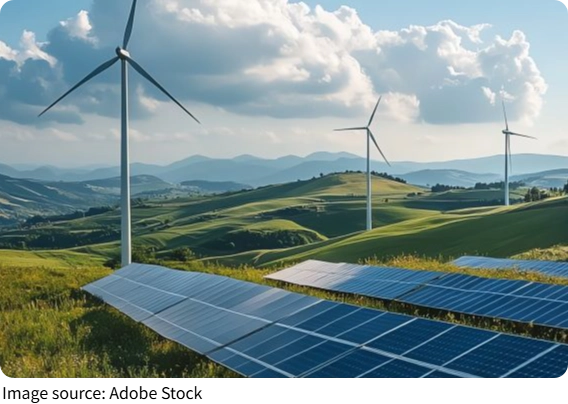
The future of utility-scale renewable energy is not just about building bigger projects—it is about building smarter, more financially resilient ones. By integrating storage, leveraging technology, and adopting innovative financing models, the sector is attracting more private investment than ever before.
As the industry matures, renewable energy will increasingly compete on both economic and environmental terms, transforming from a niche market into a cornerstone of global infrastructure. For investors and developers alike, the opportunities are vast, and the time to act is now.
Popular
Playful Cat Activity Tips
Simple daily routines to keep your cat active, curious, and mentally sharp
Rural Energy Revival
How Wind and Solar Projects Can Boost Rural Economies and Jobs
Investing in a Green Economy
Why Billions Are Flowing Into Climate Funds and How It Will Shape the Global Economy
Renewables Redefined
How Utility-Scale Renewable Finance is Powering the Next Investment Boom