Why Tigers Walk Alone
Why Tigers Walk AlonePosted by Pankaj Singh on 18-03-2026
Wild Animals
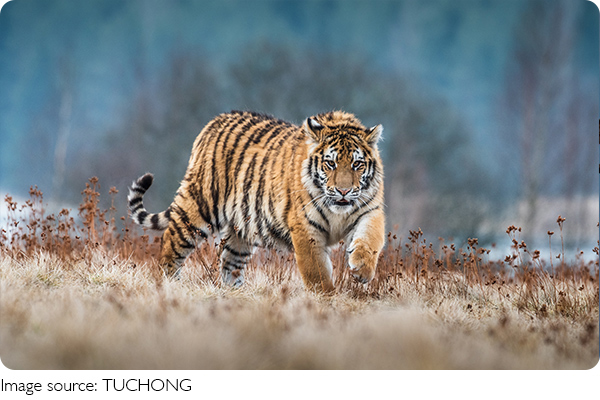
It’s easy to notice that tigers are almost always seen on their own, moving quietly through forests with a calm and confident presence. This unique lifestyle often raises curiosity. Is it just a preference, or is there a deeper reason behind it?
When we take a closer look, we realize their behavior is not random at all. It is a survival strategy shaped over millions of years. From their environment to their food sources and hunting methods, everything works together to support this independent way of life.
Food: The Most Practical Reason
Let’s start with the most direct factor—food. Tigers are large animals with huge energy needs. A single tiger can eat tens of kilograms of meat in one meal and needs a steady supply of prey throughout the year.
Now think about their environment. Forests are very different from open grasslands. In forests, prey animals are scattered and harder to find. There are no large herds gathering in one place like on the plains. If several tigers lived together, the available food in one area would quickly run out.
So, living alone ensures one important advantage: no competition. A tiger controls its own territory and enjoys all the resources within it. This reduces conflict and guarantees a more stable food supply. In simple terms, it’s not that “one mountain cannot have two tigers”—it’s that one mountain cannot feed two tigers.
Strength: No Need for Teammates
Another key reason is the tiger’s incredible strength. Unlike animals that rely on teamwork, a tiger is built to handle everything on its own. With powerful muscles, sharp claws, and explosive speed, it can hunt animals like deer or antelope without help.
Compare this to animals that live in groups—they often need cooperation to take down large prey or defend against threats. But tigers face fewer dangers in their environment and are strong enough to manage alone.
In a way, one tiger is like a complete team. It can track, attack, and defend all by itself. If working alone already works perfectly, why add the complexity of group living? For tigers, independence is simply more efficient.
Hunting Style: Silence Is Everything
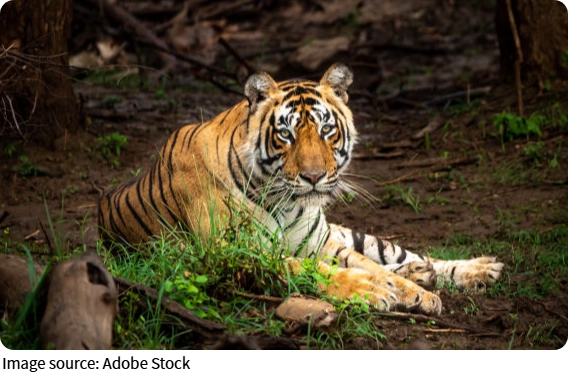
Now let’s look at how tigers hunt. They are ambush hunters. This means they rely on stealth, patience, and perfect timing. Their striped fur helps them blend into the forest, allowing them to get very close to prey before attacking.
This strategy only works if everything stays quiet. Imagine multiple tigers moving together—the chance of making noise increases, and prey can easily escape before the attack even begins.
By hunting alone, a tiger can stay silent and flexible. It can move freely through dense forests and choose the best moment to strike. This greatly improves hunting success. In contrast, group hunters rely on chasing and surrounding prey, which works better in open areas, not forests.
Not Lonely, Just Independent
Many people assume that living alone must feel lonely. But for tigers, this is not the case. They have a strong sense of territory and clearly mark their space. Each tiger knows where it belongs, and they avoid unnecessary contact with others.
They only come together briefly during the breeding season. After that, they go their separate ways again. Mother tigers raise their young alone, teaching them how to hunt and survive. Once the young are strong enough, they leave to find their own territory.
This cycle—short moments together, long periods alone—keeps the population going while maintaining their independent lifestyle. It is a well-balanced system shaped by nature.
The Smartest Survival Strategy
When we put everything together—food supply, strength, hunting style, and environment—it becomes clear that living alone is not a weakness. It is actually the best possible solution for tigers.
They are not avoiding others, and they are not bad at social interaction. Instead, they understand something important: in the wild, relying on yourself is often the safest choice.
A Lesson from the Tiger
So Lykkers, what can we learn from tigers? Their way of life reminds us that independence can be powerful. Sometimes, working alone is not about being distant—it is about being capable and confident.
Tigers have survived for millions of years by trusting their own strength, protecting their space, and adapting perfectly to their environment. Their story shows us that true strength does not always need an audience.
In the end, living alone for a tiger is not about isolation—it is about mastery. And maybe, that is what makes them the true rulers of the forest.
Popular
Dogs Mirror You to Bond
Why Do Dogs Copy Everything We Do? Discover the Surprising Reasons Behind Their Funny and Curious Behavior!
Dog Super Senses
Exploring how dogs smell, hear, and experience the world beyond us
Seasons of the Squirrel
How Squirrels Shift Behavior and Coats to Endure Winter and Summer!
Why Flamingos Turn Pink
The surprising science behind one of nature’s most iconic colors.