EV Boom Tests Grids!
EV Boom Tests Grids!Posted by Santosh Jha on 02-11-2026
Odd News
Europe's electric vehicle market is gaining momentum, with more drivers choosing battery-powered cars and more countries recording stronger sales.
The first half of 2026 brought particularly encouraging results, showing that electric mobility is becoming increasingly popular beyond its traditional leading markets. However, growing numbers of vehicles also create new demands.

Electric Vehicle Registrations Reach New Heights
During the first six months of 2026, battery electric vehicle registrations across 17 monitored European markets reached 1,241,916 units. This represented a substantial increase from the 928,800 registrations recorded during the same period in 2025. June was especially strong, with 275,060 new battery electric vehicles registered.
That was 39.5% higher than the figure recorded in June 2025. Fully electric models accounted for 25.6% of all new registrations across the markets included in the report, while the estimated share for the European Union was 27.4%.
The growth indicates that electric vehicles are becoming a more important part of the European car market. Instead of depending on a handful of established markets, adoption is spreading across a wider range of countries. This creates opportunities for manufacturers, charging companies, energy providers, and businesses supporting electric mobility.
Growth Spreads Across More Countries
Several European markets delivered particularly strong results. Italy recorded the fastest annual growth during the first half of 2026, with battery electric registrations increasing by 97.9%. France followed with a 61.3% rise, while Germany grew by 48.6% and Spain by 31%.
France registered 55,851 battery electric vehicles in June, giving fully electric models a 29.6% share of its new-car market. Spain recorded 14,559 registrations, representing an 11.3% share. Other countries also reported important milestones. Slovenia and Czechia achieved new records for monthly registrations and market. Belgium, Denmark, Portugal, and Finland recorded their highest monthly registration totals.
Norway continued to lead the region, with electric vehicles accounting for 96.5% of new registrations. Denmark followed at 79.1%, while Ireland reached 51.2%, Finland 48.9%, and the Netherlands 43.5%. These differences show why infrastructure planning needs to consider individual markets. Countries with higher adoption may require more charging capacity, while emerging markets need accessible facilities to support further growth.
Charging Networks Must Keep Pace
More electric vehicles on the road mean more demand for convenient charging. Drivers need access to facilities near homes, workplaces, shopping areas, and major roads. Without suitable coverage, people who cannot charge at home may find electric vehicle ownership less convenient.
Europe's public charging network has expanded, but its distribution remains uneven. Data published by the European Automobile Manufacturers' Association showed that the EU had approximately 1.2 million public charging points, while its target for 2030 stands at 3.5 million.
The number of chargers alone does not tell the whole story. Their power capacity, location, reliability, and availability also influence the quality of the charging experience. A large network concentrated in a few countries cannot fully support drivers across the entire region. High-speed charging facilities are particularly useful for long journeys, while slower chargers can serve vehicles parked for longer periods.
Electricity Grids Face Growing Pressure
Charging more vehicles also increases electricity demand. As electric car ownership expands, energy providers and grid operators must prepare for additional consumption, especially in locations where many vehicles may charge at similar times. This does not mean every charging session creates a problem. The timing of electricity use is important. If large numbers of drivers charge during periods of high demand, local networks may experience additional pressure.
Smart charging systems can help manage this challenge. They allow charging schedules to respond to electricity demand and available capacity, shifting some consumption towards quieter periods. Businesses and property owners can also consider battery storage and on-site renewable electricity to support their charging facilities.
Businesses See New Opportunities
The expansion of electric mobility is creating opportunities across several industries. Charging operators can develop new locations and improve their services, while energy companies can provide electricity management solutions. Property owners may also benefit from installing charging facilities at commercial buildings and residential developments.
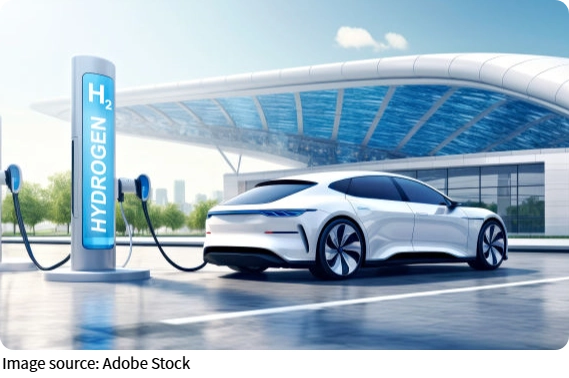
Charging availability, electricity network capacity, and reliable energy management must progress together. With better coordination between manufacturers, energy providers, businesses, and infrastructure operators, Europe can build a more practical charging environment and support the next stage of electric mobility.
Popular
Europe's Electric Car Divide
Japan challenges proposed EU incentives for electric vehicles, raising questions over competition, manufacturing and consumer choice.
Europe's Electric Car Boom
Electric cars are gaining ground in Europe, but new figures show huge gaps between leading and lagging countries.
Europe's Car Industry Crisis
European carmakers face growing competition, falling exports and job losses as the EV transition accelerates.
EV Boom Tests Grids!
Europe's EV boom tests charging networks, power grids and policy as demand keeps growing!