Fear and Greed in Investing
Fear and Greed in InvestingPosted by Marcus on 12-10-2026

On Trend
The market rarely destroys portfolios. People do. It usually starts quietly. A small drop in price triggers hesitation. A sudden rise creates urgency. Nothing dramatic on the surface, yet decisions begin to shift away from logic.
Most investors do not lose money because of flawed systems. They lose because they abandon systems at the worst possible moments. The real challenge in investing is not external information, it is internal reaction. Prices move, but emotions move faster.
When money is involved, the brain stops behaving like a calculator and starts behaving like a survival system. That shift is where costly mistakes begin.

Fear: the instinct that sells too early
Fear is not always loud. Sometimes it appears as “being careful” or “reducing risk.” But in practice, it often leads to one outcome: exiting positions too soon and locking in losses. Common fear-driven mistakes include:
- Selling during temporary declines
- Avoiding positions after minor losses
- Constantly checking prices and reacting emotionally
- Abandoning long-term plans after short-term discomfort
This usually happens in cycles. A decline begins, attention increases, negative news feels more convincing, and selling feels safer than holding. The problem is not the reaction itself, it is the timing. Fear pushes decisions when clarity is lowest. It gives a sense of control, but often removes future opportunity.
Greed: the illusion of endless growth
If fear exits too early, greed stays too long. It begins with excitement, as quick gains feel like confirmation of skill. Then expectations quietly increase. Greed does not feel dangerous at first. It feels like confidence. Typical greed-driven patterns include:
- Chasing rising prices after large moves
- Ignoring risk because returns feel strong
- Holding positions without predefined targets
- Re-entering too quickly after gains, repeating exposure cycles
Greed changes behavior in subtle ways. Position sizes increase without planning. Risk tolerance expands without awareness. Exit plans disappear because “it might go higher.” Eventually, discipline weakens. Greed does not fail immediately. It fails after consistency is abandoned.
Why most investors repeat the same cycle
Fear and greed are not separate problems. They form a loop, and one feeds the other. In a typical cycle, a rise creates confidence and entry increases. Volatility appears and fear triggers an exit. Recovery begins, regret triggers re-entry, and greed increases exposure again.
This loop is powerful because it feels rational at every step. Each decision seems justified in isolation. The real issue is fragmentation: no single consistent plan connects each action. Without structure, emotions become the strategy.
Building a system that weakens emotional control
You cannot remove emotions from investing, but you can reduce their influence. The key is shifting decisions from reaction to predefined rules. A practical approach includes:
- Defining entry logic before investing, not after price movement begins
- Setting exit conditions in advance, so profit and risk boundaries exist before emotion appears
- Limiting decision frequency, because fewer decisions reduce emotional noise
- Using fixed allocation rules, without adjusting size based on recent outcomes
- Reviewing performance periodically, not constantly, so reflection is scheduled, not reactive
These steps do not eliminate volatility, but they reduce its psychological impact. In a study of 66,465 US households, finance professor Terrance Odean of the University of California, Berkeley, found with co-author Brad Barber that the most active traders earned 11.4 percent a year while the market returned 17.9 percent.
The hidden advantage of emotional discipline
Most investors assume success comes from better predictions. In reality, consistency often beats prediction accuracy. The advantage of emotional discipline is not higher returns in every moment. It is fewer destructive mistakes over time.
Stable behavior produces compounding stability. Reactive behavior produces irregular results, even with good opportunities. The difference is not intelligence. It is process adherence under pressure.
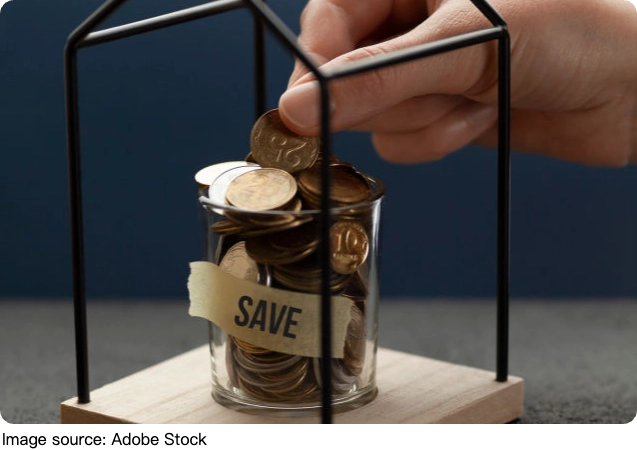
In the end, the real opponent is inside the investor. Markets will always move unpredictably. Prices will rise, fall, and reverse without warning. That part is unavoidable. What is avoidable is how decisions are made during those moments.
Fear pushes exits too early. Greed pushes exposure too far. Together, they create cycles that feel rational but lead to inconsistency.
Once investing becomes a system guided by rules instead of reactions, outcomes stabilize. The goal is not emotional silence but emotional containment, so decisions remain aligned with structure rather than impulse.
Popular
Bitcoin vs. Wheat Hedging
What research says about Bitcoin and farm commodities as inflation hedges, and what holders can do.
Unit Economics at Scale
Why more customers do not always mean more profit, and how to tell whether growth is healthy.
Climate Investing Timelines
How short-term swings and long-term growth differ in green assets, and how to balance the two in a portfolio.
Ways to Get Bitcoin Safely
From exchanges and mining to cashback apps, here is how each route works and how to protect your coins.