A Lifelong Bond
A Lifelong BondPosted by James Carter on 27-08-2026
Wild Animals
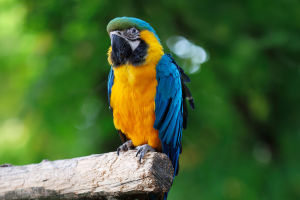
What's up, Friends! Macaws are known for forming strong pair bonds, with several species maintaining long-term relationships. Their social connections can remain stable for many years, especially during breeding and raising young.
As parrots with impressive vocal learning abilities, macaws can imitate sounds from their surroundings, including human speech. With enough exposure, they may even repeat words or phrases that people consider inappropriate.
Macaw Pairs Can Stay Together for Life
Lifelong pair bonding is documented in several macaw species. Blue-and-yellow macaws form monogamous pairs that mate for life, while red-and-green macaws maintain a monogamous pair bond and commonly stay with their partner outside larger social gatherings.
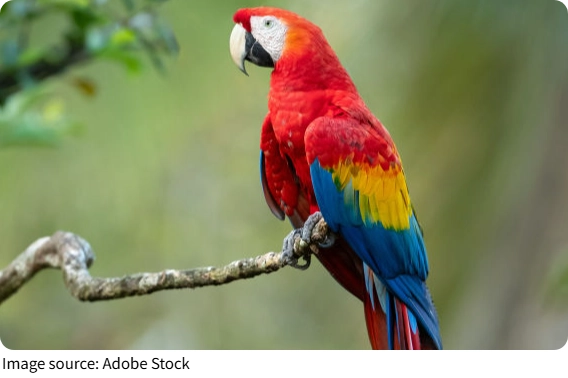
Scarlet macaws also maintain monogamous pair bonds for life. Although they gather in groups to sleep and may interact with other macaws, breeding pairs spend much of their time together.
Pair bonding involves physical and social contact. Scarlet macaws, for example, use tactile communication while preening one another. Staying close to a partner also fits their broader social behavior, which includes vocal communication and coordinated activity.
Macaws Learn and Copy Sounds
Macaws do not simply produce one fixed set of calls. Their vocal behavior includes different sounds used for communication, and some macaw species show vocal learning and mimicry. Some species can develop a large vocal repertoire throughout their lives. Both sexes vocalize, and both learn vocalizations in the same general manner.
Their calls can serve social functions and can also be used when defending nesting areas. Parrots are among the bird groups capable of vocal learning. This ability allows them to learn sounds after hearing them rather than relying entirely on calls that are present from birth.
Why Some Parrots Learn Profanity
The ability to copy human speech explains how a parrot can end up repeating words spoken by people around it. This behavior has been documented in captive parrots, including birds that repeatedly copied profanity. A British wildlife park reported a group of parrots that had learned offensive words by closely copying human voices.
Staff members observed that some birds had learned different human-sounding voices, reflecting the sounds they had heard. The same vocal learning process can produce harmless sounds. Parrots have also been observed copying noises from household equipment and other sounds in their environment.
This does not mean every macaw will learn human speech or profanity. Individual birds differ in the sounds they copy, and the available evidence about foul language is broader for parrots as a group than for macaws specifically.
What This Means for Macaw Owners
A macaw kept around people can hear and learn repeated sounds from its environment. Words spoken frequently and clearly may become part of the bird's learned vocal repertoire, so household language can influence what the bird repeats. For that reason, people who do not want a bird repeating offensive words should avoid using them around the bird.
Changing the sounds available to the bird can also change what it has an opportunity to imitate. A macaw's vocal ability is therefore separate from its pair-bonding behavior. Lifelong monogamous relationships are documented in several species, while vocal mimicry is a learning ability that can produce a wide range of copied sounds.
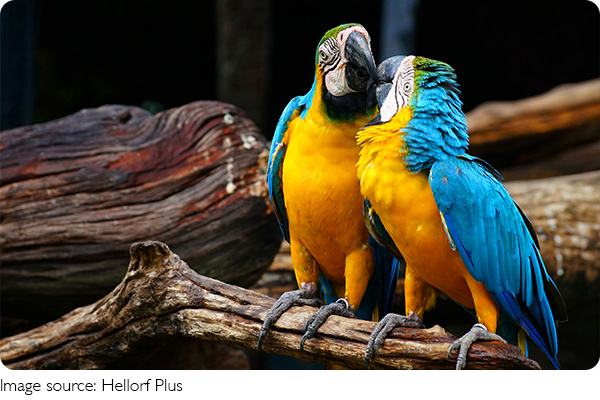
Macaws can form long-term pair bonds while also learning sounds from the environment around them. For anyone living with one, the practical point is simple: pay attention to both its social relationships and the language it hears regularly, because both can shape its behavior.
Popular
Genetics Can Save Species
A species may look healthy in the wild yet still face a hidden danger: too little genetic diversity to survive future challenges.
Long Fur, No Mats!
Brushing, bathing, and simple mat-prevention tips for a soft, healthy coat!
Why Lions Roar After Dark
Discover What Lion Roars Really Mean and Why They Echo Across the Night
One Voice in the Crowd
With pups and mothers calling everywhere, one familiar sound can guide a pup home!