Lake Como or Lake Garda?
Lake Como or Lake Garda?Posted by Camille Dubois on 18-08-2026
Holiday Topics
Choosing between Lake Como and Lake Garda is less about finding the “better” lake and more about deciding what kind of Italian escape you want.
Lake Como is cinematic, polished and compact. Its steep mountains, elegant villas and famous villages make it ideal for romantic trips, stylish hotels and slow ferry days.
Lake Garda is larger, more varied and usually easier on the budget. It combines medieval towns, beaches, hiking, water sports and family attractions, so it works particularly well for longer stays.
Lake Como: for atmosphere and elegance
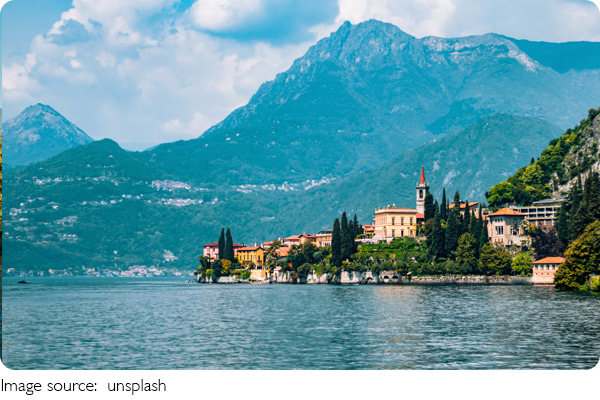
Lake Como delivers the classic postcard version of northern Italy.
Bellagio is the best-known stop, with steep lanes, boutiques and waterfront cafés. Varenna feels smaller and quieter, while Menaggio makes a practical base for exploring the central part of the lake.
The scenery is dramatic almost everywhere: mountains rise directly behind the water, while historic villas and gardens line the shoreline.
One of the most worthwhile visits is Villa Carlotta in Tremezzina. In 2026, standard admission costs €17.50, with reduced rates available for students and older visitors.
Lake Como is also easy to explore without renting a car. Ferries connect many of the most popular towns, and the boat journey is often one of the highlights rather than simply transportation. Official 2026 fares vary by route; for example, Como–Nesso costs €16.70 on the listed special fare.
Lake Como
How expensive is Lake Como?
Como’s luxury reputation is justified, but you do not need a five-star hotel to enjoy it.
Away from the most famous waterfront properties, guesthouses and apartments can be much more reasonable. Staying in Como town, Lecco or slightly inland can also reduce accommodation costs.
Without accommodation, plan around €55–€90 per person per day.
A simple café breakfast might cost €5–€8, lunch around €15–€20 and a restaurant dinner roughly €25–€40. Add ferries, villa admission or an aperitivo and the budget climbs quickly.
The easiest way to save is to use public ferries rather than private boat tours and combine restaurants with supermarket lunches or picnics.
Lake Garda: more space, more choice
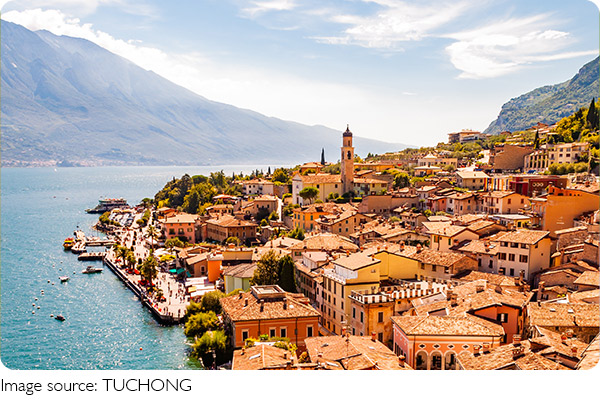
Lake Garda feels less like one destination and more like several holidays wrapped around the same lake.
In the south, Sirmione is famous for its medieval castle, narrow historic streets and turquoise water.
Farther north, Riva del Garda and Torbole are surrounded by steep mountains and attract travellers interested in sailing, hiking, cycling and windsurfing.
The eastern shore around Malcesine gives easy access to Monte Baldo, while western towns such as Salò offer a more relaxed promenade-and-café atmosphere. That variety is Garda’s biggest advantage.
Better for active travellers
If you prefer doing rather than simply looking, Garda has the stronger offer.
The northern lake is one of Italy’s best-known areas for windsurfing and sailing. Hiking and mountain biking routes start almost directly from several lakeside towns, while Monte Baldo adds mountain scenery above the eastern shore.
The lake’s public ferry network also makes multi-town trips possible without constantly driving. In 2026, a one-day ticket covering the whole lake, including fast services, costs €39.50.
For shorter journeys, individual tickets are cheaper.
Lake Garda is easier on the budget
Garda usually offers more affordable accommodation simply because there is more of it.
Campsites are widespread, often with swimming pools, beach access, bicycle hire and family facilities. B&Bs, apartments and simpler hotels provide further options.
Without accommodation, around €45–€75 per person per day is a realistic budget.
Food prices are broadly similar to Como, but there are generally more casual places and self-catering options, especially around camping areas and larger towns.
Travelling with children?
Garda has the clear advantage.
Gardaland, near the southeastern shore, is one of Italy’s major theme parks. Current 2026 online tickets start from around €29 for selected products, while standard park pricing varies by date and ticket type.
There are also castles, beaches, boat trips and plenty of outdoor activities.
Como is perfectly possible with children, particularly if they enjoy boats and swimming, but the experience is more focused on villages, gardens and scenery.
Where is swimming better?
Both lakes have public beaches and swimming areas, but Garda generally offers more choice.
Its wider shoreline includes pebble beaches, grassy access areas and organised lidos.
Como’s beaches can feel smaller and more scattered, particularly around the steep central shoreline. On the other hand, swimming beneath the surrounding mountains can be spectacular.
For either lake, water shoes can be useful because many beaches are pebble rather than sand.
Which is better without a car?
Lake Como is arguably easier for a short car-free trip.
Trains connect Milan directly with Como and Varenna, and ferries then link Bellagio, Menaggio and other central towns.
Garda is also possible without driving, but its greater size means planning matters more. Trains reach Desenzano del Garda and Peschiera del Garda in the south, while buses and ferries continue around the lake. Official summer ferry schedules operate across the lake through 4 October 2026.
A three-day Lake Como trip
Day 1: Explore Como town and take a ferry north.
Day 2: Combine Bellagio and Varenna, leaving time for a long lakeside lunch.
Day 3: Visit Villa Carlotta or another historic villa and garden before returning towards Milan.
Como rewards a slower itinerary. Trying to visit too many villages often means spending more time waiting for transport than enjoying them.
A three-day Lake Garda trip
Day 1: Start in Sirmione and explore the southern shore.
Day 2: Travel north towards Riva del Garda or Torbole for hiking, cycling or water sports.
Day 3: Visit Malcesine and spend time around Monte Baldo, or dedicate the day to Gardaland if travelling as a family.
Because Garda is so large, staying in one part of the lake and exploring nearby areas is usually smarter than attempting a complete circuit.
So which should you choose?
Choose Lake Como if you want romantic scenery, historic villas, elegant hotels, photogenic villages and an easy two- or three-day escape from Milan.
Choose Lake Garda if you want more beaches, outdoor activities, family options, campsites and a broader range of budgets.
Como feels more polished and concentrated. Garda feels more varied and energetic.
For a first romantic weekend, Lake Como probably wins. For a longer summer holiday with swimming, hiking and better value, Lake Garda is the stronger all-round choice.
Popular
Summer on Baltic Coast
Palanga and the Curonian Spit combine beaches, dunes, pine forests and relaxed summer travel at prices that remain manageable.
Sweden’s Forest Comeback
Deep ravines, wild swimming and restored broadleaf forest make Söderåsen one of southern Sweden’s most rewarding nature escapes.
Lake Como or Lake Garda?
Both are stunning, but Como is for glamour and romance, while Garda excels in activities, variety, and value.
Europe’s Best Beach for 2026
Monte Clérigo combines wild Atlantic scenery, golden sand, surfing and coastal walks without the resort crowds of the central Algarve.