Europe Beyond the Crowds
Europe Beyond the CrowdsPosted by Caroll Alvarado on 18-08-2026
Travel and Fun
Europe in summer does not have to mean packed streets, impossible restaurant reservations and queues stretching around famous landmarks. Some of the continent’s most rewarding destinations sit just beyond the usual tourist circuit, offering many of the same pleasures at a gentler pace.
Here are eight alternatives worth adding to a 2026 summer itinerary.
Here are eight alternatives worth adding to a 2026 summer itinerary.
1. Ourense, Spain
Swap Barcelona’s crowded streets for Ourense, a Galician city built around thermal springs. Wander through the historic centre, climb towards Montealegre for city views and finish the day soaking in naturally warm water.
There is one important 2026 detail: the city’s official tourism service currently lists A Chavasqueira and Outariz spa facilities as closed, so check the latest thermal-bath status before planning your day around them.
Ourense is also a good base for discovering Galicia’s hearty regional cooking and quieter countryside.
Stay: around the old town for restaurants and evening walks.
Daily budget: roughly €45–70 excluding accommodation.
2. Tallinn, Estonia
If southern European capitals feel too hot and crowded, Tallinn offers a very different summer break.
Its UNESCO-listed Old Town brings together medieval streets, towers and viewpoints, while Kalamaja adds wooden houses, cafés and a more contemporary neighbourhood atmosphere.
Summer evenings remain light remarkably late, making this a city where dinner can easily turn into another long walk.
Spend the first day around Toompea and the historic centre, then use the second for Kalamaja, Telliskivi or Kadriorg.
Stay: Old Town for atmosphere or Kalamaja for a more local feel.
Daily budget: about €50–75 excluding accommodation.
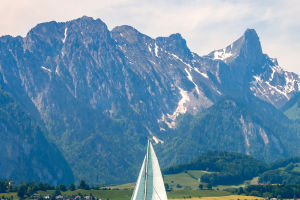
3. Lake Thun, Switzerland
Instead of automatically choosing Lake Geneva or central Lucerne, head towards Lake Thun in the Bernese Oberland.
Swimming is permitted at numerous locations around Lakes Thun and Brienz unless local signs state otherwise, and designated lidos make a summer dip especially easy.
Take a boat between lakeside towns, combine the journey with a short hike or simply settle beside the water for an afternoon. Nearby Interlaken makes transport straightforward but tends to be busier, so staying closer to Thun or Spiez can create a calmer experience.
Stay: Thun or Spiez.
Daily budget: approximately €90–130 excluding accommodation.
4. Braga, Portugal
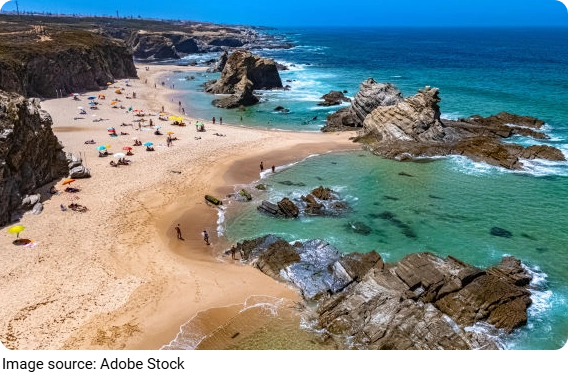
Porto receives much of northern Portugal’s attention, but Braga works beautifully as a smaller cultural break.
Explore the historic centre and Sé Cathedral, then head uphill to Bom Jesus do Monte, famous for its monumental staircase, chapels, gardens and panoramic setting. The sanctuary remains open to visitors, although access inside the basilica can be restricted during services.
Braga is also compact enough to explore without filling every hour with transport.
Stay: historic centre.
Daily budget: around €45–70 excluding accommodation.
Bom Jesus do Monte
5. Bordeaux, France
Bordeaux is hardly unknown, but compared with Paris in high summer it can feel considerably easier to navigate.
Its UNESCO-listed historic centre is an exceptional architectural ensemble, with the Garonne waterfront, grand squares and protected buildings creating a city made for long walks.
Spend one day exploring on foot and another heading towards nearby vineyards. Trams and bicycles make it relatively simple to move around without a car.
Stay: Saint-Pierre for atmosphere or Chartrons for cafés and a quieter evening.
Daily budget: approximately €65–95 excluding accommodation.
6. Rotterdam, Netherlands
Amsterdam may dominate Dutch city breaks, but Rotterdam offers something entirely different.
Here the attraction is contemporary architecture, waterfront development and an increaingly creative use of public space. Recent projects have transformed streets, squares and waterside areas with more greenery and climate-conscious design.
Walk through the centre towards the Maas, explore the Markthal and Cube Houses, then cross towards Kop van Zuid.
Stay: around Kop van Zuid for river views.
Daily budget: roughly €65–95 excluding accommodation
7. Bergen, Norway
For travellers who would happily exchange museums for mountains, Bergen makes a compelling alternative to Oslo.
Colourful Bryggen provides the classic first impression, but the real advantage is how quickly urban streets give way to hills, water and western Norway’s fjord landscapes. The city is a natural starting point for hiking and wider trips into Norway’s fjord regions.
Even in summer, pack a waterproof layer: Bergen’s dramatic scenery comes with equally enthusiastic weather.
Stay: near Bryggen or the city centre.
Daily budget: around €90–130 excluding accommodation.
8. Mostar, Bosnia and Herzegovina
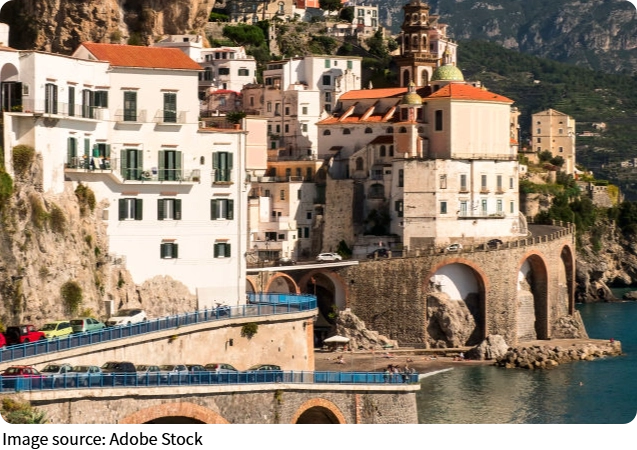
If Croatia’s Adriatic hotspots feel overwhelming in July and August, travel inland to Mostar.
The city centres on the stone Stari Most bridge and an old quarter of narrow streets, workshops and cafés. Staying overnight is particularly worthwhile because the centre becomes noticeably calmer once many day-trip groups leave.
Use a second day for nearby waterfalls, vineyards or mountain landscapes rather than rushing back towards the coast.
Stay: within walking distance of the Old Bridge.
Daily budget: roughly €35–55 excluding accommodation.
One More Worth Considering
Ljubljana deserves an honourable mention for anyone wanting a compact capital with pedestrian streets, riverside dining and easy access to Slovenia’s countryside.
The broader lesson is simple: summer in Europe becomes much easier when you stop assuming the most famous city must also be the most rewarding.
Choose somewhere with enough to explore but enough breathing room to enjoy it — and your summer holiday may finally feel like a holiday.
Popular
Europe’s Island Drive
El Hierro tops a 2026 ranking of secluded European island road trips.
Europe Beyond the Crowds
Eight European summer escapes where great food, culture and scenery come with fewer crowds.
Europe for Digital Nomads
Five European countries that make remote work easier in 2026.
Europe’s Best Stillcations
Forget packed itineraries: these European escapes are made for walking slowly, sleeping deeply and letting nature set the schedule.