AI Medicine Game Shift!
AI Medicine Game Shift!Posted by Chris Isidore on 14-04-2026

Odd News
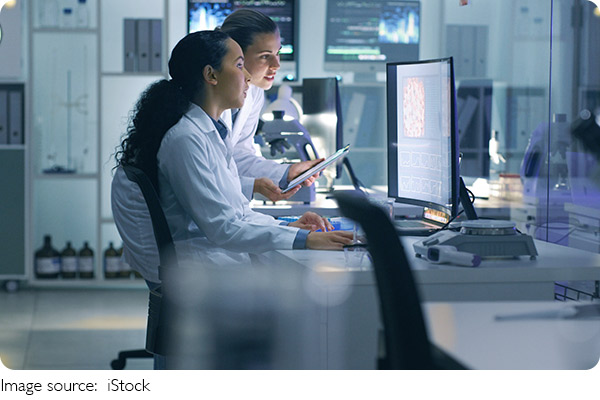
Drug discovery has long been constrained by the complexity of biological systems and the difficulty of identifying molecules capable of interacting with elusive therapeutic targets.
Many conditions involve proteins or molecular pathways that resist traditional small-molecule approaches, making them historically “undruggable.” Artificial intelligence is reshaping this landscape by introducing computational methods capable of mapping molecular behavior at unprecedented scale.
Understanding the Challenge of Difficult Drug Targets
In pharmaceutical science, drug targets often involve proteins with flexible structures, hidden binding sites, or unstable conformations. These characteristics make experimental identification slow and resource-intensive. Traditional screening methods require extensive laboratory testing of large chemical libraries, with low probability of success for complex targets.
Certain proteins associated with regulatory signaling and intracellular communication have historically resisted therapeutic modulation. Their surfaces may lack obvious binding pockets, or they may shift shape depending on their environment. These properties complicate conventional drug design, where stable structural information is essential. As a result, a significant portion of the human proteome remained underexplored for decades.
AI-Driven Structural Biology and Protein Prediction
A major breakthrough in modern computational biology has been the use of AI for protein structure prediction. Deep learning systems trained on vast biological datasets can infer three-dimensional protein configurations from amino acid sequences. This advancement reduces the reliance on time-consuming experimental methods such as crystallography or cryo-electron microscopy.
One of the most influential developments in this field is Demis Hassabis and DeepMind’s AlphaFold system. By achieving highly accurate predictions of protein structures, AI has significantly expanded the understanding of molecular architecture. This capability enables researchers to identify previously hidden binding sites and evaluate how potential drug compounds might interact with complex targets.
Generative Models and Novel Molecule Design
Beyond structural prediction, AI is now used to generate entirely new molecular candidates. Generative algorithms analyze known chemical structures and propose novel compounds optimized for specific biological targets. These systems evaluate multiple parameters simultaneously, including binding affinity, stability, and synthetic feasibility.
Unlike traditional trial-and-error methods, generative models can explore vast chemical spaces in a fraction of the time. This capability is particularly valuable for difficult targets, where conventional libraries often lack suitable candidates. Machine learning systems iteratively refine molecular designs, improving the likelihood of identifying viable therapeutic leads.
Transformer-based architectures and diffusion models have further enhanced molecular generation. These systems can incorporate structural constraints from target proteins, allowing more precise alignment between drug candidates and binding sites. As a result, early-stage discovery pipelines are becoming faster and more targeted.
Accelerating Target Validation and Biological Insight
AI is also transforming target validation, a critical step in drug development. By integrating genomic, proteomic, and chemical data, machine learning models can identify which molecular targets are most likely to influence disease pathways. This reduces the risk of investing resources in ineffective targets.
Network-based AI models map interactions between proteins, genes, and metabolic pathways, revealing indirect relationships that may not be apparent through traditional analysis. These insights help prioritize targets that play central roles in disease progression, improving the efficiency of downstream research.
In oncology, neurobiology, and infectious disease research, AI-driven systems are increasingly used to simulate how interventions might alter biological networks. These simulations provide early-stage predictions of efficacy and potential side effects, reducing reliance on lengthy experimental cycles.
Integration with High-Performance Computing and Robotics
The convergence of AI with automated laboratory systems has further accelerated drug discovery. Robotics platforms can conduct thousands of experiments in parallel, while AI algorithms analyze results in real time. This closed-loop system enables continuous refinement of hypotheses and rapid iteration of compound testing.
High-performance computing infrastructure allows AI models to process massive biological datasets, including genomic sequences and chemical interaction profiles. This computational scale is essential for addressing the complexity of modern drug discovery challenges, particularly for targets involving dynamic or multi-protein systems.
Future Directions in Therapeutic Innovation
The future of drug discovery is increasingly defined by integration between computational intelligence and molecular biology. AI systems are expected to further refine precision targeting, enabling therapies tailored to specific molecular profiles. This approach may expand treatment possibilities for conditions previously considered difficult to address.
Advances in multimodal AI, combining structural biology, chemical modeling, and clinical data, are likely to deepen understanding of disease mechanisms. Over time, drug discovery may shift from linear experimentation to adaptive, data-driven ecosystems capable of continuously learning from new biological information.
According to AI biotech leader Joshua Meier, generative AI is enabling the design of novel therapeutic molecules that can target previously undruggable proteins, significantly expanding the scope of drug discovery.
Artificial intelligence is transforming the search for solutions to medicine’s most challenging drug targets by redefining how biological complexity is understood and addressed. Through protein structure prediction, generative chemistry, and network-based modeling, AI is unlocking regions of molecular space that were previously inaccessible. Integration with automated laboratories and high-performance computing further accelerates discovery cycles.
Popular
The Role of Immune Cells!
How does your body fight back? These cells protect you every second!
Hypnagogic Hallucinations
What happens when you’re half awake? Strange visions appear in that in-between state!
Fix Your Timeline
Your Money Isn’t Growing? Your Timeline Might Be the Hidden Problem!
Freedom Beyond Stability
The Hidden Line Between Stability and Freedom—Most People Never Cross It!