The Kimberley
The KimberleyPosted by Naveen Kumar on 14-04-2026
On Trend
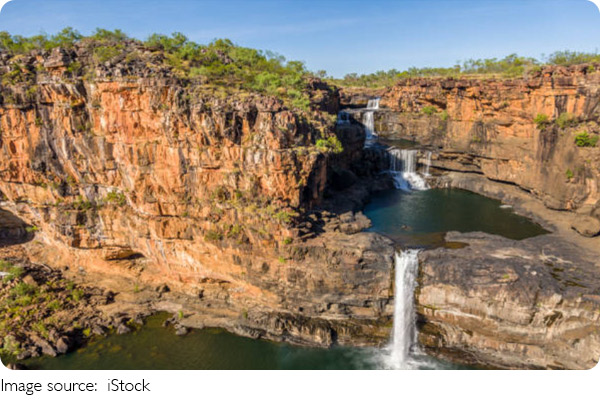
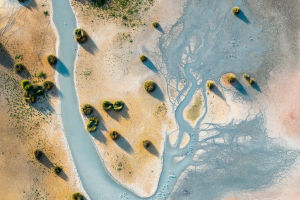
From directly above, the landscape looks like it belongs to a different world entirely.
Water channels branch through pale tidal flats in patterns that resemble the root system of an enormous tree, scattered vegetation sits in dark green clusters on the exposed sand, and the whole composition shifts between gold, blue, and grey in a palette that no designer would think to combine deliberately.
The Kimberley is a region of northwestern Australia the size of California, with roughly 35,000 people and some of the most extraordinary terrain on the planet.
Most Australians haven't been here. Almost no international visitors come close. The reality at ground level is even more dramatic than the photos. Heard of it? Here is what you need to know.
The Kimberley
What the Kimberley Actually Is
The Kimberley occupies the northwestern corner of Western Australia, bounded by the Indian Ocean to the west and north, the Great Sandy Desert to the south, and the Northern Territory border to the east. It is one of the most geologically ancient landscapes on Earth — the Kimberley Plateau contains rock formations estimated at 1.8 billion years old, making it among the oldest exposed rock surfaces on the continent.
The coastal areas produce the tidal landscape visible in the photograph. The Kimberley coast has one of the most extreme tidal ranges in the world — in some locations the difference between high and low tide exceeds 11 meters, which is among the largest tidal movements recorded anywhere on the planet.
This extreme tidal range creates the intricate channel networks, exposed tidal flats, and mangrove systems that from the air produce the branching water patterns that make aerial photography of the region so compelling.
The mangrove communities — the dark green clustered vegetation visible from above — are among the most extensive and least disturbed in Australia. They function as nurseries for marine species, carbon storage systems, and coastal stabilizers in ways that scientists are still fully documenting. The Kimberley coast remains largely free of the development pressure that has degraded mangrove systems in other parts of the world.
Getting There
The Kimberley's principal access point for visitors is Broome — a pearling town of approximately 15,000 people on the region's southwestern coast that serves as the gateway to the broader wilderness area. Qantas operates direct flights from Perth to Broome, with journey times of approximately two hours and tickets starting from approximately $180 to $280 each way depending on season and booking timing.
From Broome, access to the Kimberley's interior and coast requires either a self-drive journey along the Gibb River Road — a 660-kilometer unsealed track crossing the heart of the Kimberley, requiring a four-wheel drive vehicle — or participation in an organized tour. Four-wheel drive rental from Broome starts from approximately $150 to $200 per day for a vehicle equipped for unsealed road travel.
For visitors who want to experience the coastal tidal landscape from the air, scenic flights over the Kimberley coast operate from Broome and from the town of Kununurra in the region's east. Prices for fixed-wing scenic flights start from approximately $250 to $400 per person depending on duration and route.
Key Experiences and Practical Information
The Kimberley's attractions are distributed across enormous distances, which shapes how any visit needs to be planned.
1. Horizontal Falls — a phenomenon unique to the Kimberley where extreme tidal movement forces water through narrow coastal gorges, creating what appears to be a waterfall oriented horizontally. Accessible only by seaplane or boat tour from Broome, with day tour prices starting from approximately $550 to $800 per person.
2. Mitchell Falls — a four-tiered waterfall in the Mitchell River National Park, accessible via the Gibb River Road and a three to four hour return walk. National park entry costs approximately $15 per vehicle per day.
3. Windjana Gorge — a limestone gorge through the Napier Range with a permanent waterpool supporting freshwater crocodiles and diverse birdlife. Entry costs approximately $15 per vehicle.
4. El Questro Wilderness Park — a privately managed station of approximately one million acres offering guided tours, gorge walks, and thermal spring access. Day visitor passes cost approximately $20 per person with additional costs for specific experiences.
Where to Stay
Accommodation in the Kimberley ranges from luxury wilderness lodges to basic station stays along the Gibb River Road.
Longitude 131 at Uluru — while technically not in the Kimberley itself — represents the style of high-end wilderness accommodation that the region's best properties emulate. Within the Kimberley, El Questro's Emma Gorge Resort offers tented cabin accommodation from approximately $220 per night.
Home Valley Station, a working rural property on the Gibb River Road, provides comfortable station accommodation from approximately $180 per night with meals available on site.
In Broome, Cable Beach Club Resort sits adjacent to the famous 22-kilometer beach with rooms from approximately $250 per night. A range of guesthouses and smaller hotels in Broome town center offer accommodation from approximately $100 to $160 per night, providing a comfortable base from which to arrange regional tours and flights.
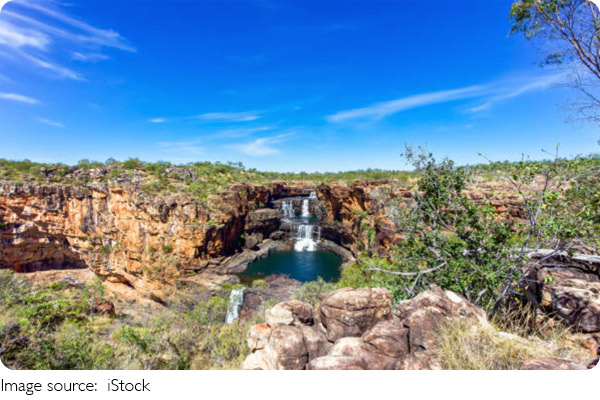
The Kimberley is one of those rare places where the scale of the landscape makes a person feel appropriately small — where the tidal forces reshaping the coast twice daily operate on a timeline that makes any individual visit feel like a brief and privileged glimpse of something continuous and ancient. The branching water channels in the photograph were not shaped by any single event.
They were formed by the same tidal movements, repeated twice daily, across thousands of years of coastal geology. Have you been to the Kimberley, or is this the moment it moved from somewhere you had heard of to somewhere you are genuinely planning to go? Either way, the tides will keep carving those channels — patient, powerful, and entirely indifferent to whether anyone is watching from above.
Popular
Ocean Golden Hour
The Science Behind That Breathtaking Sunset Wave Photo Everyone Stops to Stare At.
Ria Formosa Uncovered
This tidal lagoon in southern Portugal produces sunsets that don't look real — and almost no one visits.
Crystal Ice Cave
Walk inside Breiðamerkurjökull glacier — the world's most stunning blue ice cave experience
Tegallalang Rice Terrace
Bali's most iconic green terraces are even more stunning in person — here's how to visit right