The Panda's Diet
The Panda's DietPosted by Mason O'Donnell on 31-03-2026

On Trend
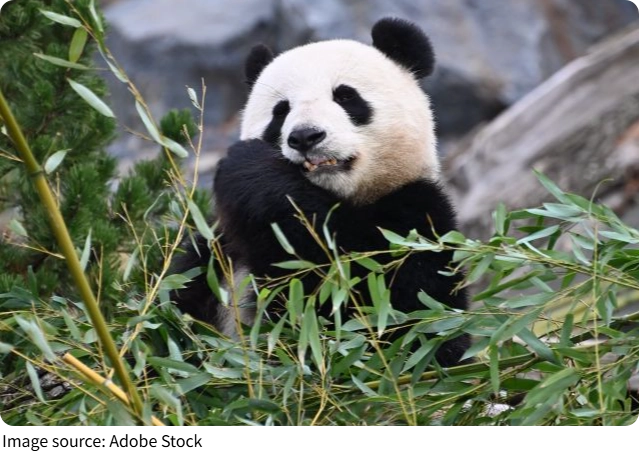
Pandas are often seen as symbols of calmness and gentleness, with their lovable appearance capturing the hearts of millions.
But behind their adorable exterior lies a complex and very specific dietary pattern. From their infancy to adulthood, pandas undergo an interesting evolution in both their eating habits and growth.
Let's take a closer look at the panda's extraordinary diet and how it shapes their development.
1. Bamboo: The Essential Diet for Survival
Pandas are herbivores that depend almost entirely on bamboo. Despite their classification as carnivores, their digestive system has adapted to extract nutrients from bamboo, a low-energy food. A panda needs to consume an average of 40 kilograms (88 pounds) of bamboo every day to fulfill its dietary requirements.
Bamboo is not only the panda's food but its very source of life. The panda's diet is typically composed of three main types of bamboo—tender shoots, leaves, and stems—each providing different nutrients at various stages of growth.
2. Panda Cubs: From Milk to Bamboo
When born, panda cubs are tiny and underdeveloped, weighing only about 100 grams (3.5 ounces). Their early diet consists entirely of their mother's milk, which is rich in nutrients essential for their initial growth. As the cubs grow, around the age of 6 months, they begin to sample bamboo. At first, the cubs eat small amounts of bamboo shoots, gradually increasing their intake as they grow older and their digestive system matures. The transition from milk to bamboo is a critical phase in their development.
3. Growing Up: The Panda's Dietary Journey
As panda cubs continue to grow, their consumption of bamboo increases significantly. By the time they reach one year of age, cubs weigh around 30 kilograms (66 pounds), and their diet consists almost entirely of bamboo. Cubs at this age start to spend more time foraging and learning to break bamboo into smaller pieces.
As they approach maturity at about four to five years old, they are fully dependent on bamboo for their nutritional needs and can forage independently. This steady growth highlights the importance of a bamboo-based diet in their development.
4. The Challenges of a Bamboo Diet
The panda's diet is unique but not without its challenges. Bamboo is relatively low in nutrients and calories, which means pandas must eat large quantities to maintain their energy. This slow digestive process results in pandas spending about 12 to 16 hours a day eating and resting.
The inefficiency of this diet means that pandas have a slow metabolism and a sedentary lifestyle. This reliance on bamboo makes them particularly vulnerable to environmental changes, especially the destruction of their bamboo habitat.

5. Conservation and Sustainable Diet
Given the panda's reliance on bamboo and the threats to its natural habitat, conservation efforts have become crucial in protecting both the panda and its food source. Preservation of bamboo forests, reforestation projects, and creating protected reserves are key strategies in ensuring that pandas have a sustainable environment. These conservation measures not only help safeguard the panda's food supply but also maintain the balance of the entire ecosystem.
Conclusion: Preserving the Panda's Path to Survival
Pandas' diet is intricately linked to their survival and growth. From the very first taste of bamboo to their mature, independent feeding habits, pandas rely on the delicate balance of their environment to thrive. Protecting this balance is not just about saving a species—it's about ensuring the health of an entire ecosystem. By understanding the unique dietary needs of pandas and the challenges they face, we can better appreciate the efforts required to secure a future for these gentle giants.
Popular
The Panda's Diet
Explore the fascinating eating habits and growth stages of pandas
Bird Conservation
Why Saving Birds is Crucial for Our Ecosystem's Future
Cat Night Vision
How Do Cats See So Clearly in Total Darkness? Discover the Surprising Secrets Behind Their Amazing Night Vision!
Gentle Golden Guardian
Why Do Golden Retrievers Instinctively Protect Babies? Their Gentle Behavior and Loyal Nature Will Truly Surprise Us!