Night Vision
Night VisionPosted by Caroll Alvarado on 12-03-2026

Funny Facts

Have you ever noticed your cat darting around at night with no trouble at all while you fumble for the light switch? It's not magic—they just have incredible night vision.
While humans struggle to see in low light, cats thrive in it. Their ability to navigate in the dark is one of the many fascinating features that make them such excellent hunters.
So how do they do it? Cats have a high concentration of rod cells in their retinas, which are specialized for low-light vision. Unlike humans, whose eyes are adapted for daytime vision with more cone cells (used for color and detail), cats have more rods, allowing them to detect even the faintest light. This adaptation helps them see in environments with very little illumination, perfect for dawn or dusk when prey like mice and birds are most active.
Why Cats' Night Vision is So Special
Cats' extraordinary ability to see in dim light isn't just due to their rod cells. They also have a special feature called the tapetum lucidum, a layer of reflective cells behind their retina. This layer acts like a mirror, reflecting light that passes through the retina back into the eye, giving the rods another chance to detect it. The result? Cats' eyes can gather more light, making them much more efficient in low-light conditions.
1. Improved Sensitivity:
The tapetum lucidum not only boosts their night vision but also increases the sensitivity of their eyes. This means cats can detect even the smallest movements at night, which is essential for hunting.
2. Eyeshine:
Ever noticed your cat's eyes glowing in the dark? This is a direct result of the tapetum lucidum. When light hits this reflective layer, it causes a glow, which is why cats' eyes appear to “shine” at night.
The Impact of Night Vision on Hunting
Cats are natural hunters, and their night vision plays a huge role in their success. Most of their prey, such as small rodents, are nocturnal, which means they are most active at night. With their exceptional night vision, cats can track and capture prey that is virtually invisible to other predators.
1. Stealthy Approach:
Cats rely on stealth, and being able to see in low light allows them to silently stalk their prey. Their ability to adjust to different levels of light helps them maintain that advantage, even in dimly lit or shadowy environments.
2. Precision in Hunting:
By seeing better in the dark, cats can judge distances and movements more accurately, giving them the precision needed for a successful hunt. This is crucial for ambush predators, who need to pounce at the perfect moment.
How Cats' Night Vision Benefits Pet Owners
For domestic cats, night vision is more than just a survival trait. It affects how they interact with their environment and their owners, especially during the night. Cats are often more active during the evening and early morning hours, which aligns with their natural hunting instincts.
1. Nocturnal Play:
If you've ever found your cat darting around the house at 2 a.m., you've experienced this firsthand. Cats are often most active at night, using their enhanced vision to explore, hunt (play), or get into mischief.
2. Safety for Indoor Cats:
Indoor cats, especially those who spend most of their time in dimly lit spaces, rely heavily on their night vision for navigating their surroundings. Their ability to see in low light helps them avoid obstacles, find food, or simply explore their territory with ease, even when it's dark.
Why Night Vision Still Matters in the Daytime
While night vision is clearly an essential skill for nocturnal hunting, it's not just useful after the sun sets. Cats' eyes are equipped to adapt quickly to changing light conditions. When transitioning from bright daylight to darkness, their eyes adjust rapidly, allowing them to continue seeing clearly. This ability to switch between different levels of light is a unique trait that separates them from humans, who take longer to adjust to low-light conditions.
1. Faster Adaptation:
When you step from a brightly lit room into a dimly lit hallway, it can take a while for your eyes to adjust. But a cat can quickly adjust from day to night or from dark to light, ensuring they don't miss a beat.
2. Ambush Advantage:
This fast adaptation is useful not only at night but also during the day, especially when they're hunting in shaded areas. It lets them blend into their environment and wait patiently for prey, whether it's dusk or midday.
The Evolutionary Benefit of Night Vision
The evolution of cats' night vision is deeply tied to their history as predators. Over millions of years, cats developed an ability to hunt in low-light conditions, allowing them to catch prey that was invisible to other predators. This evolutionary advantage has ensured their success as hunters, from the wildcats of ancient times to the domesticated cats of today.
1. Survival of the Fittest:
Cats evolved in environments where light was scarce, such as dense forests or grasslands where prey might be hiding. Over time, those with superior vision in the dark had better chances of survival and reproduction, passing down their excellent night vision to future generations.
2. The Link to Their Hunting Style:
The ambush technique employed by modern-day cats is directly tied to their night vision. They use this skill to sneak up on prey, making their approach less detectable by the prey's senses.
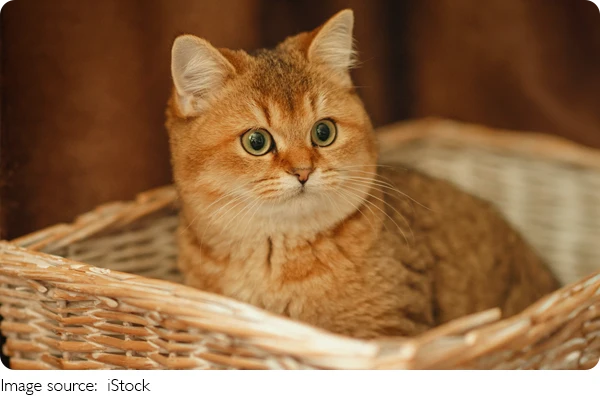
In Conclusion: More Than Just a Party Trick
Cats' night vision is far from a party trick; it's a finely-tuned skill that plays a crucial role in their survival and day-to-day behavior. From stalking prey in the wild to playing around your house at night, their ability to see in low-light conditions is vital for their success as hunters and companions. Whether they're curled up next to you on the couch or sneaking around in the dark, cats' remarkable vision makes them uniquely equipped to thrive in the shadows.
Popular
Decoding Cat Communication
Understanding What Your Cat’s Signals Really Mean.
Cats Through Human History
From Wild Hunters to Cherished Companions Across Millennia.
Rabbit Mouth Mystery
Why Do Rabbits Keep Moving Their Mouths Nonstop? Discover the Surprising Reasons Behind This Adorable Habit!
Speed, Spots, and Survival
The Speed Specialists of the Animal Kingdom.