Cells Made From Scratch!
Cells Made From Scratch!Posted by Sofia Alvarez on 02-11-2026
Odd News
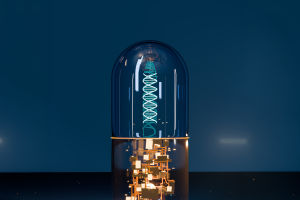
Scientists have taken an important step toward understanding how living cells work by developing SpudCells, laboratory-made structures assembled from non-living chemical components.
Created by researchers at the University of Minnesota, these tiny systems can absorb materials, grow, copy genetic information, and divide. Although they are not considered fully living organisms, their development represents a significant achievement in synthetic biology and offers new opportunities to study the basic processes of life.
What Makes SpudCells Different?
SpudCells are different from traditional genetically modified cells because researchers assembled them from individual chemical components rather than changing an existing living cell. This approach is known as bottom-up synthetic biology.
The research team, led by synthetic biologist Kate Adamala, combined several essential components to create the artificial structures. These include a fatty membrane, DNA, enzymes, and molecular machinery that supports basic cellular activities. The membrane forms an outer boundary, while the genetic material provides instructions for certain processes. Enzymes and other biological components help carry out those instructions.
How Artificial Cells Grow and Divide
One of the most interesting features of SpudCells is their ability to complete several stages of a basic cellular cycle. They can absorb additional materials, increase in size, copy their genetic information, and divide into smaller structures. However, they cannot perform these activities entirely independently. Researchers must provide additional resources through tiny membrane-covered bubbles containing proteins and other necessary components.
These bubbles merge with the artificial cells, delivering materials needed for continued growth and division. Certain proteins encoded by the synthetic DNA help control membrane fusion and separation. This allows genetic instructions to influence how the structures develop and reproduce.
Why They Are Not Fully Alive
Despite their impressive capabilities, SpudCells still lack several features associated with independent living organisms. Natural cells can produce many of the materials they need and maintain their internal conditions. SpudCells, by comparison, depend on external supplies to keep their molecular machinery working.
One major limitation is their inability to manufacture their own ribosomes. These structures function as protein-building factories, translating genetic instructions into proteins needed for cellular activities. Producing functional ribosomes from scratch remains a difficult challenge because they require numerous components assembled in a precise arrangement.
SpudCells also lack an effective internal organization system. Natural cells use structures such as the cytoskeleton to maintain their shape and distribute genetic material during division.
The Problem of Genetic Inheritance
Another challenge involves how SpudCells pass genetic information to their next generation. Their DNA is distributed across seven separate circular molecules. For successful reproduction, each new structure needs to receive a complete set of genetic instructions.
However, this process is not always reliable. Researchers found that after five generations, only around 30 percent of the artificial cells retained all seven DNA components. This demonstrates that copying genetic material is not enough. Scientists must also ensure that every new structure receives the information required to continue functioning.
Potential Uses of Synthetic Cells
Although SpudCells remain experimental, the technology could eventually support several scientific and industrial applications. One possibility is biological manufacturing. Future synthetic cells might be designed to produce useful materials, including medicines, fuels, and other chemicals. They could also help researchers understand how biological systems function. Because artificial cells contain selected components, scientists can investigate individual processes without dealing with the full complexity of natural cells.
Another potential application involves environmental testing. Specially designed systems might eventually detect particular substances and generate measurable signals. However, these applications remain possibilities rather than established capabilities of the current SpudCell design.
Working Toward Better Artificial Cells
Developing reliable synthetic cells requires knowledge from several scientific disciplines. Researchers must solve challenges involving protein production, internal organization, genetic stability, and reproduction. To encourage cooperation, Kate Adamala and other scientists established Biotic, an international research initiative focused on synthetic biology.
SpudCells represent meaningful progress in understanding and recreating the basic processes of cellular life. Their ability to grow, copy DNA, and divide shows how researchers can combine non-living materials into increasingly sophisticated biological systems. Nevertheless, they still depend on external resources and cannot function independently like natural cells. Improving their protein production, internal organization, and genetic inheritance will be essential for future development.

Rather than representing the creation of fully independent life, SpudCells provide an important foundation for further research. Their development could eventually contribute to new technologies in medicine, biotechnology, and biological manufacturing.
Popular
A Mystery Beneath the Earth
A mysterious signal detected deep underground could offer scientists their strongest clue yet in the search for invisible dark matter.
Cells Made From Scratch!
Can lab-made cells become living systems? SpudCells mark a major step toward synthetic life!
The Universe’s First Minutes
What happened in the Universe's first moments? New research reveals clues through ancient helium!
Mysterious Clouds in Space
New research shows stark road-safety gaps across Europe, with some popular destinations recording high fatality rates.