Election Market Effects
Election Market EffectsPosted by Celia on 18-09-2026

Useful Tips
Hello Lykkers! Election campaigns are among the most powerful periods for financial markets, not because of what is guaranteed to happen, but because of what is uncertain. Markets constantly try to price the future, and during these periods, the range of possible outcomes expands sharply.
That expansion is exactly what drives shifts in investor sentiment. Rather than reacting only to results, investors continuously adjust expectations as new signals emerge: speeches, surveys, fiscal promises, and debates. The result is a dynamic repricing of risk across equities, bonds, currencies, and derivatives.
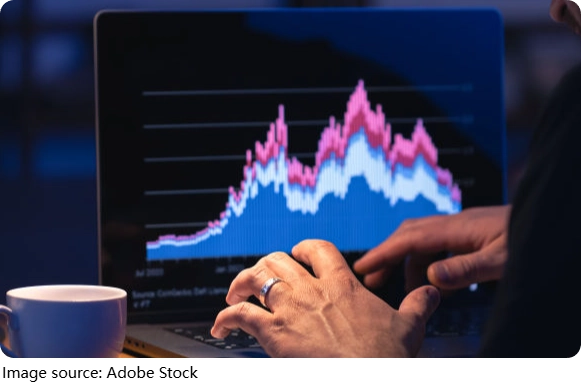
Sentiment as a Pricing Input, Not Just Psychology
In modern finance, sentiment is no longer treated as a soft behavioral concept; it is increasingly embedded into asset pricing through risk premiums and volatility assumptions.
A key perspective comes from Cliff Asness, co-founder and chief investment officer of AQR Capital Management and a prominent quantitative investor.
Asness's research has examined how both risk and investor behavior can influence asset prices and investment returns. He has argued that some established investment strategies may earn returns partly as compensation for risk and partly because of errors made by other investors.
This perspective is useful when considering periods of market uncertainty. Price movements do not necessarily reflect a single factor, so investors should be cautious about attributing market reactions entirely to a single event or an expected policy change.
How Uncertainty Reshapes Market Expectations
Markets do not wait for final outcomes; they continuously adjust expectations as information flows in. During campaign periods, this creates frequent repricing of growth expectations, tax assumptions, and spending forecasts.
The key mechanism is not direction, but dispersion. When possible outcomes are more dispersed, valuation models incorporate a broader range of scenarios, increasing short-term volatility.
This is why even small updates, such as survey changes or policy statements, can trigger noticeable market reactions. Investors are not reacting to certainty; they are reacting to shifts in probability weighting.
Volatility Cycles and Expectation Gaps
Empirical market behavior often shows a distinct pattern during these periods:
- Before the outcome is known, implied volatility tends to rise
- Options markets begin pricing wider outcome ranges
- After key milestones, volatility spikes briefly before stabilizing
This reflects how uncertainty is embedded into derivatives pricing. Options traders, in particular, adjust hedging costs based on the perceived spread of possible outcomes rather than a single forecast.
The result is a volatility structure that expands and contracts as expectations evolve.
Cross-Asset Transmission of Sentiment
Sentiment shifts rarely stay confined to equities. They move across asset classes through interconnected pricing channels.
For example:
- Bond markets adjust based on expected fiscal trajectory
- Currency markets respond to capital flow expectations
- Equity sectors reprice based on sensitivity to policy assumptions
This creates synchronized movement across markets even when underlying economic data remains stable. The driver is not fundamentals alone, but changing expectations about future financial conditions.
Institutional Positioning and Feedback Effects
Large asset managers play a major role in amplifying sentiment changes. Their adjustments are often gradual, but their scale makes them influential.
When institutional portfolios shift toward defensive positioning, liquidity can thin in certain segments of the market. Reduced liquidity increases price sensitivity, meaning even moderate order flow can cause larger price swings.
This creates a feedback loop: sentiment changes positioning, positioning affects liquidity, and liquidity amplifies sentiment.
Information Flow and Short-Term Overreaction
Modern financial systems process information almost instantly. Surveys, debates, and announcements are absorbed by algorithms and trading systems in real time.
This speed can lead to short-term overreaction, where prices adjust faster than fundamental reassessment. In many cases, markets later partially reverse these movements once expectations stabilize.
This pattern reflects a key feature of sentiment-driven environments: information is not just processed; it is amplified through rapid trading reactions.
Post-Uncertainty Stabilization
Once outcomes become clear, markets typically experience a normalization phase. However, this does not always mean a reversal of prices. Instead, the risk premium often stabilizes first.
When uncertainty declines, required returns compress, even if asset prices remain at new levels. This leads to calmer trading conditions and reduced volatility across asset classes.

Final Insight
Investor sentiment during election campaigns is fundamentally about how markets price uncertainty, not just outcomes. It affects volatility, cross-asset relationships, liquidity conditions, and sector positioning all at once.
The most important takeaway is that markets are not only reacting to events, but they are also constantly updating probability distributions of future scenarios. When those distributions widen, sentiment becomes a powerful force shaping short-term financial behavior across the entire system.
Popular
Real Estate Economics
The Untold Truth About Property Wealth Most People Ignore!
ETFs Drive Bitcoin
Why Bitcoin ETFs Are Reshaping Crypto Faster Than Expected!
Future Finance Layer
Inside the New Financial Layer That Could Change Urban Economies Forever!
Recession Wealth Shield
These 5 Strategies Could Help Your Portfolio During Recessions