Commute With Less Effort!
Commute With Less Effort!Posted by Pankaj Singh on 26-08-2026

Odd News
Automatic motorcycles remove the need for manual clutch operation and gear changes, which can make repeated stops and starts easier to manage.
For commuting, that simpler control can reduce the physical work involved in traffic while allowing the rider to concentrate on steering, braking, road conditions, and surrounding vehicles.
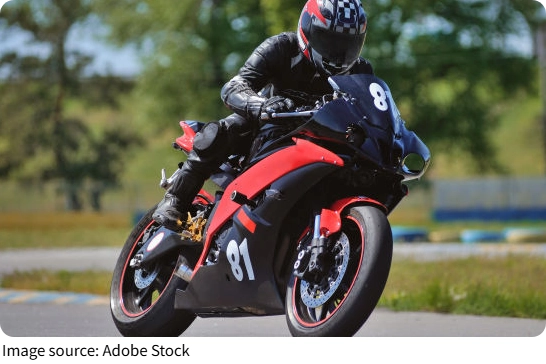
Less Work in Stop-and-Go Traffic
A manual motorcycle requires the rider to coordinate the clutch, gear selector, throttle, and brakes when traffic repeatedly slows and moves. An automatic motorcycle manages transmission changes without requiring manual gear selection or clutch operation.
Many automatic motorcycles use a continuously variable transmission, or CVT. Instead of requiring the rider to select individual gears, the system continuously adjusts the transmission ratio as the motorcycle accelerates or slows. This can simplify repeated starts and stops. The rider still needs to control the throttle, brakes, steering, speed, and following distance according to traffic conditions.
Easier Low-Speed Riding
Low-speed sections can require frequent control adjustments, especially in congested traffic, narrow streets, and parking areas. Automatic transmission removes manual shifting from these situations, allowing the rider to focus on basic motorcycle controls. The benefit does not mean that low-speed riding requires less attention. Riders still need to maintain control of the motorcycle, avoid sudden inputs, and adjust speed to road and traffic conditions.
Automatic operation can also reduce the number of physical movements required during a commute. This can be particularly useful when a route includes repeated acceleration, deceleration, and stops.
Different Automatic Systems Work Differently
Automatic motorcycles do not all use the same transmission design. CVT systems and dual-clutch transmissions, or DCTs, both provide automatic operation but use different mechanical arrangements.
A CVT continuously changes its transmission ratio rather than relying on manually selected gears. A DCT uses two clutches to manage gear changes and can select gears automatically. Some DCT-equipped motorcycles also provide manual gear selection without requiring conventional clutch-lever operation.
This difference matters when comparing motorcycles. A scooter using a CVT will provide a different riding experience from a larger motorcycle equipped with DCT, even though both reduce the need for conventional manual shifting.
Practical Features Can Matter Too
Transmission operation is only one part of a commuter motorcycle. Storage, seat height, curb weight, engine capacity, braking equipment, and riding position can also affect daily usability. Built-in under-seat storage is particularly useful on some automatic scooters because it provides dedicated space for personal items without requiring additional luggage equipment. A lockable and weather-resistant compartment can provide additional practical value for routine transportation.
Seat height and curb weight also deserve attention before purchase. A motorcycle that is difficult to balance or maneuver at low speeds may not suit a particular rider even if its automatic transmission is convenient.
What to Consider Before Choosing One
The following checks can help match an automatic motorcycle to a specific commute:
1. Check the transmission type. Determine whether the motorcycle uses a CVT, DCT, or another automatic system.
2. Review the traffic conditions. Frequent stops and low-speed riding can increase the practical value of automatic operation.
3. Consider engine capacity. The required capacity depends on the roads, traffic, distances, and speeds involved in the commute.
4. Check seat height and weight. These measurements affect low-speed handling, parking, and general control.
5. Review storage space. Built-in storage can be useful when the motorcycle is used for commuting and errands.
6. Understand the braking system. Read the owner's manual to understand how the motorcycle's brakes operate and how they should be used.
7. Match the motorcycle to the route. A compact automatic scooter may suit local urban roads, while a larger motorcycle may be more appropriate when the commute involves longer or faster roads.
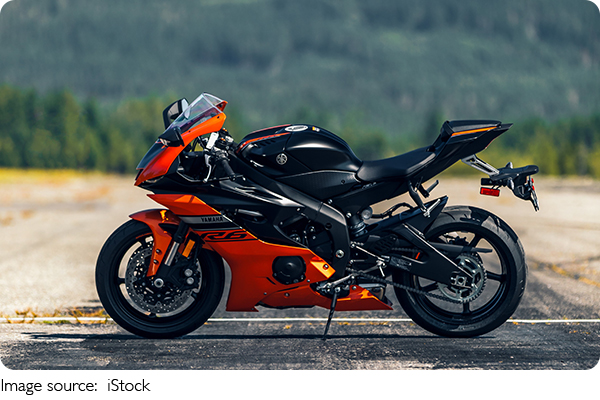
Automatic motorcycles can simplify daily riding by reducing clutch and manual gear-change work, especially in traffic with frequent stops and speed changes. The useful choice depends on more than automatic operation, so transmission type, engine capacity, physical dimensions, storage, braking equipment, and route conditions should all be considered before purchase. Checking these factors against the actual commute provides a practical way to narrow the available options.
Popular
Used EV Sales Surge
Record second-hand electric car sales show Britain’s EV transition is gaining traction, but petrol and diesel still dominate.
Europe’s EV Surge
Electric cars captured more than a quarter of Europe’s new-car market in June, while combustion registrations continued to fall.
Europe’s EV Share Climbs
Electric cars captured more than a quarter of Europe’s new-car market in July, with France and Germany driving much of the growth.
Faster Licence Updates
Reporting a medical condition online can now save UK drivers up to 10 days compared with using paper forms.