EU Charging Network Expands
EU Charging Network ExpandsPosted by Chris Isidore on 17-08-2026
Luxury Cars
Europe’s transition to electric vehicles has often been accompanied by concerns that charging infrastructure is not expanding quickly enough. New analysis suggests the opposite may now be true.
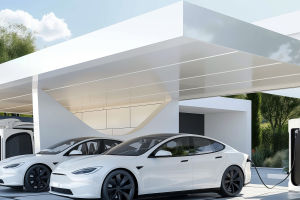
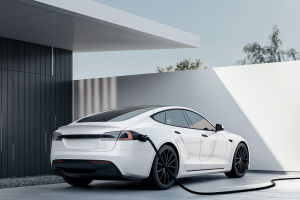
By the end of 2025, the European Union had around 1.1 million public charging points — roughly five times as many as in 2020. According to Transport & Environment, every EU member state except Malta had already met the charging-capacity requirements linked to the size of its electric-vehicle fleet.
The findings suggest that public charging capacity is currently expanding faster than battery-electric vehicle ownership across much of the bloc.
What the EU Rules Require
The Alternative Fuels Infrastructure Regulation, known as AFIR, establishes minimum charging targets for EU countries.
For light-duty vehicles, member states must provide at least 1.3 kW of publicly accessible charging capacity for every registered battery-electric vehicle and 0.8 kW for every plug-in hybrid.
According to the latest assessment, EU charging capacity exceeds the fleet-based AFIR target by around 180%.
That challenges the argument that a general lack of public chargers is the main reason electric-car sales are not growing faster.
However, having enough total charging power does not mean drivers experience the same level of convenience everywhere.
Fast-Charging Gaps Remain
AFIR also focuses on where chargers are located.
Along major European transport routes, the regulation requires fast-charging infrastructure at regular intervals. For electric cars and vans, charging stations along key TEN-T routes are generally expected every 60 kilometres.
This part of the network still has gaps.
In June 2026, only 79% of the TEN-T Core network, which includes many of Europe’s principal motorway routes, met the 2025 target for ultra-fast charging coverage. Western Europe was already more than 99% compliant, while many remaining gaps were concentrated in parts of Eastern Europe and Spain.
This distinction matters for drivers. A country can have plenty of chargers overall while still lacking convenient high-power stations on particular long-distance routes.
More Chargers Are Coming
Expansion is expected to continue.
Industry forecasts cited in the analysis suggest Europe’s public network could grow by around 90% between 2025 and 2030, reaching approximately 2.1 million charging points.
Growth is also increasingly shifting toward faster equipment, which can reduce waiting times on long journeys.
For electric-car owners, that means the practical question is becoming less about whether chargers exist at all and more about their speed, reliability, location and availability when demand is high.
Infrastructure Is Only Part of the EV Challenge
A strong charging network does not automatically guarantee faster electric-car adoption.
Vehicle prices, financing costs, electricity tariffs, access to home charging and confidence in battery range can all influence purchasing decisions.
Drivers living in apartments or without private parking may also depend much more heavily on public infrastructure than homeowners who can charge overnight.
So while the latest figures weaken the argument that Europe simply lacks enough chargers, they do not remove every obstacle facing the EV market.
A More Mature Charging Market
The picture across Europe is becoming increasingly nuanced.
Overall charging capacity is already ahead of minimum fleet-based targets in nearly every member state, while the total number of public charging points has expanded dramatically in just five years. Yet ultra-fast coverage along some major transport corridors still needs improvement.
The next stage of Europe’s charging rollout is therefore less about building chargers everywhere and more about ensuring that the right chargers are available in the right places.
As electric-car ownership grows, reliability, charging speed and consistent coverage across borders are likely to become just as important as the headline number of charging points.
Popular
EU Charging Network Expands
Europe’s public charging network is now growing faster than its electric-car fleet.
Summer Drink-Drive Risk
New analysis shows summer can be more dangerous for drink-driving collisions than the festive season.
EU Boosts Driver Monitoring
New EU safety rules are accelerating demand for technologies that detect distraction and fatigue behind the wheel.
Cars That Watch Drivers
Europe’s new distraction rules could influence how driver-monitoring technology develops in the US.