Do Pandas Hibernate?
Do Pandas Hibernate?Posted by Chris Isidore on 11-08-2026
Wild Animals
Welcome, Readers! When winter arrives, many retreat into sheltered dens, lower their body activity, and survive for months using energy stored before the cold season. Giant pandas take a very different approach.
They continue moving through mountain forests, searching for bamboo, resting between feeding sessions, and adjusting their behavior to the changing conditions.
Why Don't Giant Pandas Hibernate?
Hibernation requires an animal to survive for an extended period with little or no food intake. Before entering a prolonged winter sleep, many hibernating mammals build substantial energy reserves that can gradually support their bodies when food becomes scarce. Giant pandas are poorly suited to this strategy because their bamboo-based diet provides limited energy and they need to feed regularly to maintain their daily requirements.
Their bamboo-based diet provides limited energy, while their digestive system does not extract nutrients from plant material as efficiently as that of specialized herbivores. Research measuring giant pandas in both captivity and the wild found exceptionally low daily energy expenditure, with average expenditure far below what would normally be expected for a mammal of similar size. Low physical activity and relatively small sizes of several organs contribute to this energy-saving lifestyle.
Winter Can Actually Be a Good Season for Pandas
The image of a panda surrounded by snow might suggest that cold weather is a hardship it must escape. In reality, giant pandas are naturally equipped for cool mountain environments. Their native habitat lies in the mountainous regions of central China, where winter temperatures can be low, and snow can occur.
Their thick fur provides insulation, while their compact body shape helps reduce heat loss. They also possess an important physiological advantage: because their normal metabolism is already unusually economical, they can maintain a relatively low-energy lifestyle compared with many mammals of similar size.
Bamboo Keeps the Panda Moving
The biggest reason pandas remain active during winter is simple: food does not disappear completely. Bamboo grows in the same mountain landscapes occupied by pandas, although the nutritional quality of different parts of the plant changes throughout the year. Pandas respond by altering what they eat. Research has documented seasonal changes in their selection of bamboo parts, with leaves and stems becoming more important at different times of year.
The seasonal shift matters because bamboo is not nutritionally identical from one part to another. During late winter and early spring, for example, some wild pandas face reduced availability of their preferred, more nutritious bamboo components. Research from Foping Nature Reserve found that pandas changed their foraging patterns as the quality and availability of particular bamboo resources declined.
A Panda's Slow Lifestyle Has a Scientific Purpose
Pandas are often portrayed as lazy because they spend long periods eating, resting, and moving relatively slowly. Biologically, however, that lifestyle makes considerable sense. A panda's body operates on a tight energy budget. Rather than spending large amounts of energy chasing prey or traveling continuously, it minimizes unnecessary movement and spends much of its day feeding or resting.
The result is an unusual survival strategy: instead of escaping winter through hibernation, the panda reduces its energy demands enough to remain active while continuing to feed. This strategy also explains why a panda can look remarkably relaxed while doing something essential for survival. Sitting beneath a tree and methodically chewing bamboo may appear effortless, but every feeding session is part of a carefully balanced energy budget.
Snow Is Not a Signal to Sleep
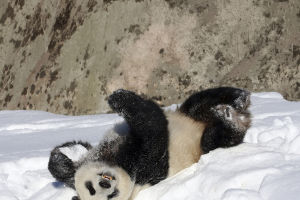
A snowy landscape does not automatically mean a panda should retreat underground. In fact, giant pandas can show considerable interest in cold weather. At the Smithsonian's National Zoo, keepers have observed pandas climbing, playing, and moving through snow during winter conditions.
Wild pandas similarly remain part of the mountain ecosystem throughout the cold season. Their winter behavior is shaped less by avoiding cold altogether and more by balancing temperature, movement, and access to suitable bamboo. Its black-and-white coat, bamboo-heavy diet, low metabolic rate, and seasonal feeding behavior all fit together into a survival strategy that does not require a winter shutdown.

So, do pandas hibernate in winter? No. Giant pandas remain active throughout the cold season and must continue feeding because their bamboo diet does not provide the conditions needed for prolonged fasting. Their solution is far more subtle than hibernation.
They conserve energy through a naturally low metabolic rate, keep their activity relatively economical, adjust their bamboo choices as plant quality changes, and use physiological mechanisms that help them cope with cold temperatures.
Popular
Hidden Wing Wonders
The Butterfly With a Secret Tool: The Incredible Survival Tricks of the Swallowtail Revealed!
Chipmunk Survival Secrets
How Do Chipmunks Survive Winter? Their Secret Food-Storage Skills Are More Clever Than We Think!
Hidden Deer Spots
Do Sika Deer Really Lose Their Spots in Winter? The Surprising Reason Their Markings Seem to Disappear!
Lion Sleep Secrets
Why Do Lions Sleep So Much? The Real Reasons Behind Their Surprisingly Long Resting Hours!