Island Bamboo Pit Viper
Island Bamboo Pit ViperPosted by Caroll Alvarado on 30-06-2026
On Trend
Hello, Lykkers! If you have ever been curious about the island bamboo pit viper, also known as Trimeresurus insularis, you are definitely not alone.
This striking reptile is known for its vivid coloring and quiet, watchful presence. It belongs to the viper family and is found on several islands in Southeast Asia, where it lives in warm, tropical settings.
Even though its appearance can feel a little intimidating at first glance, learning about it helps turn that first reaction into understanding.
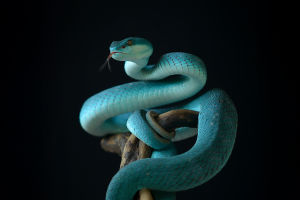
Trimeresurus insularis is a pit viper species. It is especially known for its bright green body, though some individuals can appear in yellow or blue-toned forms depending on the local population. Males and females also show differences in appearance. Males often have clearer markings, including reddish or pale lines along the sides, while females are usually larger and more solid in color. Like other pit vipers, this species has heat-sensing pits between the eyes and nostrils, which help it detect prey with impressive precision.
Where it lives
This species is native to islands in Indonesia, including Lombok, Sumbawa, Komodo, Flores, Alor, Wetar, and nearby smaller islands. It does not have a broad mainland range, which is part of what makes it so interesting. Its name, insularis, points to this island-based distribution. It usually lives in forests, scrublands, farmland edges, and other places with enough cover and warmth. Because it adapts to different local environments, people may come across it in both more natural landscapes and areas closer to settlement.
How it looks
One of the most memorable things about this snake is its color. The common green form blends beautifully into leaves and branches, making it difficult to spot. There are also yellow and blue variations that have drawn a lot of attention from reptile enthusiasts and researchers. The body is fairly slender, with a distinct triangular head typical of vipers. This shape is linked to the venom glands and gives the animal its alert profile. Its tail is prehensile, which means it can help grip branches while the snake rests or waits quietly above ground.
Behavior and food
Trimeresurus insularis is mainly arboreal, so it spends much of its time in shrubs and trees. It is usually active at night, when it hunts small animals. Its diet includes lizards, frogs, small birds, and rodents. Rather than chasing prey over long distances, it relies on patience and camouflage. It stays still, waits for the right moment, and then strikes quickly. This hunting style works well in dense vegetation, where blending in is one of its greatest strengths.
Why caution matters
This species is venomous, so respectful distance is very important. A bite can be medically serious and should always be treated as an emergency. At the same time, the snake is not looking for conflict with people. Like many wild animals, it usually prefers to remain undisturbed. Most problems happen when someone gets too close, tries to handle it, or does not notice it in vegetation. That is why awareness matters so much in places where it lives naturally.
A closer understanding
The island bamboo pit viper is a fascinating example of how wildlife adapts to specific environments. Its island distribution, color variation, tree-living habits, and hunting ability all make it a remarkable species to study. It is also a gentle reminder that beauty in nature often comes with the need for care and respect. When people learn how an animal lives, where it belongs, and what it needs, fear often softens into appreciation.
So, if you ever read about Trimeresurus insularis or see photos of its brilliant green coils resting among leaves, take it as a chance to look a little closer with curiosity and care. The more we understand creatures like this one, the better we can share the world with them thoughtfully and safely.
Popular
Whale Songs Cross Oceans
Whales are basically the opera singers of the ocean, and their songs travel farther than you'd ever expect.
Your Cat’s Secret Language
Cats have a whole vocabulary and most of us completely miss it. Here's what science says they're actually trying to tell us.
Can Apes Really Sign?
Turns out apes might have more to say than we think, and scientists have the wild experiments to prove it.
Why Do Birds Actually Sing?
Birds aren't just making noise for fun. Their songs carry big messages about love, turf, and survival.