Help Your Cat Stay Active
Help Your Cat Stay ActivePosted by Camille Dubois on 24-06-2026

Odd News
Many cats enjoy long periods of rest, but regular movement is an important part of maintaining their physical and mental well-being.
Encouraging a less active cat to play is not about forcing exercise. Instead, it involves creating an environment that inspires natural behaviors and makes movement enjoyable.
Cats are natural hunters. Their instincts encourage them to climb, chase, explore, and observe their surroundings. Although domestic cats often live comfortable indoor lives, these instincts remain an important part of their behavior. With the right approach, even a relaxed cat can become more interested in play through engaging activities, stimulating surroundings, and positive interaction.
Understand Why a Cat Becomes Less Active
Before introducing new activities, it is helpful to understand why a cat avoids play. Some cats naturally prefer calm exploration instead of energetic movement. Personality, age, previous experiences, and daily surroundings can all influence activity levels.
If a cat suddenly loses interest in playing or becomes noticeably less active, it is advisable to consult a veterinarian, as unexpected behavioral changes may sometimes be linked to an underlying health concern. However, many healthy cats simply benefit from greater environmental enrichment and more opportunities for stimulation.
Observing a cat's daily habits can provide useful insight. Does the cat become curious when it hears unfamiliar sounds? Does it watch birds or moving objects through a window? Does it enjoy chasing small toys but quickly loses interest? These observations can help identify the types of activities that best match the cat's natural preferences.
Use Natural Hunting Behaviors During Play
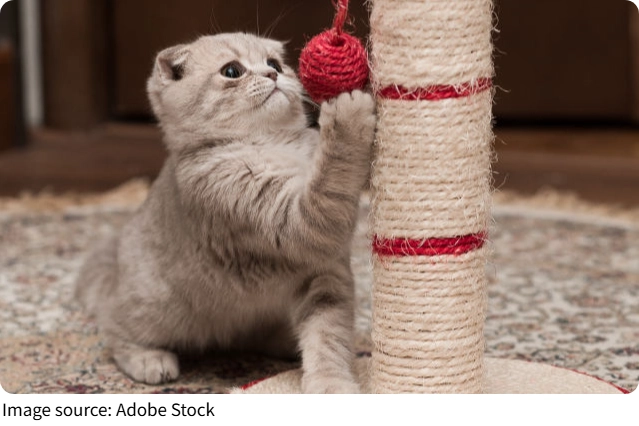
One of the most effective ways to encourage activity is to recreate natural hunting behaviors during play. Many cats enjoy games that involve watching, stalking, chasing, and catching. A feather wand, moving toy, or soft ball often becomes more engaging when it moves unpredictably, similar to prey.
Short play sessions are usually more effective than long ones. Just a few minutes of interactive play can provide meaningful physical activity while keeping the experience enjoyable. Changing the toy's direction, varying its speed, and allowing the cat to successfully catch it can make playtime more rewarding.
As Krista Seraydar, DVM, explains, "Cats are not nocturnal—they're crepuscular, meaning they're most active at dawn and dusk." Scheduling interactive play during these naturally active periods can help increase a cat's interest and participation.
Create an Environment That Encourages Movement
A cat's surroundings have a significant influence on daily activity. Creating an enriching environment does not require expensive equipment. Small adjustments throughout the home can provide more opportunities for movement and exploration.
Placing a scratching post near a favorite resting area encourages stretching and climbing. Providing a cat tree, sturdy shelves, or elevated resting spaces can inspire exploration, as many cats enjoy observing their surroundings from higher locations where they feel comfortable and secure.
Rotating toys regularly can also maintain interest. Keeping some toys out of sight and introducing them again after a period of time can make familiar items feel exciting and new.
Make Mealtimes More Engaging
Daily feeding routines can also encourage movement. Instead of always placing food in the same location, small portions can occasionally be placed in safe, easy-to-find spots around the home to encourage natural searching behavior.
Puzzle feeders are another effective option. They encourage cats to interact with the feeder before receiving food, providing both mental stimulation and gentle physical activity.
The objective is to make everyday routines more engaging without creating frustration. Activities should feel enjoyable and rewarding while encouraging natural behaviors.
Encourage Positive Experiences
Cats are more likely to participate in play when they feel safe and comfortable. Gentle encouragement is generally more effective than repeatedly interrupting a cat's rest or overwhelming it with constant stimulation. Some cats simply need time to become interested in new activities.
Rewarding curiosity with affection or an appropriate treat can reinforce active behaviors. Even small increases in daily movement, such as walking across the room or briefly chasing a toy, can contribute to a more active routine over time.
Helping a cat stay active is a gradual process that begins with understanding its individual personality and natural instincts. Interactive play, an enriching environment, engaging feeding activities, and consistent positive encouragement can all support a healthier and more stimulating daily routine.
Every cat responds differently, so patience and consistency are essential. By providing regular opportunities for movement, exploration, and play, owners can help their feline companions maintain physical activity, mental stimulation, and overall well-being while strengthening the bond they share.
Popular
Help Your Cat Stay Active
Simple activities to encourage play, curiosity, and a healthier daily routine
Simple Steps for Pet Care
Routine wellness care helps pets stay healthy, active, and happy throughout every stage of life
Inside The Brain MRI
How MRI scans reveal detailed insights into brain structure, function, and neurological health
Help Kids Love Dental Care
Simple, positive strategies to help children feel confident, comfortable, and prepared for dental visits