Llama Facts
Llama FactsPosted by Ethan Sullivan on 24-04-2026
On Trend
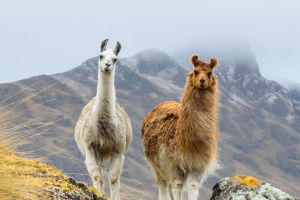
A quiet figure stands on a high Andean slope, ears alert, eyes scanning the distance, while wind moves across dry grasslands.
This is the world of the llama—an animal often seen as gentle and steady, yet far more interesting than it first appears.
Native to South America, llamas belong to the camelid family and have adapted remarkably to life in high-altitude environments.
Built for High Altitudes
Llamas thrive in regions where oxygen levels are lower, and temperatures shift quickly between day and night. Their bodies are naturally adapted to these conditions, with efficient blood circulation and a lightweight frame that supports long-distance walking across rugged terrain.
They can travel across steep mountain paths without tiring easily, making them historically valuable for transport in remote regions.
Communication Through Subtle Signals
Llamas do not rely on complex sounds. Instead, they use a combination of posture, ear movement, and soft vocalizations to communicate.
• Ears angled forward often signal curiosity
• Ears pinned back may indicate discomfort
• Soft humming sounds are used to maintain group awareness
These subtle signals help maintain order within herds without aggressive behavior.
Natural Pack Animals
One of the most interesting traits of llamas is their role as natural carriers. Their strength and endurance allow them to carry loads over long distances without damaging fragile terrain.
1. They can carry moderate loads relative to body size
2. They navigate narrow mountain paths with stability
3. They require minimal external training compared to many transport animals
This combination of traits made them essential in traditional mountain communities.
Self-Defense Behavior
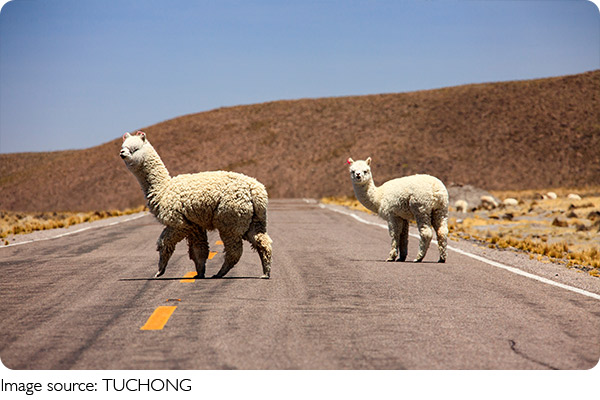
Although generally calm, llamas have a clear way of setting boundaries. When stressed or threatened, they may use a simple but effective defense mechanism: projecting stomach contents toward perceived threats.
This behavior is not random aggression but a protective response used primarily within herd dynamics or during close encounters with unfamiliar animals.
Social Structure in Herds
Llamas are highly social and prefer group living. Within herds, they establish loose hierarchies that reduce conflict and improve coordination.
• Small groups often include a dominant individual and several followers
• Young members learn behavior by observing older ones
• Group cohesion is maintained through constant visual awareness
This structure allows them to move efficiently as a unit across open landscapes.
Coat Variations and Uses
Their wool has been used for centuries due to its softness and insulation properties. It is lighter than many other natural fibers while still providing warmth in cold environments.
Coat colors vary widely, including shades of white, brown, black, and mixed patterns. This diversity makes each individual visually distinct, even within the same herd.
Role in Modern Environments
While historically essential for transport, llamas are now often found in agricultural settings and eco-tourism environments. They are valued for their calm temperament and adaptability.
Some regions also use them in controlled grazing programs, as they can help manage vegetation growth without damaging soil structure.
Why They Remain Fascinating
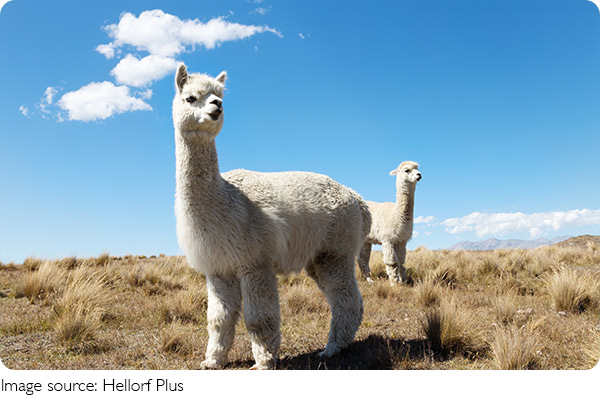
What makes llamas especially interesting is the balance between simplicity and adaptability. They do not rely on speed or strength alone, but on endurance, awareness, and social coordination.
In many ways, they reflect a model of survival based on cooperation rather than dominance—an approach that has allowed them to thrive for centuries in some of the most demanding environments on Earth.
Popular
Flamingo Color
The Science Behind Their Stunning Pink Feathers
Horse Running Science
Precision in Motion: The Science Behind Why Horses Run So Efficiently
Llama Facts
Surprising Things You Didn’t Know About These Calm Mountain Animals
Elephant Memory Secrets
Discover How Elephants Remember Landscapes, Companions, and Life Experiences, and Why Their Memory Is Key to Survival