Amazing Puffin Facts
Amazing Puffin FactsPosted by Pardeep Singh on 13-03-2026

On Trend
Puffins are among the most fascinating seabirds in the northern oceans.
With their striking colorful beaks and quirky behaviors, they captivate nature lovers and researchers alike.
Although they often look like a caricature of a bird, puffins are a highly adapted species with remarkable survival skills. By exploring reliable scientific sources, we uncover verified insights into how these birds live, hunt, and thrive in marine environments.
Where Puffins Live and What They Look Like
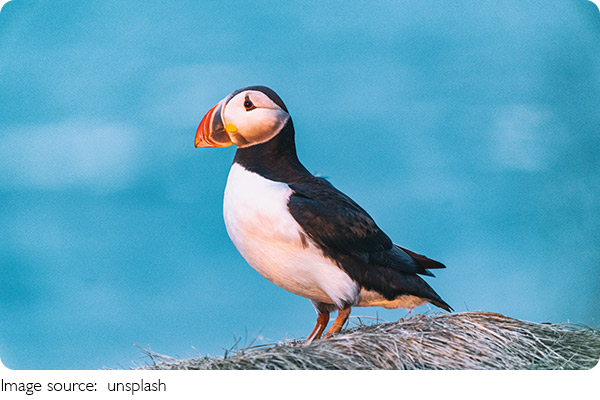
Puffins are small seabirds belonging to the auk family. The Atlantic puffin (Fratercula arctica) is one of the most recognized species, easily identified by its large triangular bill and contrasting black-and-white plumage.
Puffins spend most of their lives far from land, floating or swimming on open ocean waters.
They return to coastal cliffs during the breeding season in spring and summer to nest and raise their chicks. These burrows are often on remote island slopes or cliff faces.
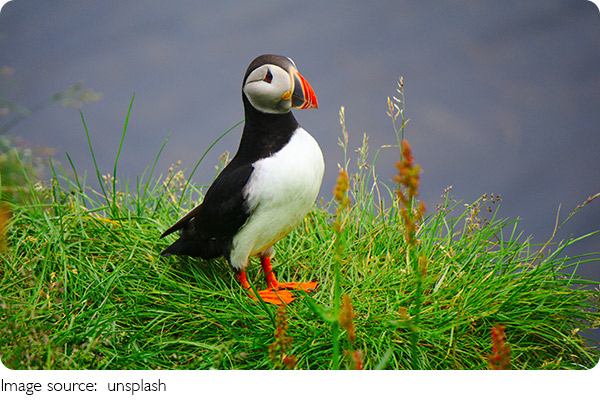
Their bright red-orange bills and legs become more intense during mating season, which scientists believe helps attract partners. In winter, these colors fade to duller grey tones once the breeding period has passed.
Unique Adaptations for Air and Sea
Puffins are remarkable swimmers and flyers. Using their wings as paddles, they “fly” underwater to catch fish, demonstrating agility rarely seen in other bird species.
• Swimming prowess: Puffins can dive up to 300 feet and stay submerged long enough to chase fast moving small fish.
• Flying ability: Though their short wings require rapid flapping, puffins can reach impressive air speeds and maneuver quickly in flight.
Their feet are webbed, which helps steer during dives and on the surface. These adaptations allow puffins to live successfully in cold, open waters where fish are their primary diet.
Life Cycle and Behavior
Puffins are social birds that form large breeding colonies. They typically return to the same nesting spot each year and often mate with the same partner season after season.
Inside their tunnels, puffins lay a single egg per breeding season. Both parents participate in incubation and feeding duties. After hatching, the chick — sometimes called a puffling — remains underground until its feathers are strong enough for it to venture out to sea.
This faithful and cooperative behavior contributes to their success as a species, allowing families to raise young effectively despite the challenges of ocean life.
Population and Conservation
While puffins are not currently at immediate risk of extinction, their global population has seen declines in some regions due to environmental changes and human impact on marine ecosystems.
Conservation efforts including habitat protection and sustainable fishing practices play a role in ensuring that puffins have access to plentiful food sources and safe breeding grounds. Continued monitoring by scientists helps track population trends and detect threats early.
Reflections on Puffins' Place in Nature
Puffins are more than just charming symbols of the sea — they are resilient, highly specialized birds with lifeways deeply tied to the ocean's health. From their brilliant breeding plumage to their underwater hunting agility, every facet of their biology illustrates evolution at its finest.
Observing puffins reminds us that even the smallest creatures have complex lives that contribute to the balance of marine ecosystems. Their survival depends not only on their remarkable adaptations but also on thoughtful stewardship of the planet's oceans.
Popular
Amazing Puffin Facts
Discover How These Sea Birds Swim, Fly, and Charm Scientists.
Fascinating Seal Facts
Discover How These Marine Mammals Dive, Navigate, and Thrive Across the Oceans.
Decoding Cat Communication
Understanding What Your Cat’s Signals Really Mean.
Cats Through Human History
From Wild Hunters to Cherished Companions Across Millennia.