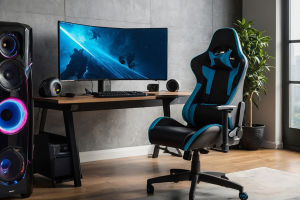
Addiction or Passion?
Addiction or Passion?Posted by Santosh Jha on 16-03-2026
Funny Facts

We all love games — whether it's battling through dungeons, exploring vast worlds, or competing with friends, gaming brings us a unique blend of relaxation, challenge, and social connection.
But we're also increasingly worried about the fine line between passion and addiction. Where should we draw that boundary? In this article, we want to explore this delicate balance together and help you identify when gaming crosses the threshold from a healthy passion to a harmful dependency.
The Appeal of Gaming
We appreciate games for many reasons. They enable us to escape stress, connect with friends, improve our reflexes, solve problems, and appreciate stories rendered in rich, cinematic worlds. According to developmental psychologist Douglas A. Gentile, video games are not inherently harmful and can even support learning when used appropriately. As Gentile explains, “if content is chosen wisely, video games can actually enhance some skills.” Research suggests that certain games may encourage problem-solving, creativity, and cooperation, although balance and moderation remain important.
When Passion Becomes Addiction
We need to watch for the moment when our passion crosses the boundary into dependency. Signs include a growing inability to control gaming habits, neglecting responsibilities, disrupted routines, poor performance at school or work, and growing conflict in relationships. The World Health Organization (WHO) recognized gaming disorder in its International Classification of Diseases (ICD-11), stating that this happens when we prioritize games over other aspects of life for at least 12 months — even when we know it's causing harm. We must pay close attention to these signals in ourselves and our friends.
Managing Our Time and Priorities
We can make sure we keep gaming as a healthy passion instead of a dependency by setting realistic routines and priorities. We can create a gaming schedule, limit our daily hours, and balance games with physical activity, social interaction, and responsibilities. According to expert Dr. Kim Young, a renowned clinician specializing in internet and gaming addiction, setting clear boundaries and realistic goals helps players enjoy their games without losing control. We can collaborate with friends or family members to keep ourselves accountable.
Seeking Help When Needed
If we or someone we care about crosses the boundary into dependency, we shouldn't wait — we should seek help. Cognitive behavioral therapy (CBT) and group therapy can aid in reducing dependency and developing healthy habits. Support groups, community programs, and health care providers specialize in guiding people back toward a balanced lifestyle. We must remember we're not battling this alone — there's a strong network of support available to aid us in regaining control.
Let's Reflect Together
We'd love to hear your stories and thoughts. Do you think you or someone you know might be battling gaming dependency? How do you balance your passion for games with your daily routines? Please share your experiences in the comments — together, we can foster a healthy, enjoyable, and sustainable way to appreciate games!
Popular
VR Gaming
How immersive gameplay transforms interaction and storytelling
Top Table Games to Try
Discover fun, strategy, and social connection with these engaging board games
The VR/AR Revolution
Exploring the Current State and Future of VR/AR Gaming: What’s Next for This Transformative Technology?
Handheld Consoles
Explore how retro handheld consoles continue to captivate modern gamers and fuel nostalgia.